No one reads everything
A broad audience is not a generic one. Why so much internal communication never lands — and how to build it like a newspaper, in sections people actually read.

A broad audience is not a generic one. Why so much internal communication never lands — and how to build it like a newspaper, in sections people actually read.
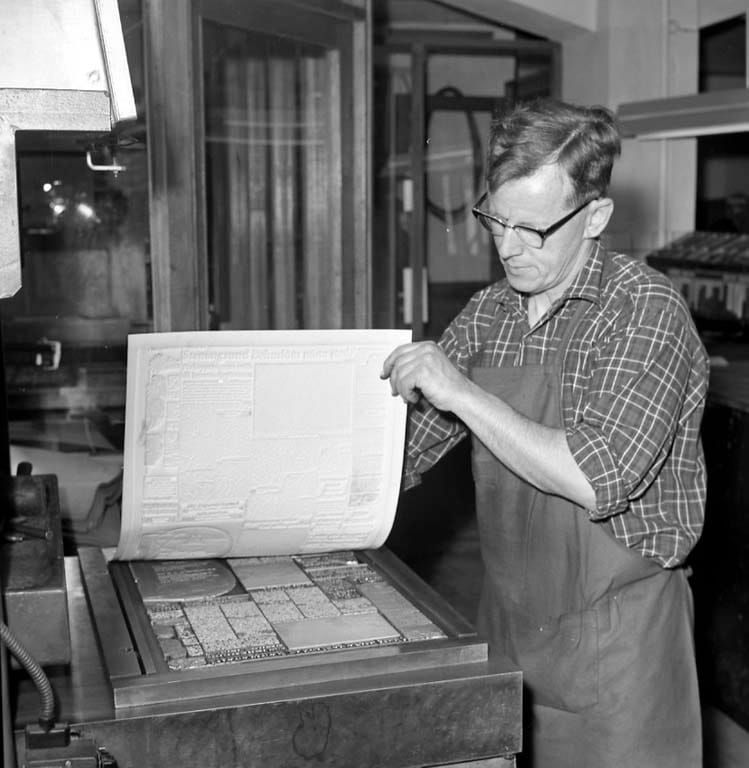
When I was a boy I delivered the Sunday papers. Not just the thin weekday ones – but those astonishingly large Sunday editions, which in the early nineties were absurd, swollen things, so fat with supplements that it took each of us 10 minutes to hang them over our shoulders. We needed a team of five just to help each other stand up.
Each one was really a dozen papers pretending to be one: the main news, and then a barrage of pull-out sections – politics, culture, finance, food, travel, sport, a television guide, a magazine whose purpose nobody was sure, but seemed to be a hit with the my parents.
At the time I would have been mortified to know that my effort wasn't fully realised, but I learned years later, very few people read all of it. Not one person in those houses on my round read that entire paper, I suspect.
At home, my dad went straight for the television guide and the sport and left the rest folded on the arm of the chair. I went for lifestyle, food and entertainment. My sister went for the fashion. And my mum went for that magazine that we had no real clue what it was actually about. Someone three doors down went for the politics and binned the telly guide. Everyone read something. Very few people read everything. And the paper was built – deliberately, rather brilliantly – for exactly that.
These papers solve a problem most organisations never do. Every so often a company has to say something to everyone at once: a change is coming, the strategy has shifted, here is the new shape of things moving forward. And the instinct, almost always, is to write it once, for "everyone." One deck. One all-staff email. Marked as important. One gigantic playbook that took five months to assemble. Efficient for the sender, exhausting for the reader, and, more often than not, ignored.
Because a broad audience is not a generic audience. It only looks like a single crowd from the stage, or the boardroom. Up close it's a stack of narrower audiences layered together – the function losing a process it rather liked, the team gaining a manager it rather dislikes, the people two sites over for whom none of this changes a thing, the team on floor four that nobody knows what they do, the guy in the basement collecting staplers. Write to all of them as one, and you write to none of them in particular; and none-of-them-in-particular is exactly who ends up reading it.
The Sunday papers don't make that mistake. They don't ask the reader who wants the football score to wade through four pages of foreign affairs to find that Barnsley beat Rotherham 5-0. It assumes difference rather than sameness and is built for it – clear sections, obvious signposts, a consistent shape that lets each person walk straight to what is for them, while still knowing the rest is there for somebody else.
An editor would never dream of printing the recipes, the geopolitics and the county cricket on the same page, mixed together to make it hard for the reader. Organisations do the equivalent daily, and then wonder why the one line that mattered sank without trace.
And the reason it sinks isn't apathy or distaste or disengagement, which is the comforting explanation and the one I hear reached for most often. It's the design. People read closely when something is theirs, and trust me, will read a staggering amount of words too – and slide straight past when it isn't — that's not a failing of character, it's how attention has always behaved. Bury the thing you need someone to notice inside a heap of things they don't, and they'll look for a while until something else more pressing grabs their attention. The message went out. It simply went somewhere no one was looking. And no understanding was created – which is, at the heart of it – what communication is.
So the better instinct is the editor's, not the broadcaster's. A change that touches five functions is not one communication; it's five, sharing a single spine — the same story of where we're heading, told into the particular worries, interests, needs and concerns of each group. The spine is what everyone holds in common. The sections are where it becomes real for the person actually reading. That isn't more work for the sake of it. It's the difference between being effective rather than being efficient. Or, being missed versus understood.
There's a remarkable craft to writing each of those sections well too – a discipline I've taught for years in the Communication work, most of which comes down to respecting the reader enough to ask what they need before you tell them what you've got. But the architecture is one you already know, because you've maybe held it in your hands on a cold Sunday morning: stop printing one enormous paper for everyone, and start making sections people can find themselves in.
Clarity, it turns out, is not, and never will be, about volume. You don't make yourself understood by saying more, any more than a newspaper serves its readers by weighing more. You don't need more communication, you need more effective communication. You make yourself understood by making it easy to find what matters – which is wonderful when you think about it; it's respect to the reader's time, energy and attention, paid in advance.
The editors of the Sunday paper know every bit of this without having to think about it. Most of us, handed a company and something to say, forget it the moment we open a blank slide or craft an email to all staff marked as important.
The happier truth is that it's a behaviour, and behaviours can be learned – and it begins by remembering that the person you're writing to is not "everyone." They are always "someone", standing on a doorstep, feeling something, interesting in something, wanting something, and reaching for the supplement that is for them.
Where this sits in the Atlas
Orientation·Idea to Value·Communication·Creativity & Climate·Learning
Subscribe now and have access to all our stories, enjoy exclusive content and stay up to date with constant updates.