About Rob Lambert & Cultivated
Cultivated is the work of Rob Lambert — a writer, speaker, teacher and independent advisor interested in ideas, communication and the strange business of getting things done.
An interest in what people can make of things.
Cultivated is about making room for potential: in people, in ideas, and in the work that brings them to life.
An idea begins with noticing something: a possibility, a problem, a question or a better way of doing things. What follows is less predictable. Decisions, communication, attention, creativity, working conditions and the people involved all shape what happens next.
Through writing, books, films, courses, talks, workshops and advisory work, I explore this journey – how to see what's really happening, decide what is worth pursuing, and help ideas become something valuable in the world.
Work is the main focus because it is where so much of our time, ability, energy and potential gets spent. But the questions extend beyond organisations. They matter to anyone trying to create something worthwhile, develop their abilities or bring an idea to life.
The aim isn't simply to do more. It's to waste less of what is precious, and make more of what matters.
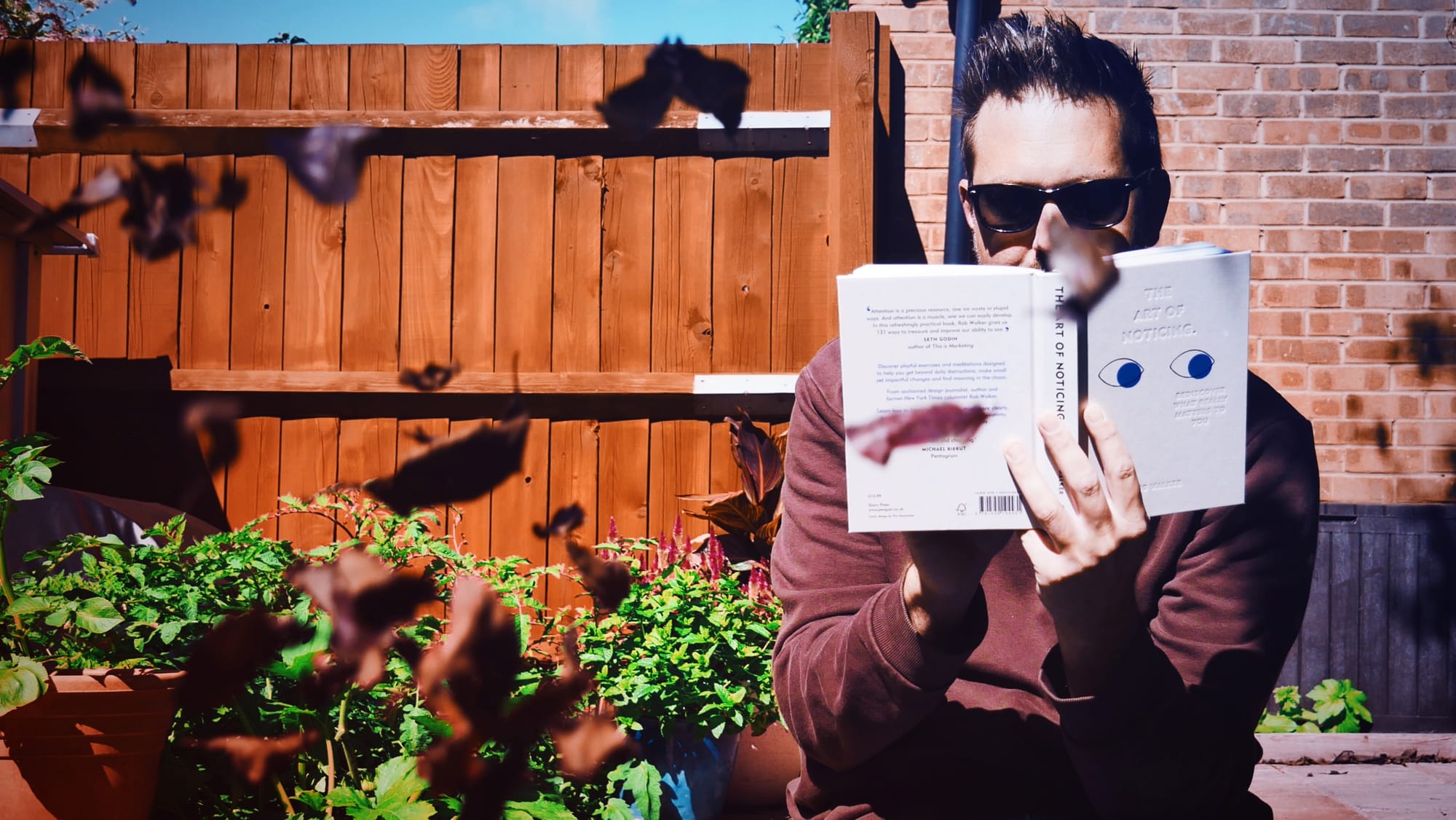
What I believe
People are capable of more than their current circumstances sometimes allow them to see.
We can learn to see things differently, develop our skills and bring ideas into the world that weren't there before. But potential doesn't turn into something valuable by itself. It needs curiosity, practice, judgement, other people and the right conditions to grow.
That's true whether you're preparing a talk, making a film, building a business or trying to make a difficult piece of work better.
I believe work should develop us. That the things we create should be worth creating. And that we shouldn't waste the finite time, energy and attention we have on things that could be done better – or perhaps shouldn't be done at all.
Why work matters
Work is one of the main places where we put our abilities to use. It takes a great deal of our lives, and it gives us opportunities to learn, contribute, make things and work alongside other people.
And the conditions make an enormous difference. The same good people can do remarkable work in one place and struggle to think straight in another. Very little of that is down to them.
I've seen both sides, from helping a business grow from its earliest days to working inside large organisations. That experience informs the talks, workshops and advisory work I do with organisations today.
But the starting point has always been the person. One person seeing something differently, becoming more capable or finding a better way forward can change a great deal around them.
That's why the publishing and the practical work belong together.
Rob's energy, expertise, and amiable presenting style were a big hit — we left with new skills, insights, and practical knowledge." — Scott Summers, Director, nFocus
The question
When I was about eight, I wrote a story I thought might be funny, took it into school and read it out.
People laughed.
I remember the surprise more than the laughter. Something that had existed only in my head a week earlier was now doing something in the world. It had landed.
I've been mildly obsessed with that journey ever since.
Twenty-plus years ago, that curiosity followed me into organisations, where it became a more specific question: whether an idea becomes the value it should, and whether it's any good to be part of the work that gets it there.
Both halves have always mattered to me. An idea becoming useful and valuable is one thing. What it asks of the people involved, and what kind of climate it creates along the way, is another.
The apparent weirdness of my CV (Media Science, journalism, technology, VP of Engineering, VP of HR, film-making, communication, consulting, business agility, and helping scale a company from barely making payroll to an exit) is not, in fact, particularly strange.
It's one long interest in the same thing: how something that exists as an idea becomes something valuable in the world, how meaning travels between people, what helps or hinders that journey, and whether being part of it is worth it.
Learning to see
A surprising amount of the world runs on borrowed seeing.
Someone somewhere does something that works. It becomes a case study. The case study becomes a framework. The framework becomes a course. The course becomes a certification. Eventually we find ourselves looking at our own work through somebody else's eyes.
I'm less interested in that.
What works in one place may be entirely wrong in another. Different people have different histories, constraints, ambitions and moments. Context matters. Judgement matters. Taste matters. Above all, the thing in front of you matters.
So much of what I do begins with seeing what's actually there before reaching for an answer.
That sounds simple. It isn't.
Once you start paying attention to the journey ideas take, you notice it everywhere. In the postbox outside Winchester Cathedral. In a well-made notebook. In a railway timetable. In a conversation overheard in a café. In a museum where a curator has used space to change the meaning of an object. In a publishing house where a thought becomes words, the words become pages, and the pages find their way into somebody else's thinking. And in the work we do every day.
The same journey, in different rooms.
Ways into the practice
To read, free. Meeting Notes, one good idea every Sunday. Joining opens the members' library: nine free books and the Before the Stage masterclass. There are also two hundred essays on the Writing page, and A List of Good Things.
To go deeper on your own. The Life of an Idea is the calmest place to start: how ideas become value, in five layers and 26 principles. Then the field guides: Zero to Keynote for talks, Workshop Mastery for teaching, Effective Workplace Communication for everyday work, and From Idea to Sustainable Work for independents. The whole shelf →
Every month. Studio is the paid membership: a new edition of the Department of Interesting Things, essays written only for members, live seminars, the Practitioner's Handbook and a direct line to me.
With me. Office Hours, one hour on one thing. Or for teams, talks, workshops where people make something they keep, and advisory for organisations that want their most important ideas to land.
Different forms. Same practice.
A few true things
I've broken almost every bone in my body, including a leg, laughing too hard at a Jasper Carrott sketch.
I played semi-professional basketball for exactly one year, until I worked out that everyone else was taller and stronger than me. I'm six foot three.
I drive an old, increasingly rusty Mazda MX-5 around the countryside. Driving is a form of meditation, and an excellent way to generate ideas and solve problems. I make films. I fill notebooks at an alarming rate. I type letters on an old Olivetti. I co-host a stationery podcast with my friend Helen Lisowski, which is a rather enjoyable thing to do.
I live in Winchester with my wife and three sons. Most of the writing happens in a studio lined with books, music equipment and an old writing bureau. Some of it happens in cafés and bars in Edinburgh, Berlin, Paris, Oslo and Norfolk, because the practice travels with the person.
And a few smaller ones
1/ Work should leave us more human, more skilled and more experienced than it found us. It should give back, not drain.
2/ Communication is the infrastructure through which ideas and meaning travel. It's where most ideas land, or don't.
3/ Creativity belongs to everyone, including people who've spent years telling themselves they aren't creative.
4/ Every office should contain a library. And good stationery.
5/ Books remain one of humanity's greatest inventions.
6/ Good Earl Grey tea, and the occasional craft beer, helps.
If any of this lands, if you've got an idea you'd like to get somewhere, at work or in something of your own, and you're willing to look at it clearly enough to do something about it, Cultivated is written for you. Consider this a little room being made.
The writing is where most of the thinking lives. The rest happens in workshops, conversations, books, films, photographs and the occasional coffee shop.
Start Here is the guided tour.
Thank you for spending a few minutes here. If you've made it this far, we'd probably get on. If you fancy a virtual cup of tea, don't hesitate to get in touch.
— Rob
Meeting Notes · every Sunday
If any of this sounds like you, let’s stay in touch.
One good idea a week, from my desk to yours. Join and the members’ library opens straight away: nine free books and a video masterclass.
The Trade List · No. 01
Everything in one place, to read or pass on.
Talks, workshops, advice and books, with an essay to begin. Twelve pages, free to download, written for whoever holds the budget.