Effective Workplace Communication
A practical workbook for being well understood at work: the emails, meetings and conversations that make up your working day.
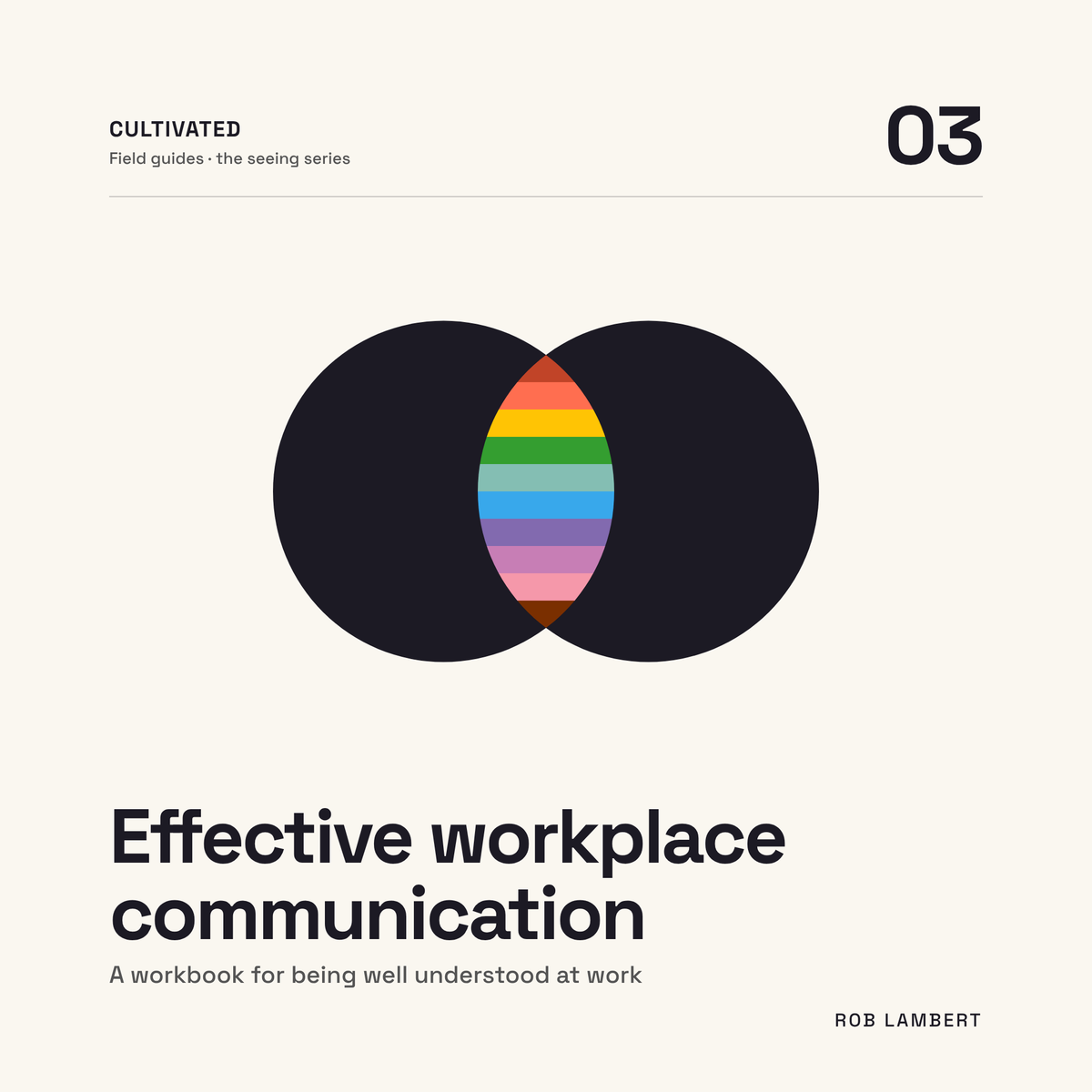
No. 03 in the seeing series. New edition, October 2026: 125 pages, ten chapters, exercises in every one. The companion workbook to The Everyday Communication Workshop.
A lot of good work gets lost in transit. The idea was good. The email seemed perfectly clear when you sent it. The meeting felt important. And somewhere between your head and someone else’s, the meaning dropped away.
This workbook is about making sure it arrives. It’s practical and exercise-led, and it covers the communication that fills an ordinary working day: the emails, the meetings, the difficult conversations and the moments when someone needs to understand you first time.
No. 03 in the seeing series · New edition, October 2026
Get understood the first time
A practical workbook for the emails, meetings and conversations that make up your working day. Ten chapters, and something to do at the end of every one.
- £14.99, one purchase
- 125 pages
- 10 chapters
- Exercises in every chapter
- DISC at a glance included
- A4 PDF, prints well
What changes when you’ve worked through it
Every chapter ends with something to do, so the ideas show up at work rather than staying on the page. Here’s what that looks like.
Chapter 9
Your emails get answered
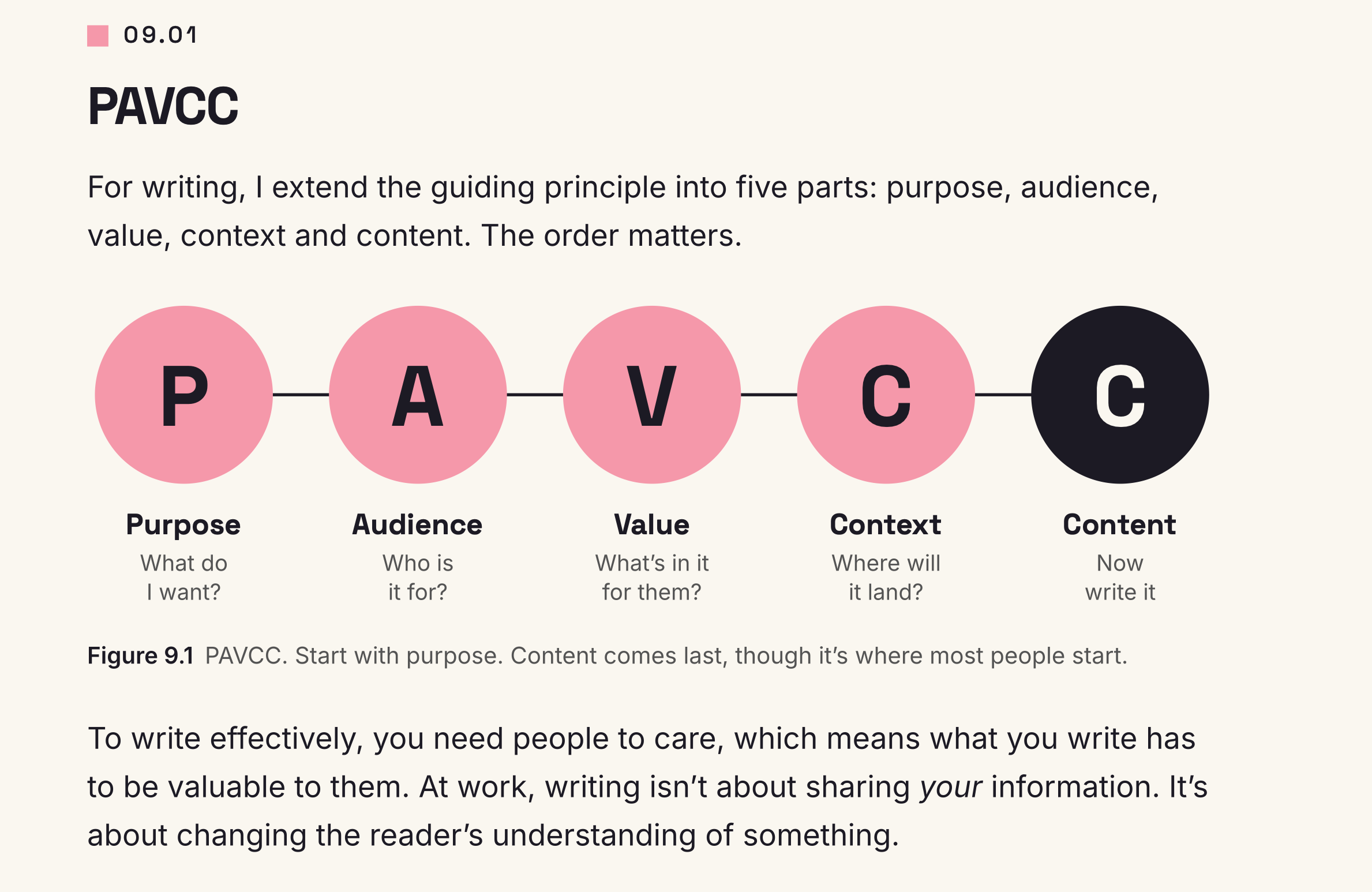
Put the ask in the first line, write for one person, and pass the “so what?” test before you hit send.
Chapter 10
Your meetings decide things
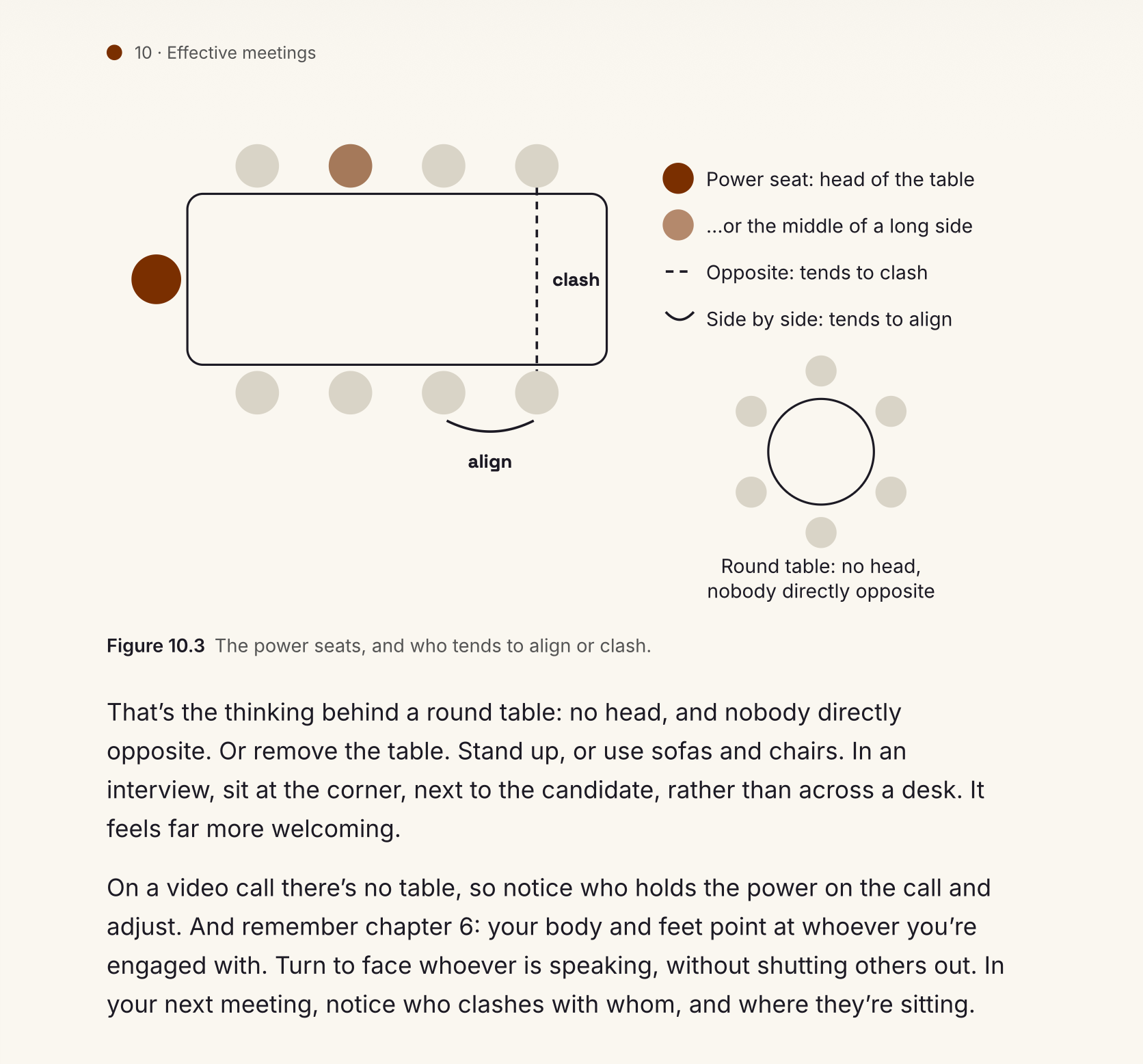
An agenda that works, a few simple rules, and why where people sit changes the conversation.
Chapter 7
You hold your nerve
Breathe, read the intent behind the question, buy yourself a moment, then answer and stop.
Chapter 6
You read the room
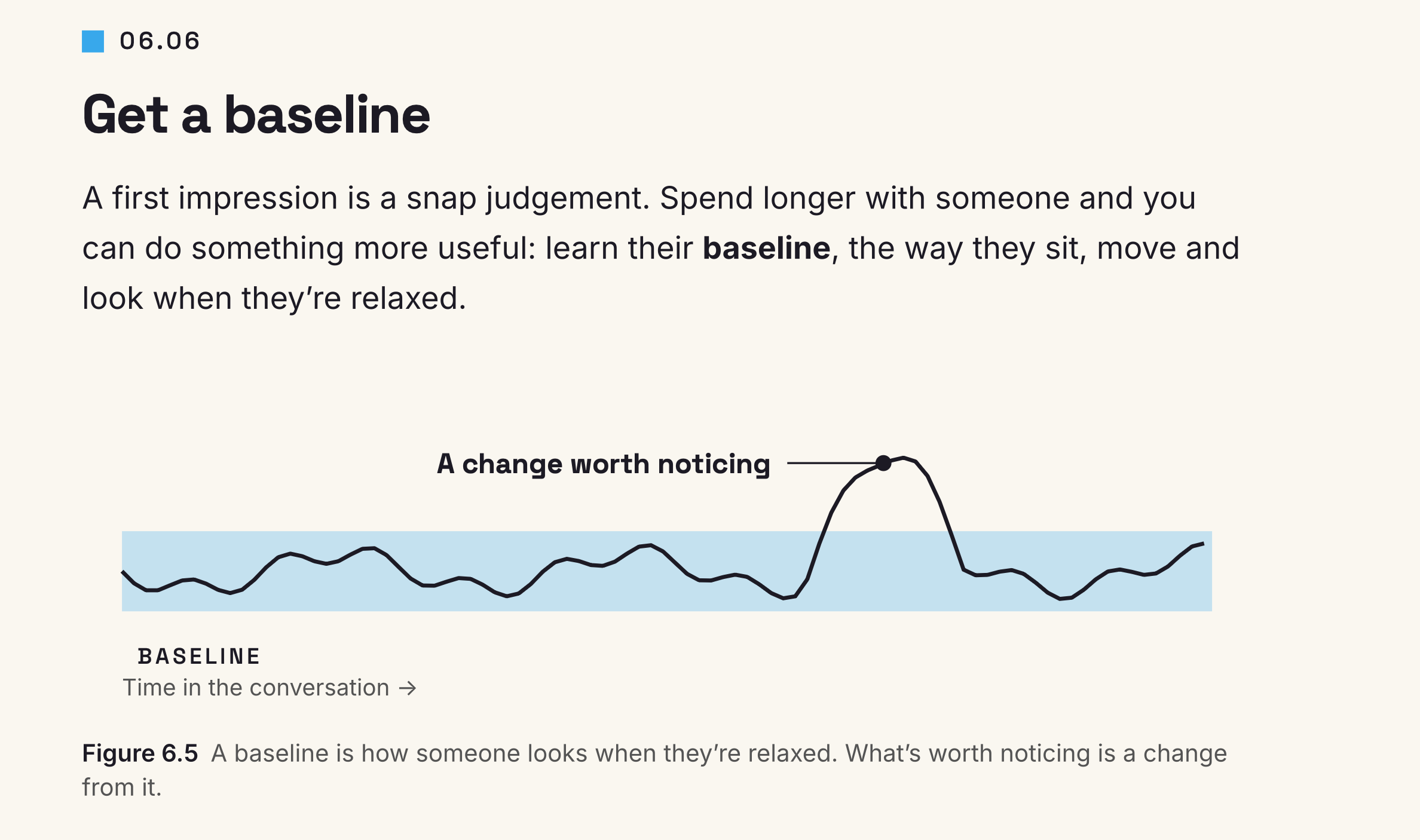
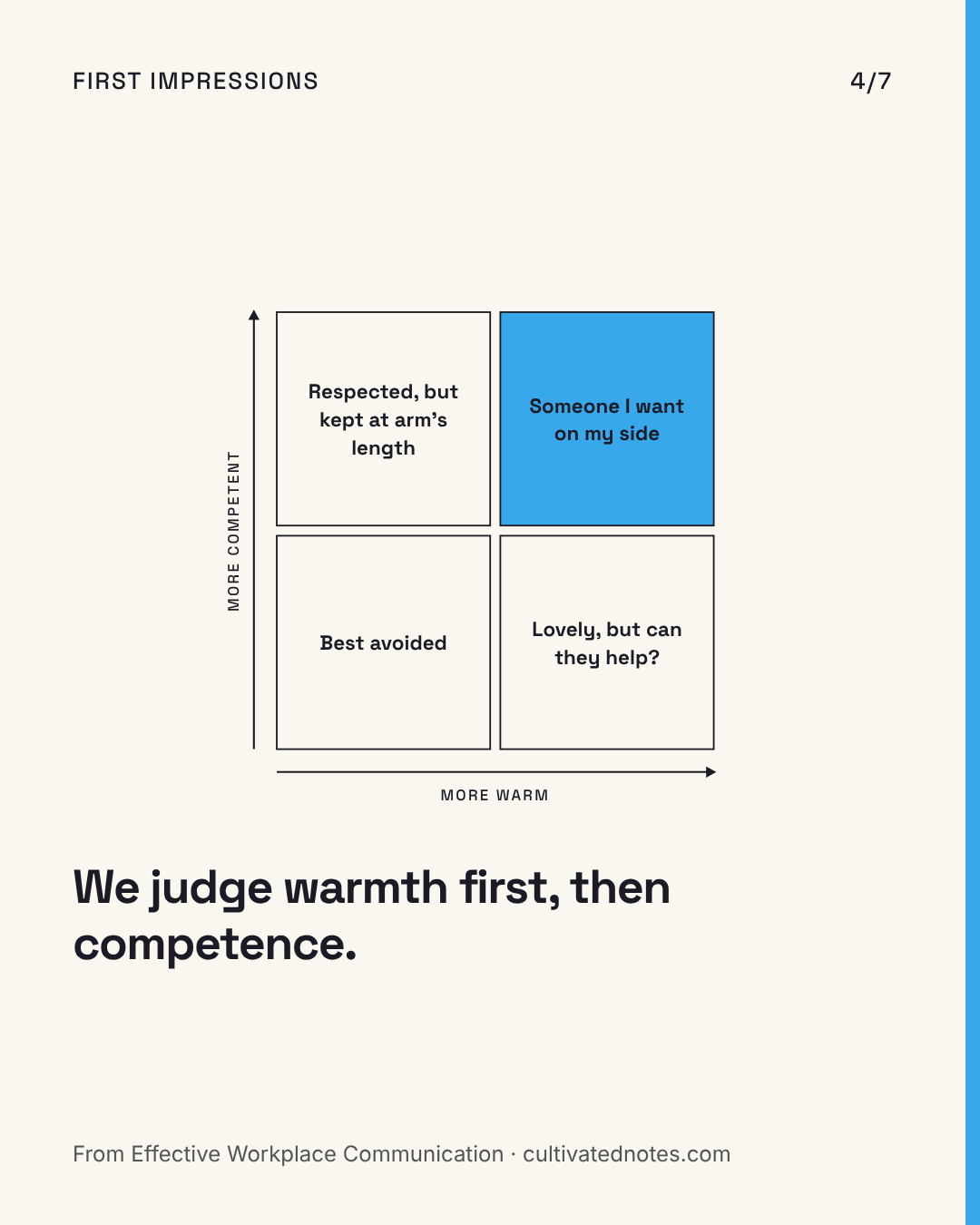
How first impressions form in a tenth of a second, and how to read people against their baseline.
Chapter 4
You land with different people
Know your own DISC style, spot other people’s, and move towards theirs.
Chapter 8
People feel heard
Nine listening habits, and the acid test that tells you whether you really listened.
You don’t need to be naturally charismatic, or the loudest person in the room. You don’t need to become someone who calls themselves a strong communicator on LinkedIn.
Communication is a set of behaviours, and behaviours can be practised.
Built on one idea
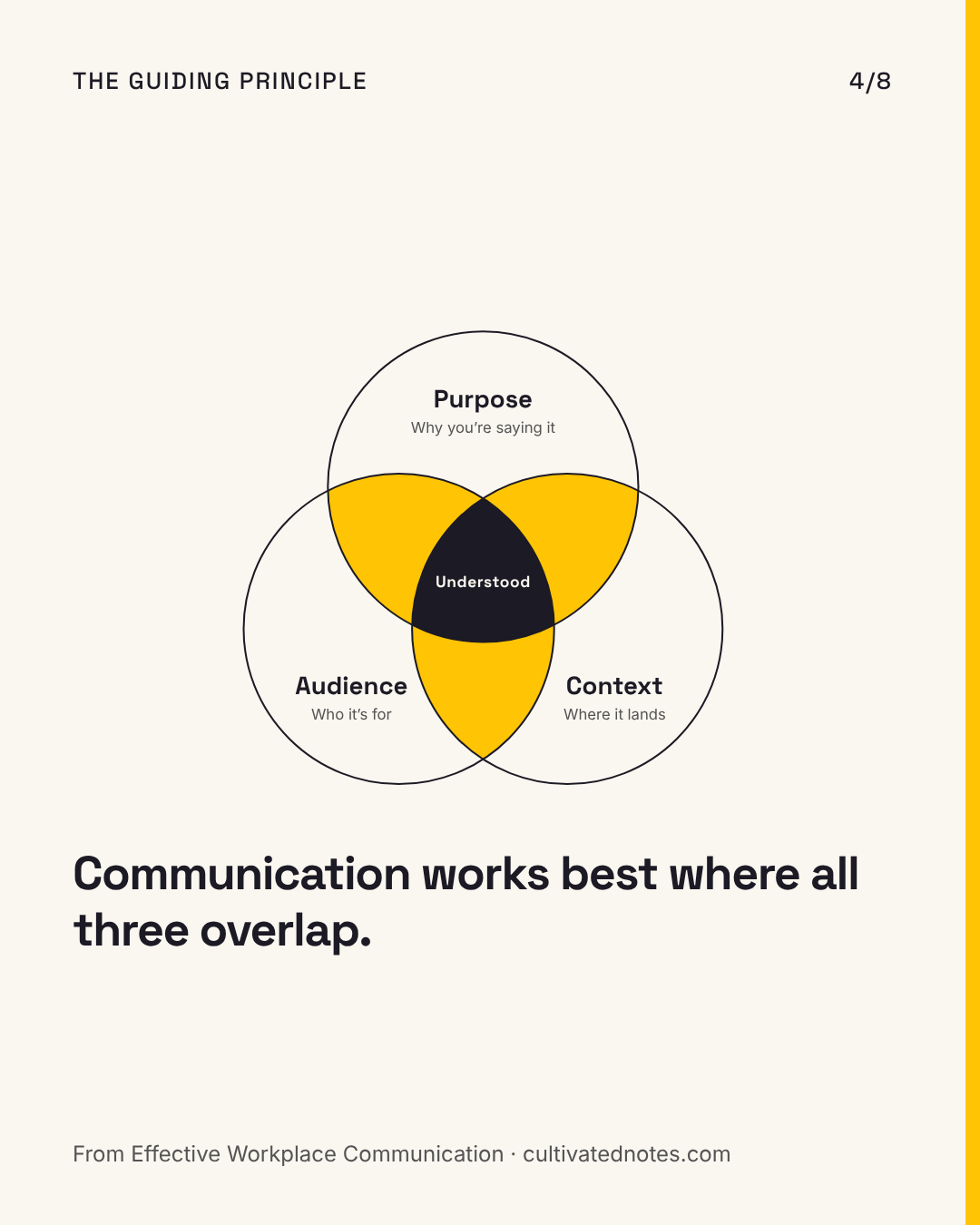
I trained in Media Science, and the first thing my lecturer taught me has held up ever since: every act of communication has a purpose, an audience and a context. Most of us think about one of them. Getting all three right is enough to set you apart.
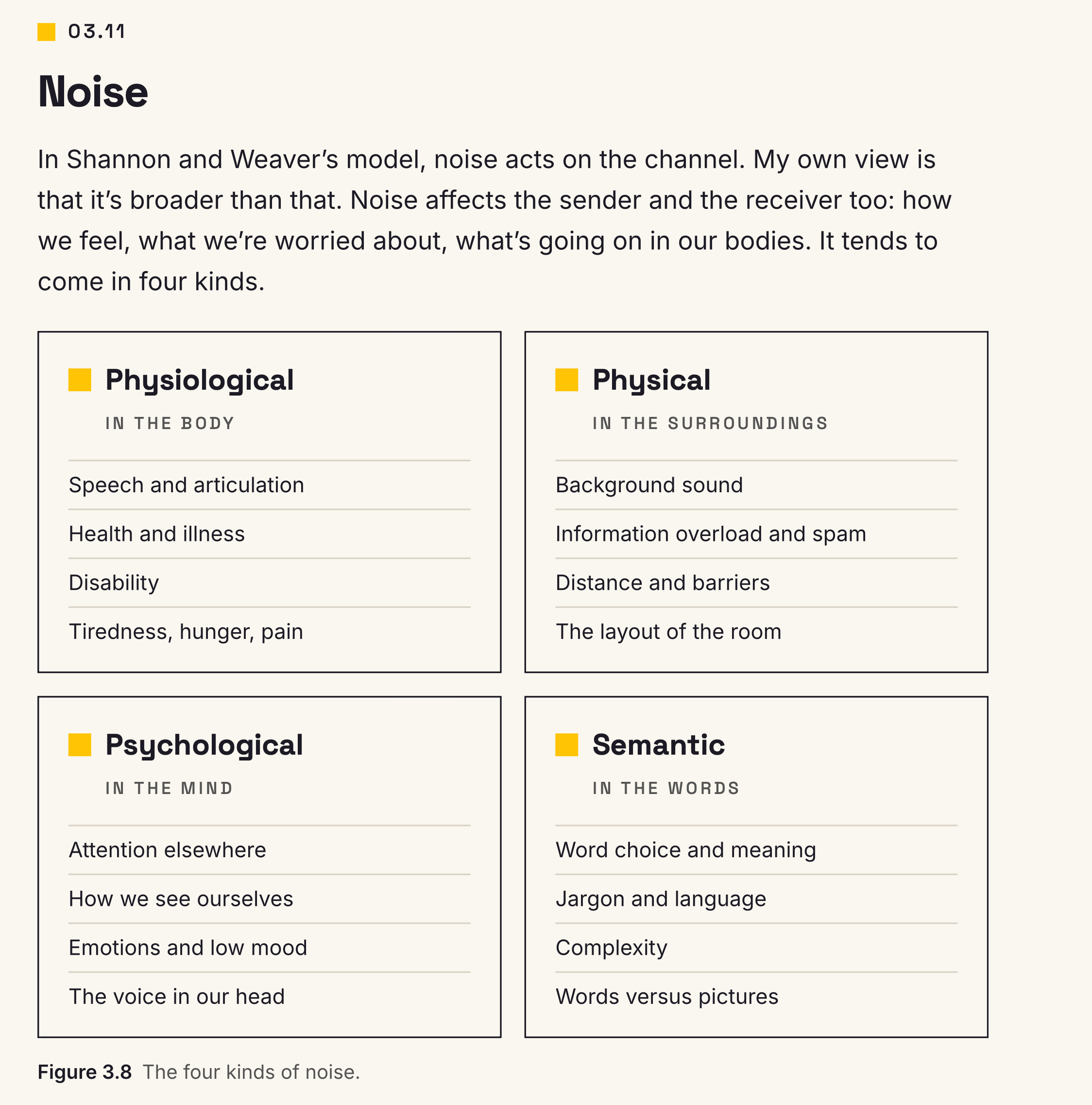
On top of that sit ten elements, small habits good communicators share, each with something to practise.
The guiding principle
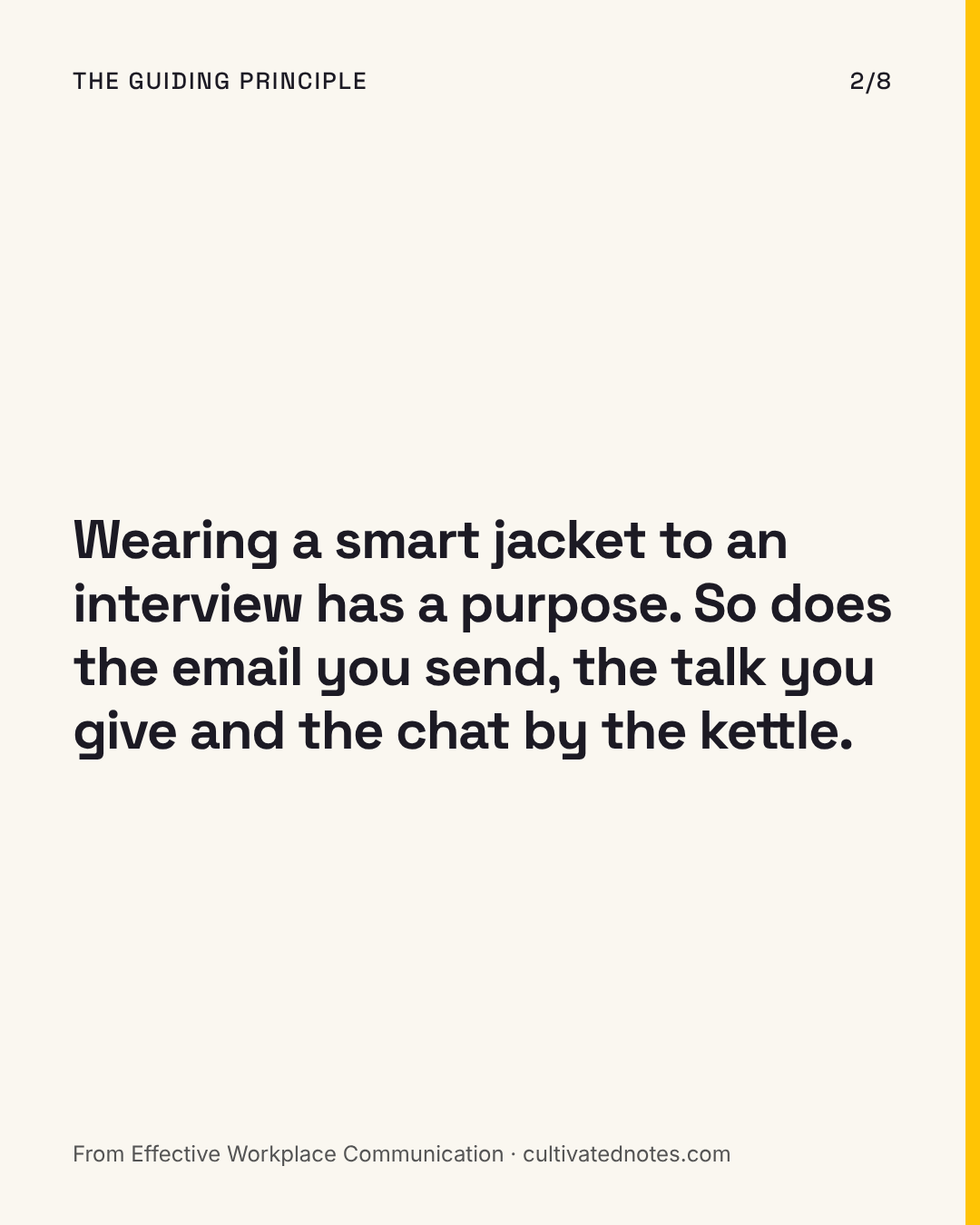
All communication has a purpose, an audience and a context.
Built on it: the ten elements
- 01Be enthusiastic
- 02The receiver does the communicating
- 03Stories go where facts can’t
- 04Don’t waste people’s time
- 05Practice makes permanent
- 06People remember how you made them feel
- 07Your body is talking too
- 08People listen to those who sound like them
- 09How you feel is how you communicate
- 10Listening is the greatest compliment
What’s inside
Images from inside the workbook
A workbook, not a book
This isn’t a book to read, nod at and put back on the shelf. You’ll draw yourself in thirty seconds, keep a colleague talking with nothing but a nod, learn the colour of someone’s eyes, plan your next meeting’s agenda and rewrite your last email so the request comes first.
Every chapter ends with pages to write on, and a two-page cheat sheet keeps the whole thing on your desk.
The new edition is rewritten from the first page to the last. The research is checked against what the evidence says today, the diagrams are redrawn, and it comes with DISC at a glance, a three-page sheet for spotting someone’s style and adapting to it.
Who it’s for
Anyone whose work depends on being understood, which is almost everyone’s.
It’s especially useful if you’re early in your career and finding your voice, newly leading a team, living in your inbox, or spending half your week in meetings that go round in circles.
Questions people ask
Is it a course?
No. It’s a PDF workbook you work through at your own pace. It’s the companion to The Everyday Communication Workshop and covers the same ground in the same order, so you get the workshop’s structure without needing to be in the room.
I bought an earlier edition. Do I get this one?
Yes. Everyone who bought an earlier edition gets this one free, through the download link in your original receipt or the email I’ve sent to buyers.
Can I print it?
Yes. It’s A4 portrait, and the exercise pages at the end of each chapter are designed to be printed and written on. So is the cheat sheet.
How long does it take?
There are ten chapters. Many people work through one a week and try the exercises in between. The ideas stick when you use them at work, not when you finish reading.
Can I bring this to my team?
Yes. If you’d like these ideas in a room with your team, The Everyday Communication Workshop is the version I run in person, and teams leave with something real to keep.
About Rob Lambert
I’m Rob. I’ve spent twenty years inside organisations, as VP of Engineering, VP of HR, Head of Business Agility, and independently, studying how ideas become value, and where they don’t.
Before that I trained in Media Science and worked as a journalist and editor. I’ve run the workshop this book comes from more than two hundred times.
Nothing borrowed, nothing installed. Just what I’ve seen hold true across teams of one, six and sixteen thousand.
All communication has a purpose, an audience and a context.
Learn to get all three right, and practise until it’s simply how you work. 125 pages, ten chapters, exercises in every one.
A4 PDF · DISC at a glance included · No. 03 in the seeing series · New edition, October 2026
More from inside