There's a camel in the room
Management by committee rarely looks like a committee. It looks like a kind manager who wants everyone heard. On keeping the kindness, adding a decision, and a car that seats four in ten feet.

On management by committee, a car that seats four in ten feet, and why the kind thing to do is let someone decide.
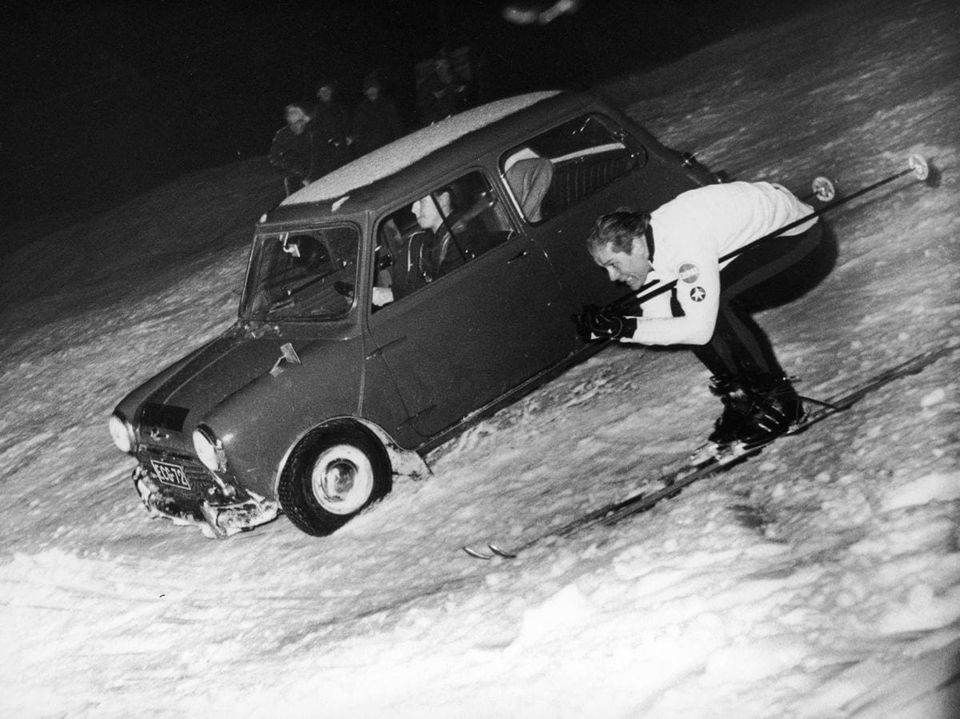
The original Mini is about ten feet long and seats four adults, which still feels ridiculous. I used to own one, and despite being six foot three, I remember finding it surprisingly spacious.
Issigonis, the Mini's designer, is often credited with one of the great observations about work: a camel is a horse designed by a committee. Nobody has ever quite established that he said it, of course, and there are earlier appearances of the line, rival claimants and a respectable amount of scholarly disagreement about its origins. There's something rather pleasing about a quote about committees requiring so much committee work to establish its authorship.
Whoever came up with it first, the joke has endured because we recognise the camel. We've all seen something that started out promising and emerged from a lengthy process of consultation looking rather different from what anyone originally had in mind.
Good intentions, unfortunate camels
Management by committee doesn't always involve a committee, a meeting room or even a particularly large group of people in suits. Sometimes it's simply a manager trying very hard to do the right thing by everyone, making sure nobody feels overlooked and taking care not to ride roughshod over the people who have to live with a decision. I recognise the instinct because I've felt it myself, and there's a great deal to admire in it.
Asking people what they think is good management. It's how we discover what's really happening, uncover the problems that aren't visible from our desks and give people a stake in the work. The trouble begins when listening becomes a prerequisite for moving, and the desire to include everybody turns into a requirement to satisfy everybody.
It rarely happens all at once. You want the team to be on board, so you wait for agreement, and when agreement proves elusive, the proposal gets softened until nobody has much left to object to.
Alternatively, you decide to have a conversation with every person individually before making the call, which sounds admirably wonderful until the conversations have consumed a fortnight, the original problem has acquired three new problems and everyone is wondering why nothing has happened.
My favourite version is the decision that everybody appears to support, right up until they leave the room. I once saw a leadership team agree to move the entire business onto a single cloud platform. There was plenty of nodding, the discussion seemed conclusive, and for a few minutes it looked as though we'd achieved the rare and beautiful state of collective agreement. Then everybody went back to their desks and carried on using the platform they'd preferred all along. The decision had been made, but nobody had really taken responsibility for making it happen.
It was an excellent illustration of the difference between getting people to agree in a meeting and helping them commit to doing something together.
Disagreement is a useful thing
In twenty years of leadership, I can't remember a strategic decision that everyone genuinely agreed with, and I'm not sure I'd be particularly reassured if I could.
Decisions worth making tend to involve trade-offs, uncertainty and competing priorities, which means sensible people can look at the same situation and reach different conclusions.
If everybody agrees immediately, perhaps the decision is unimportant, perhaps the ambition is too modest, or perhaps somebody has decided that keeping quiet is easier than sharing what they really think. That's far more common than it should be.
Disagreement is where much of the useful information lives. It gives us the chance to test our assumptions, spot the things we've missed and make a better decision than any one of us might have made alone. The aim isn't to eliminate disagreement but to make good use of it, while there's still time to change our minds.
One phrase I keep coming back to is disagree and commit. It's associated with Scott McNealy at Sun Microsystems, has parallels in the management thinking of Intel's Andy Grove, and is now familiar through Amazon's leadership principles. The underlying idea is refreshingly practical: people should be able to express their concerns honestly, have those concerns taken seriously and contribute to the discussion, but once a decision has been made, the team gets behind it, including those who would have chosen differently.
That doesn't mean pretending the decision is perfect, abandoning your judgement or promising never to raise the issue again. It means recognising that a decision made in good faith deserves a proper chance to work, and that the time to challenge it is not an excuse to avoid helping it succeed.
It's a lovely phrase, but phrases are the easy bit. The harder work is creating the conditions in which people can disagree without feeling disloyal, understand how decisions get made and trust that their contribution matters even when their preferred option isn't chosen. Put that into practice and disagreement becomes a source of strength rather than a permanent reason to wait.
Whose decision is it, anyway?
There's a question that can clear a surprising amount of ambiguity from a difficult discussion: whose decision is this?
We often assume that decisions are being held up because people have strong opinions, and certainly there are plenty of those to go around. Sometimes the conversation becomes a contest in which everybody is trying to get their preferred answer over the line. More often, though, the real difficulty is that nobody quite knows who has the responsibility to choose, or whether choosing something without everyone's approval will be seen as an act of leadership or an act of treason.
It's a rather curious feature of organisational life that a decision can have five people responsible for making it and, somehow, nobody accountable for actually making it. And no, a RACI isn't going to help. A relatively straightforward choice gets passed upwards, referred sideways, discussed again and eventually returned to the people who could probably have dealt with it perfectly well in the first place.
Of course, some decisions genuinely belong to a team, and the best outcome comes from working through the options together. Others need one person to take responsibility, informed by the experience and expertise of the people around them. Setting direction, allocating resources and deciding what gets attention first are often part of a manager's job, even when the answers are uncomfortable or unpopular.
Being clear about that responsibility isn't an attempt to shut people out of the process. Quite the opposite: it gives everyone permission to participate honestly, because they know the boundaries of the discussion and what will happen when it ends. People can challenge assumptions, offer alternatives and explain what concerns them without having to negotiate the decision itself through an endless series of informal vetoes and high flying opinions without evidence.
A manager who says, "I want to hear what you think, and I'll make the decision once we've worked through the options," isn't being authoritarian. They're offering people something valuable: a genuine opportunity to influence the outcome, alongside the reassurance that somebody will take responsibility for getting there.
Ask everyone. Listen properly. Then let someone decide.
A simple way to decide together
For asking everyone without waiting for everyone.
Say what's being decided, and who decides it. Name the decision and its owner before anyone starts discussing it.
Ask the people who know. Context, experience and the people who'll live with it — not a headcount.
Bring two or three real options. A shortlist invites thought. A long list invites a sub-committee.
Decide, and say why. A decision closes options. That's its job.
Disagree and commit. Concerns are heard and kept. Then everyone gets behind it, and you get on with the work.
Four seats, ten feet
Whatever Issigonis did or didn't say about camels, the Mini remains a rather good illustration of what can happen when somebody has the clarity of purpose and the authority to bring an idea to life. Its compact proportions, transverse engine and front-wheel-drive layout helped make extraordinary use of a small amount of space, and the basic arrangement went on to influence generations of small cars. It's also a hoot to drive.
The achievement wasn't that the Mini pleased absolutely everybody, or that every decision involved in its creation was beyond criticism. It was that a clear idea was turned into something real, distinctive and useful, with the compromises and constraints worked through in service of the overall ambition. That might actually be one of the main reasons decisions become so hard to make – the organisation doesn't have a story of the future to align people.
Good work needs plenty of voices, and the more complicated the problem, the more valuable those different perspectives can become. But collaboration needs somewhere to go and land, and that means somebody must eventually bring the discussion to a close, look at the options, makes a decision and give the idea a chance to prove itself in the world. We can keep listening as we go, pay attention to what happens and revisit the decision when the evidence tells us we should.
Letting someone decide isn't the opposite of collaboration. It's the point at which collaboration becomes alignment, then momentum.
And if you're the person responsible for making that call, you don't need to arrive with every answer or guarantee that nobody will disagree with you. You need to make space for the right conversations, be clear about what you're trying to achieve, explain your reasoning, listen and have the courage to move things forward.
It's a small kindness, in the end, to let people know that their voices matter and that the work won't be left waiting for everybody to think alike.
You might even end up with something rather better than a camel.
Where this sits in the Atlas
Orientation·Idea to Value·Communication·Creativity & Climate·Learning