Idea to Value (Physics)
How ideas move to value — the gap, the cost, the runway, and the learning. Articles in this layer explore the systemic forces that determine whether investment produces outcomes.
Most organisations think they're managing projects, products or people. But what if the thing being managed is the idea — and everything else is infrastructure?
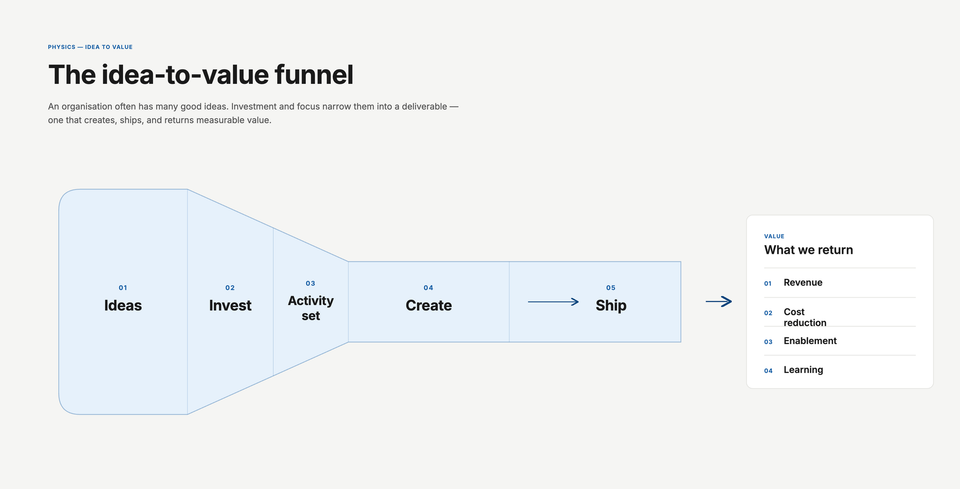
A product team had twenty million pounds and until year-end to turn it into something people would pay for. Then two other teams' good work landed on top of theirs — and someone had to choose which value moved first.
Most meetings that fail aren't badly run. They produce agreement instead of alignment — and the difference between the two is what people do on Thursday.

Most organisations say they want to turn ideas into value and rarely manage it. Writers do it for a living. Here's what their craft teaches us about keeping an idea's meaning alive, from seed to shipped work.

I was in a room of small business owners when one of them asked me to explain how ideas become value.

I thought I was researching old printing presses. Instead I found myself studying operating systems. A journey through the archives of the GPO, Braun, Lufthansa and the BBC — and what they were really building beneath the surface.
Portfolio began as a leather case for carrying papers. Where the word came from, how its meaning changed — and what a portfolio really is at work.
Progress isn't movement — it's seeing. What stop-motion animation reveals about how your ideas actually become valuable.

We borrowed our language for organisations from the factory floor. But the parts that decide whether good work happens are the parts no machine can see.