Who's Looking After the Idea?
We've got very good at managing work. We're less good at looking after the ideas the work is for. Could AI help with that — not as a project manager, but as a curator?
I remember a stunning idea that became a write-off in one company. I'm sure we've all got similar stories.
It was a platform to let customers serve themselves. It was much needed. Every early sign was good. Customers had a real need and expressed a clear desire for it. They'd happily spend some money on it. The case was rather clear. People were excited about it, which in a large organisation is rarer than it should be.
Then the idea met the way the business worked.
The exploratory work baked into the plan went first: the experiments and customer conversations that would have tightened the idea. They didn't fit the budgeting proposition process. Experiments and capital investment were two different processes.
In its place came hard and fast early requirements – of which almost all of them were based on assumptions.
As word got around about a new platform to rule them all, other parts of the business threw something else into the mix too. Each one reasonable on their own but now this simple solution was bloating before anyone had even done any building of it. It barely scraped the investment round and delivery against the budget seemed unlikely. One feature became ten. Ten became hundreds.
It's like starting out with an idea for a kid's book and ending up writing War & Peace. We've all done this in our own lives too, no doubt. Well, I have. I once set out to fix a broken drawer and ended up renovating an entire cabinet, much to the annoyance of my wife. And my bank manager.
In the end the platform was so complicated, so feature rich and so overwhelming that the customers it was built for didn't want it. A year of a hundred people's working lives, and millions of pounds. Written off.
Nobody was incompetent. Far from it. It worked peachy. It was legit great tech. It ran smooth. Nobody set out to build something nobody wanted. Quite the opposite. Everyone was busy. Decisions were made, requirements worked through, dependencies resolved, compromises negotiated, governance governed and metrics rippling in the right direction.
The work progressed. And somewhere along the way, the original idea became a shadow (a larger shadow) of its former self.
I don't think that year was wasted. A hundred people learned a great deal, and some of it will have gone on to make other things better.
But it's the common scenario – the work was managed – and managed well. The idea wasn't.
Most organisations are a bit like this. They can spend millions on something, employ hundreds of people to make it happen, hold thousands of meetings about it, define everything, and still have very little shared understanding of whether it was, or still is, a good idea.
Which is quite an achievement, when you consider that almost everything we do at work began with someone having an idea.
An Idea
An idea is a form of seeing. First we notice something: a customer struggling with a process, a gap in the market, an annoying inefficiency everybody has learned to live with, something inspiring from the world around us.
Then we imagine what could be: the gap filled, the process fixed, the customer no longer struggling. The work sits between the two. At Cultivated, we call it the messy middle.
We've become very good at managing that work. We have systems for allocating it, tracking it, reporting it, escalating it, governing it and occasionally celebrating its completion. Dashboards showing the progress of things whose original purpose has gone a little hazy. Business cases written with great confidence about benefits nobody has worked out how to measure, or are even realistic. And no shortage of new frameworks for doing all of it.
What we're less good at is managing the idea itself. Whether the thing we're making is still true to what we first saw. Whether the meaning has survived the journey. And if it has changed, was it for the better?
Ideas should change shape as they become real. That's often how they get better. But there's a difference between an idea that grows and one that becomes an expensive shadow of itself, and most of our tools can't tell the two apart.
A chief curator
So here's an idea worth playing with. What if AI could help look after the idea?
Not by automating the management of work. Nobody needs a new machine that chases deadlines, assigns actions and sends passive-aggressive messages about overdue tasks. Nor another chatbot with access to the corporate document library. Not something to replace people, jobs or human led activities either.
Something closer to a curator.
A curator does something different from an administrator. They don't just maintain a collection. They interpret it. They make connections and draw attention to things we might otherwise miss. They know that what an object means depends on what sits alongside it and the story it tells.
A good curator doesn't make a collection more interesting by adding everything they can find. They help us see why what's already there matters. And occasionally they bring in one thing that changes how we see the whole.
An organisation's curator would understand its ambitions, its strategy, its economics, its customers, its research, its people and what it has learned. Not a search engine, but something that uses all of that to help people think. Above all, it would hold the context that gets lost as an idea travels: the original intent, the story, the reason we said yes, the outcome we hoped for, what we've learned since and the work happening around it.
Along the journey
At the start, someone has an idea. Instead of rushing it into a business case, they could explore it. What problem might this solve? Have customers been asking for it? Are we already doing something similar? What did we try before?
The curator might turn up research from another team, an experiment from two years ago or a customer conversation that makes the opportunity clearer. It might find the idea is already being explored elsewhere, which saves everyone reinventing the wheel, or at least the expensive bits of it.
When the idea becomes an investment, the questions change. What are we expecting to achieve? What's the evidence for our assumptions? What else could we do with the money and the people? Are we investing in the right problem, or just the most visible solution?
In the messy middle, it might see what no individual can. A requirement that contradicts the original intention. A team doing something remarkably similar down the corridor. A dependency nobody has spotted. Organisations are full of useful information that's hard to find at the moment it matters: decisions made months ago, research buried in a folder, lessons from a project nobody remembers. The information is usually there. The problem is that we often don't know when it's needed.
In the self-service platform story, this is where a curator might have counted most. It could have noticed the moment the exploratory work was cut, and what that meant for the idea (although I suspect everyone involved already knew). It could have set the growing list of features against what customers had actually asked for, and asked whether this was still the thing we set out to build.
And when the work is done, it could help us compare what we expected with what happened. Not just whether we delivered on time, but whether we created the value we thought we would, and what we should carry into the next idea. Perhaps value isn't only the end of the process. Perhaps it's the information that makes the next one better.
What should I be paying attention to?
Imagine asking it one simple question: what should I be paying attention to?
Not which tasks are overdue, or what the plan says comes next. But, given what we know about the idea, the outcome we want, the work underway and everything going on around it, what's actually worth my attention?
It might suggest the team is spending too long on a secondary feature. It might point out that a decision made three months ago is now holding everything up. It might surface a conversation in another team that changes the direction of the work.
Or it might remind us of something we already knew but hadn't taken seriously.
Which brings me to the harder part.
Two harder questions
So far, so appealing. But there are two problems I can't get past, and I suspect they matter more than the technology.
The first is that, a lot of the time, people already know.
On most projects that wander, somebody in the room can see it. The feature is pointless. The scope has got silly. The customer won't want this. They don't say it, or they say it once and get nowhere, because saying it has a cost. It's their budget, their boss's favourite requirement, their next promotion – there's a consequence for speaking the truth. It's why Watermelon reporting exists.
The problem isn't that nobody can see. It's that maybe there's fear in speaking out.
So perhaps the curator's real value isn't what it can see. It's what it can say.
It has no budget to protect, no promotion pending and no awkward relationship with the head of the department whose work it's questioning. It can put the uncomfortable observation on the table as evidence rather than opinion: here's what customers asked for, here's what we're building, here's how far apart they've become.
That doesn't make it brave. Someone still has to act on what it says. But it might make the conversation a great deal easier to start.
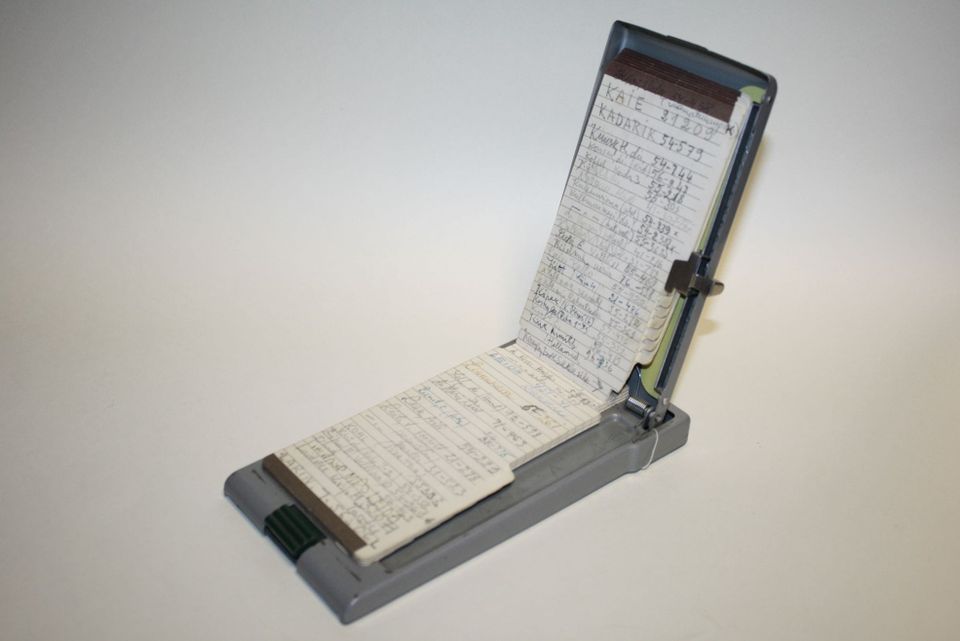
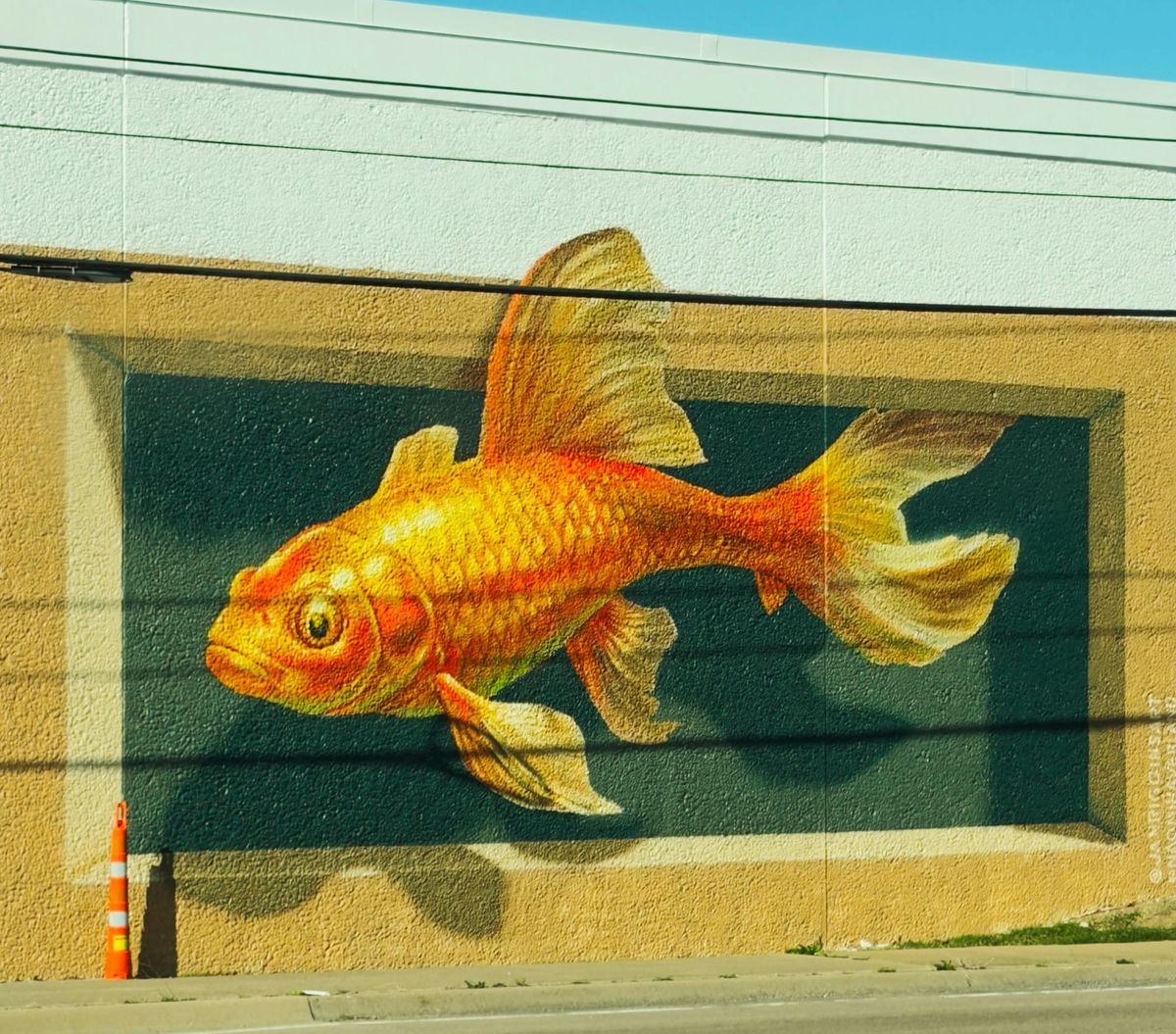
The second problem is that the curator only knows what's written down. I often describe AI as a goldfish with a good notebook. And if it's not in the notebook......
And the why behind most decisions mostly isn't written down. The real reason a feature went in, whether a promise was made in a corridor, or whether it's a compromise to get a sign-off or a promotion, or a secret project through. These live in people's heads and it often leaves with them. A curator working from documents alone would have a tidy, confident and partly fictional picture of how the idea got here.
There's no clever fix for that, and I'd be wary of anyone who says there is.
But it does point to what a good curator would have to do. It would have to ask. When a decision is made, it would ask why, and keep the answer. When something changes with no recorded reason, it would notice and go looking for one. And it would be open about the limits of what it knows: here's what I can see, and here's where the trail goes cold.
A curator that admits the gaps is far more useful than one that fills them in with hopes, dreams, wishes and best guesses.
Not another governance system
There's a third problem, and it's the one I'd worry about most.
It would be easy to build an AI that scores every idea against the strategy, assigns a viability rating, calculates an alignment score and produces a recommendation. Before long, we'd have a machine that makes the organisation more efficient at approving things that look like the things it already approves.
Which would be a super strange use of a technology that's quite good at helping us see what we hadn't thought to look for.
Alignment sounds reassuring. Everything pointing the same way. But it shouldn't mean every new idea is obedient to what we already believe. When something interesting doesn't fit the strategy, that might be a reason to set it aside. It might also be a reason to look again at the strategy.
There's a difference between an organisation that is aligned and one that is simply very good at agreeing with itself. A "Yes" person in digital form.
The curator isn't there to enforce alignment. It's there to help us understand it: to make the relationship between what we imagine, what we invest in, what we make and what we achieve a little more visible.
A perspective
A curator isn't expected to know everything or make decisions. Their contribution is the quality of their attention, how they read what they see and their insights about what's worth bringing into the conversation. And how they help others to also see what's important.
An AI could be good at this. It could hold more context than any one person, connect across disciplines, find evidence quickly and keep comparing what's happening with what the organisation says it wants.
But its best contribution might not be the answers. It might be the questions it helps us ask, and the ones it's willing to ask on our behalf.
What are we trying to make better? What have we overlooked? What do we already know? What are we assuming? What's worth our attention? What did we learn?
Imagine anyone in an organisation being able to ask those questions, at any point between idea and value, and getting a thoughtful, informed, honest answer back.
Not an instruction. Not an approval. Not a decision. Not another process to satisfy.
A perspective. Another perspective to weave into our very own human judgement, taste, insights, creativity, observations and sense of what needs doing next.
The self-service platform in this story certainly wasn't short of management. What it needed was someone looking after the idea, with the freedom to say so when it started to slip away.
Perhaps that's what AI could be: not another way of controlling work, but a useful companion in the business of making more ideas more worthwhile.
And of course, you don't need AI to do some of this, you could have your own chief curation officer.
Notes on this essay:
I feel I should add a small disclaimer.
I, like everyone else, am still wrangling with what AI can, or does, bring to the table. I'm of the position that it should free people up to use their nature; curiosity, interest, compassion, creativity, taste, judgement.
Almost everything we publish here at Cultivated is about those very human conditions. But, we also feel AI can contribute to removing some of the more mundane, tedious and frankly mind numbing activities that we all have to do sometimes. That's why we're exploring it in essays like this.
And underneath this though, is the fact that AI can be so stunningly, confidently, wrong. Let's remember, it's a goldfish that doesn't remember much, with a good notebook. And do we all want to spend our days updating the notebook.....?
Where this sits in the Atlas
Orientation·Idea to Value·Communication·Creativity & Climate·Learning