The tongue of the woodpecker
Leonardo's to-do list included working out the tongue of the woodpecker, and popping to the stationer's. On keeping a catalogue notebook, the one place where thinking is allowed to be unfinished.
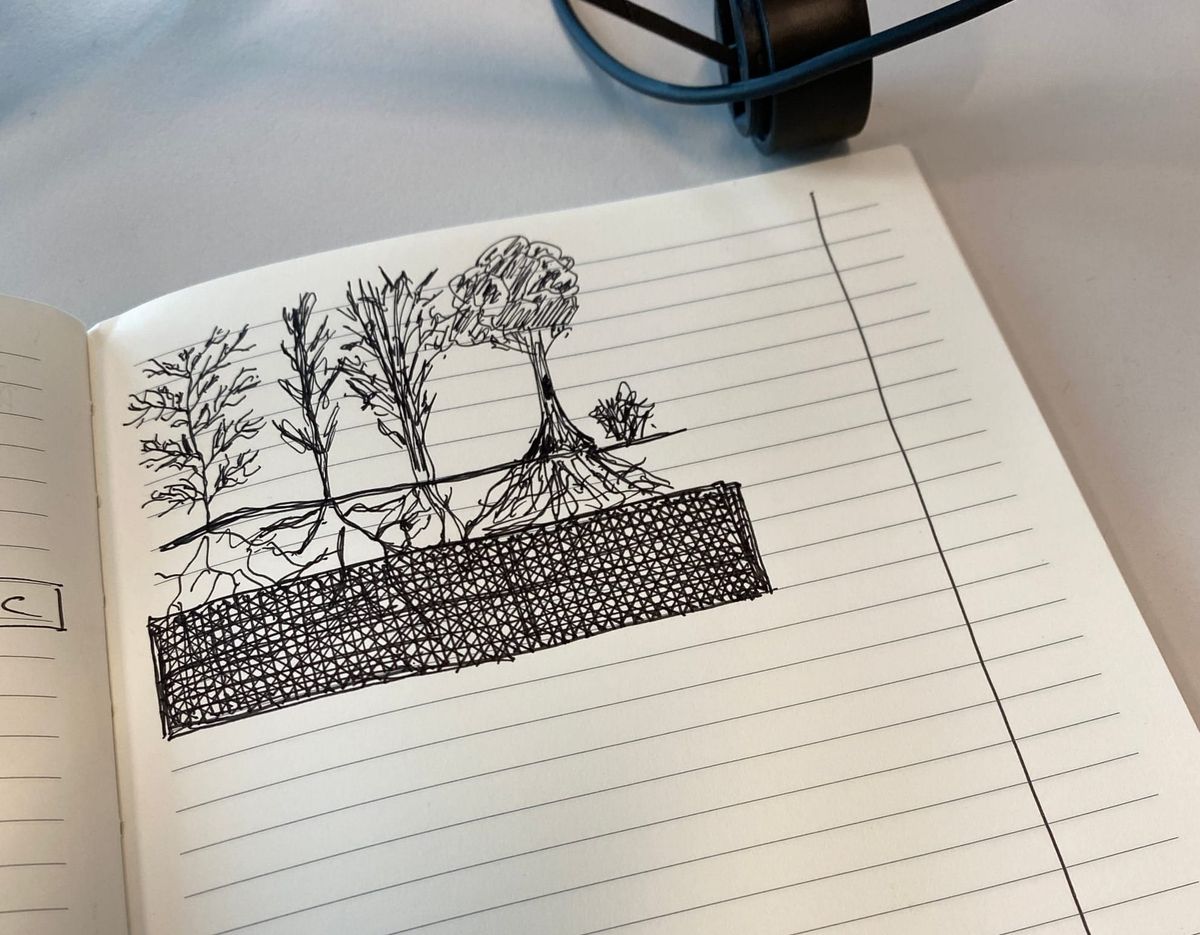
Leonardo's to-do lists, Darwin's "I think", and a reporter's notebook full of Earl Grey: on keeping a catalogue notebook, the one place where thinking is allowed to be unfinished.
Updated 21 Oct 2026.
The Catalogue Notebook
Somewhere in Leonardo da Vinci's notebooks there is a to-do list that includes getting hold of a skull, studying the jaw of a crocodile, and working out the tongue of the woodpecker. It's a remarkable read.
In another list, from his years in Milan, he reminds himself to ask a merchant how people travel on ice in Flanders, to draw a map of the city, and to pick up a book about Milan's churches from a stationer's.
Even Leonardo needed to pop to the stationer's. I find this enormously reassuring as someone who co-hosts a podcast about stationery.
My weekends and evenings often disappear down rabbit holes of old notebooks like these. Darwin's notebook B, from around 1837, has a scrappy branching tree on one page with two words written above it: "I think." That's how one of the biggest ideas in science starts in its author's own notebook. It starts with a doodle and a tentative "I think", rather than a theory or a breakthrough.
Benjamin Franklin made himself a little book with a page for each of the virtues he wanted to work on, and marked his slips with small black spots. Such an honest system, even if he didn't achieve all of the virtues each day.
None of these are plans, exactly, and none of them are diaries. They're something in between: a place where thinking is allowed to be unfinished.
Somewhere to put the half-thoughts
I think we all need somewhere to put half-thought things. Especially as most of our working days leaves little room for that.
My calendar wants decisions, meetings and demands my finite resources. Documents want conclusions, or edits, or rewrites. Emails want a reply in the next four minutes otherwise I'll receive another one chasing the first.
Even journaling, if I'm not careful, turns into a structured exercise with prompts and a streak to protect. There's very little room for a thought that's still in motion: not decided, not useful, not anything yet.
So I keep a catalogue notebook, and I have for years.
Mine, for the record, is any notebook from the 140 I have in the writing bureau. Currently, it's a Dingbats reporter notebook that makes me feel like a policeman, scribbling important notes about researching the best Earl Grey tea available in Tescos, or what a current observation might mean for work. Rather less important than I imagine gets jotted in a police officer's notebook.
But, it goes where I go.
What goes in
Everything, more or less, and in no particular order. That's the point.
But I do think there are ways to hold what we put in it. We reflect backwards, we plan forwards, and we capture in the now. A catalogue notebook holds all three, often on the same page.
A meeting reminds you of something a mentor once said. That makes you reconsider a decision from last week, which suggests a small experiment worth trying next month. Most tools would split that chain across a calendar, a journal and an app. The notebook keeps it together, because that's how it arrived in your head.
So on any given page you might find:
- a half-formed plan
- a reflection on a tricky conversation
- a quote from a book read on the train
- three questions for a coaching session
- a sketch of something noticed on a walk
- a reminder to pop to the stationer's
It isn't tidy, and it isn't meant to be. My learning notes live elsewhere, in a much more organised system with folders and tags and a degree of discipline I'm rather proud of. This is the other notebook, the messy one, and I'd argue it's the one that has most of the ideas.
Why the mess works
There's a rather counterintuitive bit to this. A notebook like this is a very inefficient way to be productive, and a wonderfully efficient way to have ideas.
Most of what goes in won't matter. That's fine, because it costs almost nothing to write down. But every so often, two scraps that don't seem to belong together end up on the same page, and something new appears in the gap between them.
A structured notebook, with its sections and its prompts, keeps each thought in its own compartment, so those scraps don't meet – and that might be right for you. But here they sit next to each other, intermingling and cross pollinating. I've written before, that proximity to people is where a great deal of learning happens. It seems to work for thoughts and ideas too.
There's a second trick to it though, which is interesting. Writing something down forces you to choose words, which forces you to think a little more precisely than you would otherwise. And once you have somewhere to put observations, you tend start noticing more of them. The notebook doesn't just record the noticing. It encourages it. Isn't that grand?
Then there's reading back, the flicking through, the synthesis.
Alongside the catalogue, I keep a ledger of entirely boring facts – an entry per record. And yes, it's actually kept in a financial ledger. Read back across a year, it shows patterns I wouldn't have spotted in the moment. A productivity system is designed to forget a task the moment it's done. A notebook is designed to remember, and the remembering is where the surprises, connections and insights are.
You're more creative than your job title
We tend to save notebooks like this for artists, scientists and people who own a beret and carry a paint brush. But all work is creative if you look at it closely. A plan is a creative act. So is a strategy, a difficult conversation handled well, or a team that's turning an idea into something of value – which is what all teams should be doing. They're things you compose. They're things you create – which is, by most accounts, what creativity is.
A catalogue notebook is a small studio in your bag for that kind of work. It gives your thinking somewhere to live before it has to perform in a meeting.
Pop to the stationer's
Leonardo didn't publish his notebooks for others to read. Darwin's were for Darwin to read through and muse in. Franklin's black spots were for Franklin to be a better person each day. Their value lies in what they made possible for the people who kept them.
So, if you fancy it: buy a cheap notebook (my Toolkit has a whole shelf of them, and I'd start with something you're not precious about). Carry it. Write down the half-thoughts, the questions, the reminders and the things you notice. Read it back now and then.
Reflect backwards. Plan forwards. Capture in the now. A notebook is one of the few places all three fit on one page, with room left over for the tongue of the woodpecker. If that's your thing.
Where this sits in the Atlas
Orientation·Idea to Value·Communication·Creativity & Climate·Learning