While the midday sun baked the tourists, I took to the bar for a beer with the hotel manager, to find out how a large hotel full of British tourists actually runs. Hospitality is not software, or accounting, or architecture. But work is work.
What a hotel full of British tourists can teach us about huddles, handovers and getting work done
It was like a disco inferno. People writhing to the sound of techno, my kids somewhere there in the mix, me sipping an all-inclusive beer that was allegedly a Cruzcampo. The vibes were good, the music was loud, the place was partying. It's a similar story across many hotels in holiday resorts like this one in Tenerife.
I'd happily say this is not my sweet spot. I am not a dancer, far from it. My dancing style was once described as more akin to a fish out of water, flapping around. But here, right now, my family are having a great time, and I'm enjoying this unknown beer.
I've been a people watcher for longer than I really recall, although a defining moment in the 1980s cemented my tendency to notice what's happening around me and make notes of it. Holidays are no different either; they can be remarkably good places to see human connection and productivity in motion.
Of course, there'll be some who say "just chill out and switch off", to which I reply "I am chilled out and switched off" – which are exactly the conditions that are ripe for the mind to notice and ponder.
I am the most creative when I travel, whether that be for work or leisure. When in new places you are forced to pay attention to new surroundings, different cultures, different food and people you may not normally hang around. And so, with this act of noticing tends to come ideas, observations, connections and insights – all food for the curious mind.
And on this trip, I became curious about how a large hotel actually operated. So, whilst the midday sun baked the tourists, I took to the bar for a beer with the hotel manager, who had kindly given me some of his time, energy and attention, to find out what really happens in a large hotel full of British tourists, all demanding the beer, food, entertainment and service promised on the booking form.
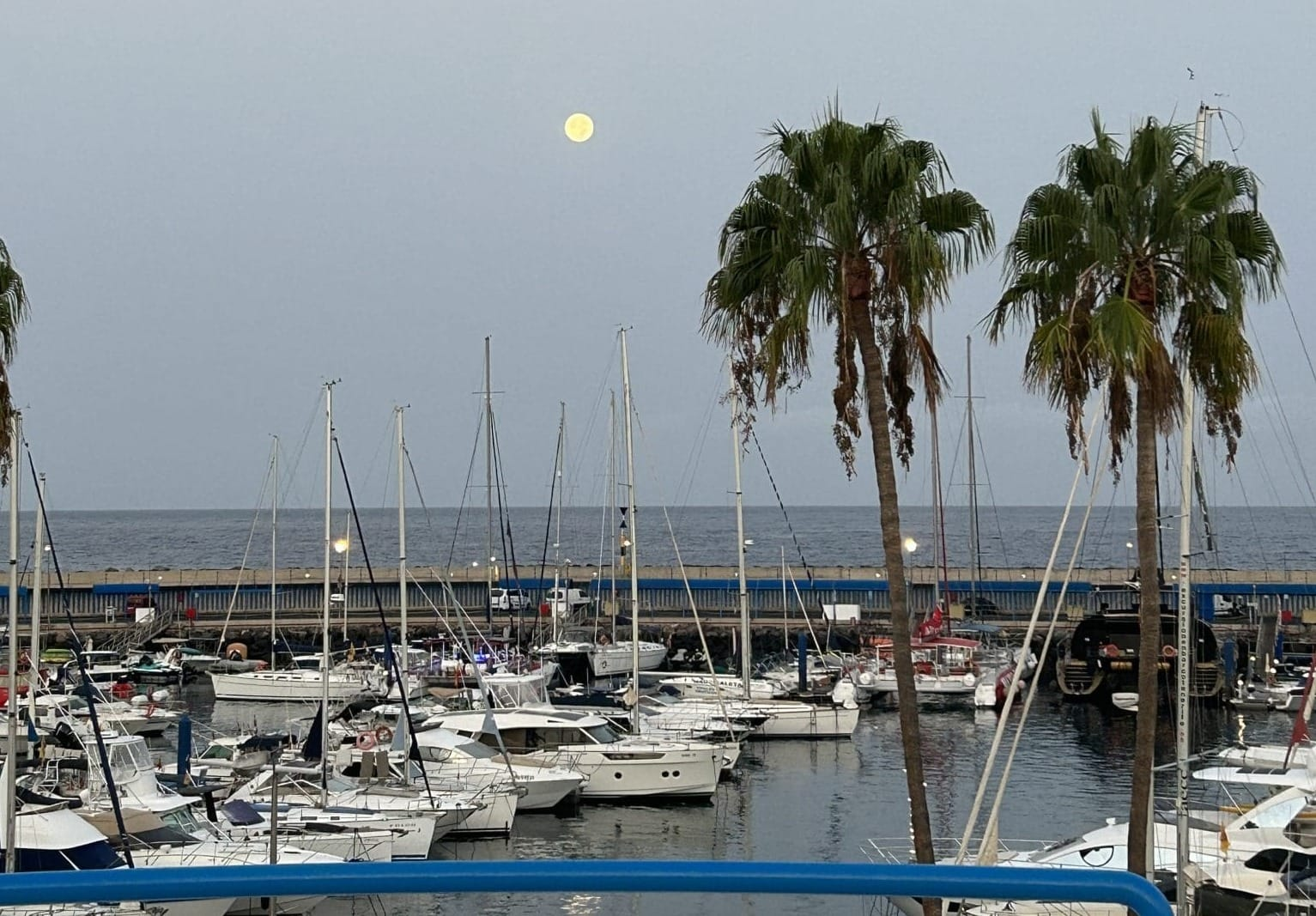
The moon still out over the harbour
Huddles are human, not agile
I'm an early riser, always have been, and don't see that stopping anytime soon. Around 6am every day I get up and go for a walk to explore the local area, get some steps in and bask in the morning sunlight. It's magical. When I return from the walks I always head to the cafe for a coffee and await the rest of my family before breakfast.
This is where we see the first insight – one the tech peeps have given a rather official name: the daily standup.
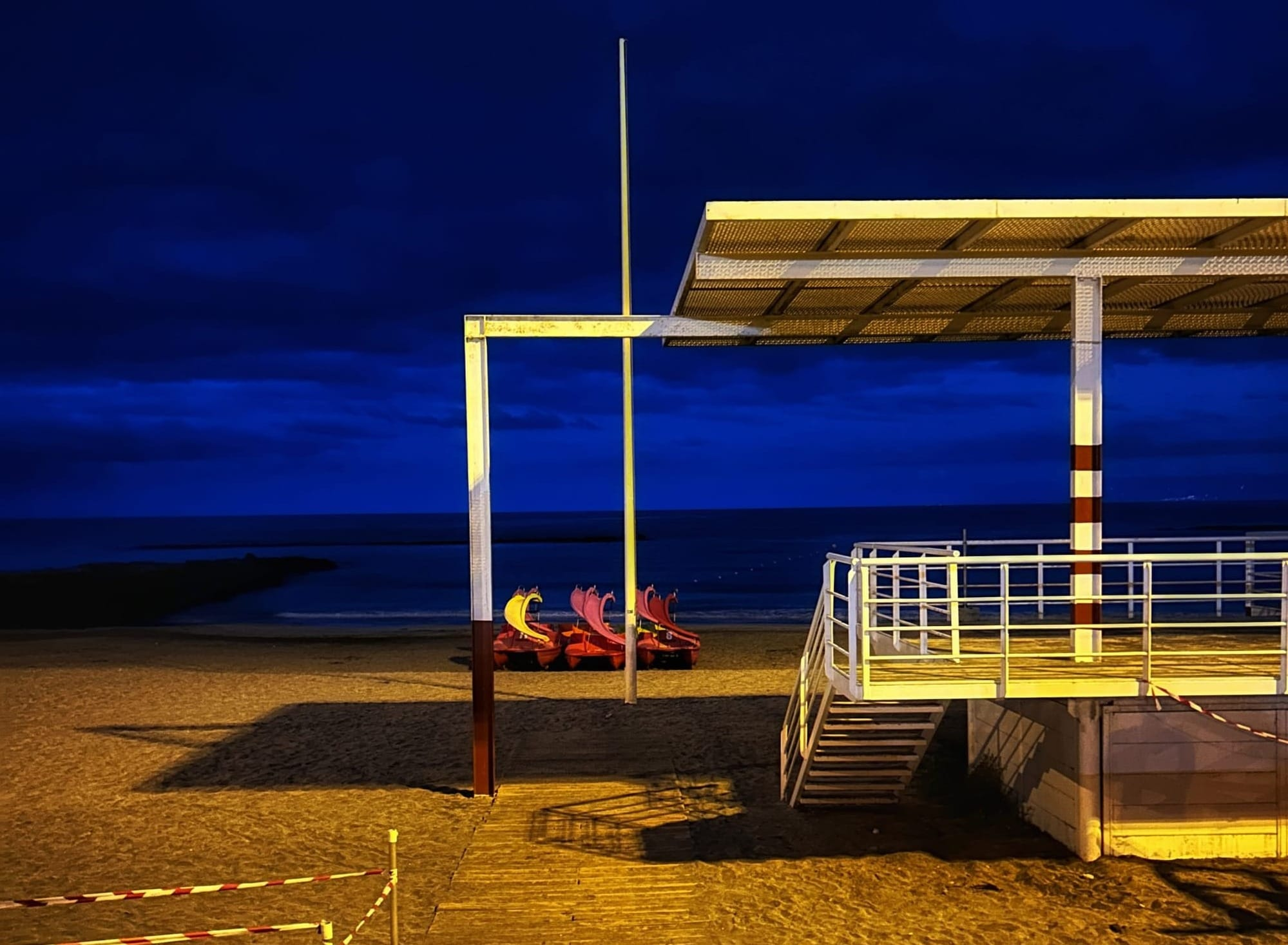
A photo from the beach - early morning
The manager at this hotel calls it a daily huddle – and they have two of them, one in the morning, and one before the day shift turns into the night shift. The heads of each department come together to align; cleaning, maintenance, food, entertainment – all present, and all aligning around the main tasks, outcomes and plans for the day.
It takes them a strict 15 minutes, and any issues are taken out of the huddle if they warrant further actions and information. Each team lead then goes to their own teams and relays anything important to align them.
In my work I am always brought in to solve what look like delivery or people problems but always turn out to be clarity and alignment issues. Even companies doing the "agile" events like standups often turn out to have little in the way of clarity and alignment. They become daily status updates rather than genuine communication opportunities to generate alignment.
Clarity first, then alignment, then momentum. It's hard to align around something that isn't very clear. It's easy to do busy action on the wrong things without alignment too. Alignment is understanding, and understanding avoids wasted effort.
The manager told me they used to trust that everyone knew what they were doing – and that resulted in lots of action, with good intent, but not joined up across the functions. He was quick to point out that the people they hired were dedicated and good, but without organisation across the functions, they didn't always know what the right thing to do was, and when. This is the same in business: provide that direction and alignment, and great people always do great work.
There's no "agile" framework or fancy name, just a huddle of humans twice a day. Clarity, then alignment, then momentum.
The heats on
Right action, immediately
After these alignment sessions the work began – fast. And I mean fast. As soon as the heads had run their sessions, literally hundreds of people swarmed across the hotel, creating the best possible service. Teams of five to seven people were the norm, and each team owned a specific part of the hotel. The cleaning teams owned areas of the hotel, working hard to ensure they were clean and free of rubbish.
The bar staff, full of joy and laughter, prepared the bar, packed the ice and tidied the communal areas. The kitchen staff were already busy prepping breakfast. The entertainment crews loaded the playlists, practised their evening show and swarmed around saying hello to everyone. Everyone knew their role, the plan for the day, and how their work connected with each other.
This coordination was not accidental. It was designed.
Real-time problems need real-time communication
The team leads all carried radios, on which constant chatter was bouncing through the airwaves. A spillage reported here, a fault flagged in a room there, a delivery arrived at the back door, more eggs needed for the omelette station, first aid needed by the pool (that's usually for one of my boys).
When something went wrong, people asked for help, listened to the radio, stopped what they were doing and fixed it if they could. The manager told me they have a one-minute response-time goal on the radio. So, if a spillage needs the cleaners, the head of cleaning is expected to respond on the radio within one minute, and articulate what's going to happen next.
He was keen to point out that a response on the radio is not the same as fixing the problem. And they have a five-minute response-rate goal on that too. It's often not met, mostly because the hotel is vast and it can take 10 minutes to get from one side to the other, but he doesn't mind that. The goal is the standard to aim for, not the measure to punish people with. He said he keeps the standard high to avoid letting their service sink to the average, and the upside is that people keep finding ways to meet the response, and the resolution, more quickly.
No queues. No tickets. No handovers. No passing the burden. No asynchronous lag. Just the good old-fashioned, and astonishingly simple, interrupt-driven work handled synchronously. As an aside, I was working with a support team who solved exactly zero customer cases on the first call. The reason was the belief by managers that all cases needed to flow through a triage, be assigned correctly, and that the queue needed scientific measurement. It resulted in a customer service process that had over 10 different stages and a typical resolution time of 10 days. 10 days... to solve something that could have been done in five minutes. We moved to an entirely interrupt-based system, where if the person answering the call needed help from the technical teams, the technical folk were expected to stop what they were doing and help.
Cases started being resolved in hours, and importantly, 70% of them on that first call. Customer satisfaction went through the roof. And the customer is the one paying for something worth paying for... and that keeps the business alive.
Work flows to someone else
Every shift prepared the ground for the next shift, always ensuring each and every shift was set up for success. The manager told me this is the essence of good manners, respect and high standards. It's also, by the way, how you keep the quality high and increase the flow of value.
The bar staff, at the end of a busy shift, always set up breakfast, ensuring there were cups ready, the coffee machines were loaded and stocked, milk was stacked up in the fridge and the alcohol was put away in favour of spaces for cakes and pastries.
The day teams prepped for the night teams, ensuring paperwork was filed correctly, the spaces were clean, all radios were fully charged and that the next set of staff could turn up and do the hard work of keeping the hotel running.
Work was treated as a relay, not a silo. One of my main pushes to every function in a business is to look at two ends of your work: where work comes from, and where work goes to. At each side you should be demanding high standards, expecting excellence and building strong relationships. If work coming to you requires deciphering, piecing together, a degree in maths to understand it, then you are creating delays, misunderstanding and the potential for wasted time, energy and attention. The same applies at the far end – whoever you give your work to should trust it will arrive with the right quality so they can pick it up seamlessly and move it forward – go see them, speak to them, and ask if you can do anything to make it better and easier for them, without, of course, taking on their work too.
This is rarely designed in knowledge work – but it matters because all customer value work crosses functional boundaries to generate that value. Working in isolation is how we end up polishing our own small corner of the business while the whole system's ability to create value ebbs away.
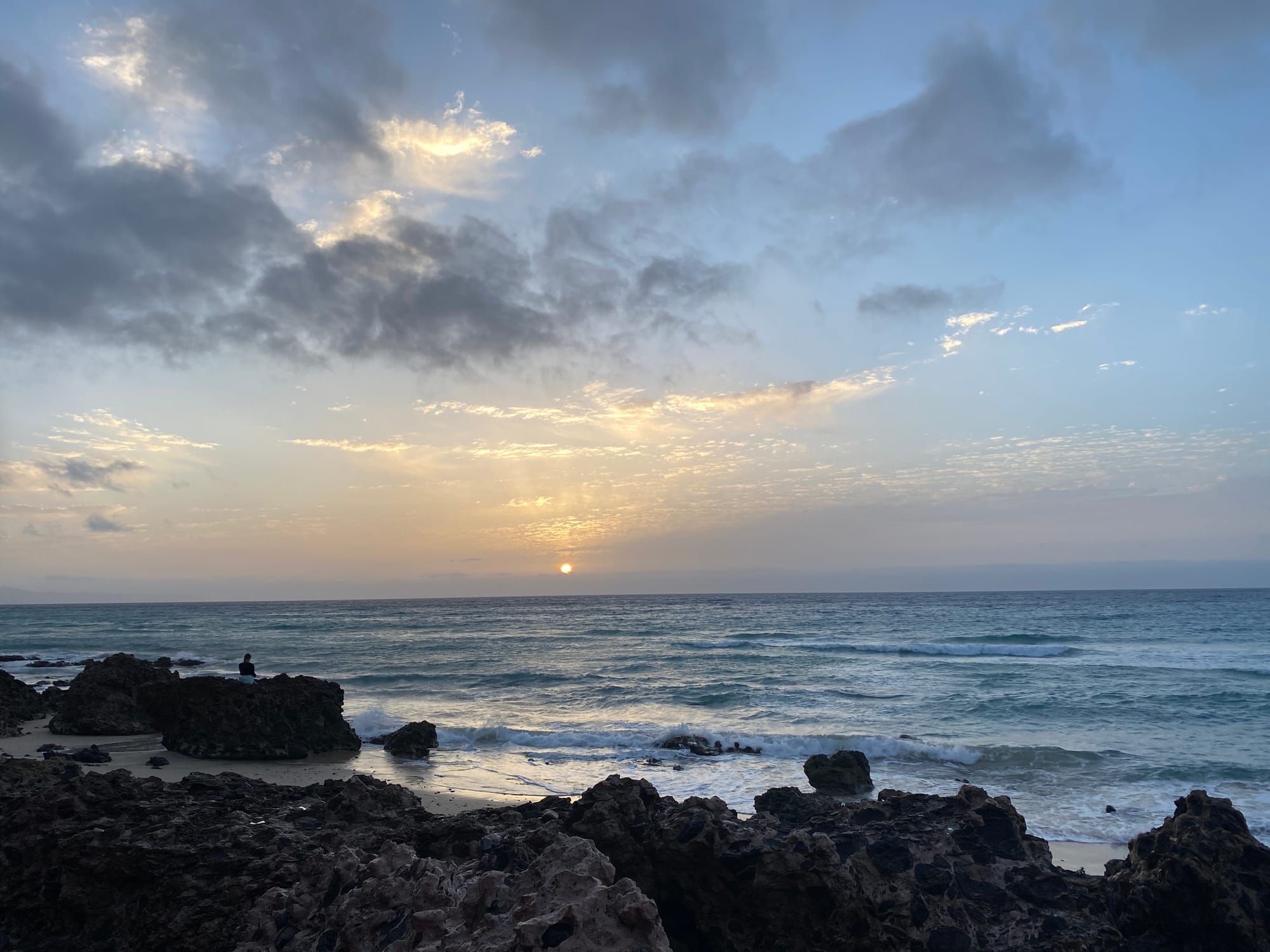
The morning sunrise, Spain
The best leaders I've observed didn't abstract work into dashboards and reports. They leaned into reality. They went to see, and engage in, the work. That's what the management team did here. They were visible, they were walking the floor, they were talking to customers, they were making notes for improvement (he showed me his notebook full of little notes on how to get better) and they were on the radios dealing with problems.
They spoke kindly to the staff, they were clear in what they expected and they were focused on providing the right service. They made problems visible, compelling, and shared. People therefore felt part of solving them.
Hospitality is not software, or accounting, or architecture. But work is work. Coordination, communication, handover, customer focus – these patterns repeat everywhere. Observing adjacent industries is one of the fastest ways to see your own more clearly.
Now, I may well go for a dance. Clear the floor, the fish is on the way.
Where this sits in the Atlas
Orientation·Idea to Value·Communication·Creativity & Climate·Learning
A gentle, image-rich reflection on work, rest and the pace we set for ourselves. Less a productivity book than a permission slip — a reminder that stepping back is part of doing good work, not a break from it.
Made to be picked up and enjoyed, in print or digital. A warm, slow read for anyone who suspects they've been going a little too hard.