Coffee with Konstantinas
A forgotten bottle of suncream, an hour to kill in a Greek taverna, and a retired schoolteacher who never stopped learning. On how to actually study — and why most of what we call studying isn't learning at all.

A forgotten bottle of suncream, an hour to kill in a Greek taverna, and a retired schoolteacher who never stopped learning. On how to actually study — and why most of what we call studying isn't learning at all.

I was trapped in Kardamena. Well – "trapped" is a strong word really. I was on holiday, on the island of Kos, and I do on holiday what I do most mornings everywhere: wake before the rest of the house stirs and go wandering, camera and notebook in hand.
There's a coastal path that runs from the hotel into town, and every morning I would set out along it early, the sea flat, calm and shimmering with the morning light. The sun still just about peaking over the horizon.

Kardamena is a lovely little place. The usual holiday stuff is all there – the tourist shops, the tavernas, the bars with laminated menus in four languages, the English pubs – but so are the more traditional bits: a scatter of proper artisan shops, a working harbour with the boats nudging against each other, and, of course, the town's special residents, the stray cats, meandering with supreme confidence, certain they own the place.

I'd made one small error this morning though. I'd left later than usual, and I'd forgotten my sun cream.
All week it hadn't mattered – I'd always been back at the hotel before the sun woke up properly – but today I was late, the morning was already hotter than any so far, and there I was, a good three miles from home with an entirely unshaded coastal path between me and safety.
Now, you might reasonably ask why I didn't simply walk it and take the sun like a grown man. But if you're built like me, the sun is not a friend. Expose any part of me that doesn't regularly meet British daylight – which is to say anything below the collar and above the wrist – and within the hour I become a walking, radiating, self-pitying lobster in a bad mood. Best avoided.
This being Greece, and this being early, nothing was open but a couple of cafés, and nowhere would be selling sun cream for at least an hour. So I did what seemed remarkably reasonable - I took a seat at a taverna by the sea, ordered a Greek coffee – thick, dark, gritty at the bottom, served in a cup the size of an egg cup, delicious and strong – messaged my wife to say I was alive and merely stranded, and settled in to wait out the shops.
And that is how I came to spend an hour with Konstantinas.

He was an older gentleman, sitting nearby, and – I at least imagined – equally there to pass the time until the sun cream became available. His English was excellent, which was rather good news, because my Greek wasn't up to much. "A beer please" is about all I can run to.
As we sat with the sun beginning to beat down on the umbrellas and a cat winding its hopeful way between the table legs hoping for snacks, he told me he'd been a teacher at the local school for the whole of his working life. Retired now, though – and this is the part that matters – not remotely done with learning. If anything he'd taken it up more seriously since he stopped being paid for it.
His name, he made very clear, is Konstantinas. With an a at the end, not an o. He was emphatic on the point, and who am I to argue. Hey, Konstantinas – you may well be reading this.
Regular readers will know I'm a deep-learning obsessive myself, so the two of us fell easily into an hour of talking about the one thing we had most in common: how a person actually learns.
I made notes. Lots of them – in the little book I carry everywhere. What follows is most of what we chatted about, between the coffee and the cats and the rattling-open shutters of the town – his wisdom, my scribbles, and a good deal of overlap.

The first thing we agreed on, more or less immediately, is the thing almost everyone gets wrong.
Learning is not about collecting information. It's about turning information into action, into capability – into something you can actually do, and eventually turning you into who you've become.
A personal knowledge system helps enormously here, and mine runs on four movements I think of as the four Cs: capture, curate, crunch, contribute. Capture what genuinely matters. Curate it into some kind of structure so it isn't just a heap, and whittle away what you don't need.
Crunch it – put it through the mill of actual application. And contribute it back out into the world.
Skip this loop and studying becomes merely the accumulation of information without a change in you. You end up with a bigger and bigger pile of stuff you once read. And a pile of stuff you once read is not learning.
Konstantinas nodded at this with the sage authority of a man who has watched a great many facts go in and rather fewer people come out changed.
Here's the trap. Studying looks productive. Highlighting, watching another video, taking tidy notes, memorising – it all feels like progress, and it photographs beautifully for Instagram. Very little of it changes what you can do on Monday.
The example I keep coming back to is the gym. Studying is far closer to strength training than to reading – and watching someone else throw heavy metal around does remarkably little for your own muscles. You have to get under the bar yourself. Knowledge is the same: information becomes capability only when it's applied, tested against reality, and revised in the light of what actually happened. Until that cycle closes, the information just sits there, inert and slightly smug and looking good in a notebook for the socials.
It's exactly why so much organisational training simply doesn't make the business better. It stops at the transfer – the presentation, the workshop, the course, the certificate – and then sends people back to their desks with no structured way to apply any of it.
Within days the whole lot has evaporated, because it wasn't converted into action. With practice, information becomes knowledge and skill. With repetition, skill becomes identity and behaviours. With neither, it stays what it always was: content.
And the fuel for all that applying and testing? Curiosity, not discipline. When you're genuinely interested, attention tends to looks after itself. When you're not, discipline has to do all the lifting to get you to pay attention – and discipline is a finite tank that empties under load. Without attention very little learning takes place.
Konstantinas put it beautifully, watching a fishing boat come in: the question worth asking yourself isn't what should I learn? but what am I so curious about that I'd chase it with no reward at the end?
Start there and the depth takes care of itself.
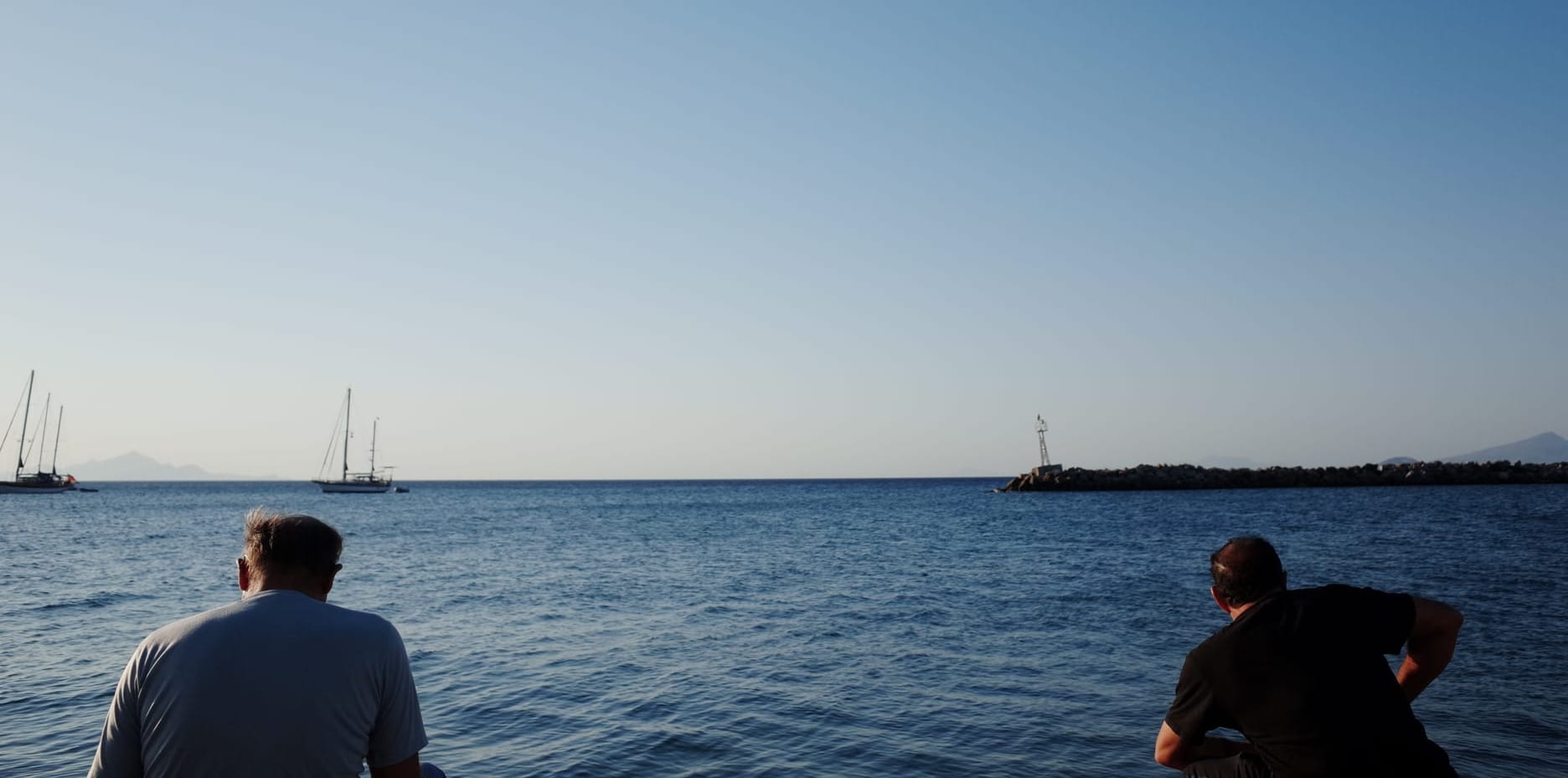
By now the town was waking – shutters going up with a clatter, mopeds darting through the narrow road by the cafe, the cafe itself filling with people seeking fresh pastries and coffee. Off to our side were holiday makers putting towels on sunbeds, then retreating back to their room.
The smell of freshly baked bread was wafting down the street from the bakers – and Konstantinas said something that stuck with me. Forty years teaching, and his firm conclusion was that he had never once learned anything for a single student. Not one. He'd handed out maps and guides and advice by the thousand. He'd never been able to walk the path of learning for anyone.
That's the heart of education, and it's lovely and freeing. It's self driven. A teacher, a book, a mentor, a course – these give you a direction and a compass and, if they're any good, show you how to read it well. You still have to make the walk yourself.
Which also means treating everything, including the compass, with a critical eye. Information isn't knowledge; books and experts and confident online voices are starting points, not verdicts of absolutes and the truth. Nothing is true simply because it's written down or said with confidence by someone looking like they know what they're talking about – it only becomes true for you when you put it into action and it survives the encounter.
(I care about this enough that I open Zero to Keynote with a whole chapter urging people to think critically about every bit of speaking advice, mine absolutely included too.)
Real learning happens where theory meets friction, where information is put into action in a real scenario – the moment the tidy model breaks against a real situation and you're forced to think again, and learn again.
Which is why, Konstantinas reckoned, the best development is always the kind a person drives themselves. And that was coming from a teacher.
The courses and mentors and books set the conditions; the individual decides whether to actually act on them. The ones who act change fast. The ones waiting for the learning to be done to them tend not to change at all – a thing every teacher, and every manager, eventually learns the hard way.

The second coffee arrived, very kindly paid for by Konstantinas.
I mentioned that it baffles me when people boast about reading two hundred books a year, or worse, reading algorithm-generated summaries of them, and Konstantinas positively lit up, and proceeded to light up another cigarette too, because it turns out he'd been at war with that idea for decades.
Francis Bacon knew this four hundred years ago: some books are to be tasted, others to be swallowed, and some few to be chewed and digested.
The goal isn't to reach the last page, tick the book off on a checklist, post your progress to Instagram and swiftly move on to another book – it's to digest what the writer is really offering.
I re-read Paul Hawken's Growing a Business once a year, every year, and every reading gives me something new, not because the book has changed but because I have; it's in conversation with a slightly different version of me each time.
Most business books, if we're honest, are variations on a small handful of foundational ones – I've read dozens of sales books, and nearly all of them turn out to be How I Raised Myself from Failure to Success in Selling dressed up with fancy sounding systems and a different tone of voice. Truly understanding that one does more for you than skimming thirty of its imitators. Depth beats volume, and knowledge compounds when you revisit it across the seasons of a life.
And the best way to find out whether you've actually digested something? Try to teach it. Nothing exposes the holes in your understanding like having to explain it clearly for someone else – laddering it from the simple to the hard, fielding the challenging question you didn't see coming, bringing it to a bright image through living example that makes it real.
If you can't explain a thing simply, you probably don't understand it as well as you think you do. I fool myself on this regularly: certain I've grasped something, right up until someone asks me to explain it clearly – usually my kids asking – and the edges of my understanding are exposed. I cover this concept quite directly in Workshop Mastery; teach at the edges of your understanding and your students suffer.
Contribution, it turns out, isn't only generosity and care for other people. It's one of the deepest ways there is to learn.

The sun was high now and the umbrellas had stopped helping much, but I wasn't leaving until the chemist or shop opened (they likely were), so we pressed on to the part that ties it all together.
Details decay; principles endure.
Most people get bogged down in the details – the plausible tactic, the clever technique, the right structure, the best tool, the optimised path, the grand theory of the week – when underneath all of it sit a small number of foundational principles that make sense of everything built on top.
In communication, for instance, the principle that every message has a purpose, an audience and a context will outlive any specific presentation trick you could name; once you truly hold it, it becomes a lens for judging every new idea in the field. Portfolio Management works on a simple principle too; connect investment to the work needed to realise the value, and out to the value generated. If you cannot see that thread cleanly no amount of clever tooling will save you.
Understand the fundamentals first, and the complexity has somewhere to attach itself.
And you get to those fundamentals the way you get to anything worth having – by building a ladder, not attempting a leap. Musicians practice scales long before the concert. Writers write before they attempt to sell the book. Kids learn basic multiplications before tackling calculus. The speakers who walk on stage and deliver something remarkable did not simply turn up gifted; they laddered it, usually over years – ideas, then writing, then rehearsal, then delivery, each rung resting on the one below.
We so often skip the rungs, grab for the advanced material first, and then wonder why none of it holds. It doesn't hold because there's nothing solid underneath it.

Konstantinas insisted – and he's right – that a great deal of learning happens when you're not studying at all.
Insight tends to arrive in the pauses: on a walk, in the shower, in the calm before sleep, in boredom, in the rest after real effort. Just as muscle is built during recovery rather than during the lift, understanding consolidates during the downtime.
Study with no reflection is activity without assimilation – motion without memory attached to it. The best thing you read this morning will very often only make sense on this afternoon's walk, not at the desk where you read it.
Which, I pointed out to him, was rather the joke of the whole morning: the most useful hour of thinking I'd done all week was happening by accident, in the shade, because I'd forgotten a bottle of sun cream. He laughed, lit another cig and said that was more or less how all his best lessons had arrived too – sideways, unplanned, while he was busy doing something else.
And then the last thing, the thing that keeps all the rest moving nicely: stay open.
When your fundamentals are genuinely solid, you can sit comfortably with a view opposed to your own, which is a remarkably under-rated skill in the workplace. You can see how it might work, where it might fall down, what it has to teach even where you disagree – without feeling the ground move under everything you know.
Dogma is just learning that has hardened into ideology and stopped asking questions about itself. Real learning holds solid understanding and curiosity in mind at the same time. Remember, opinionated people go around the world annoying other people with opinions. Stay open to learning, to being wrong, to broadening what you currently think you know – to learning.
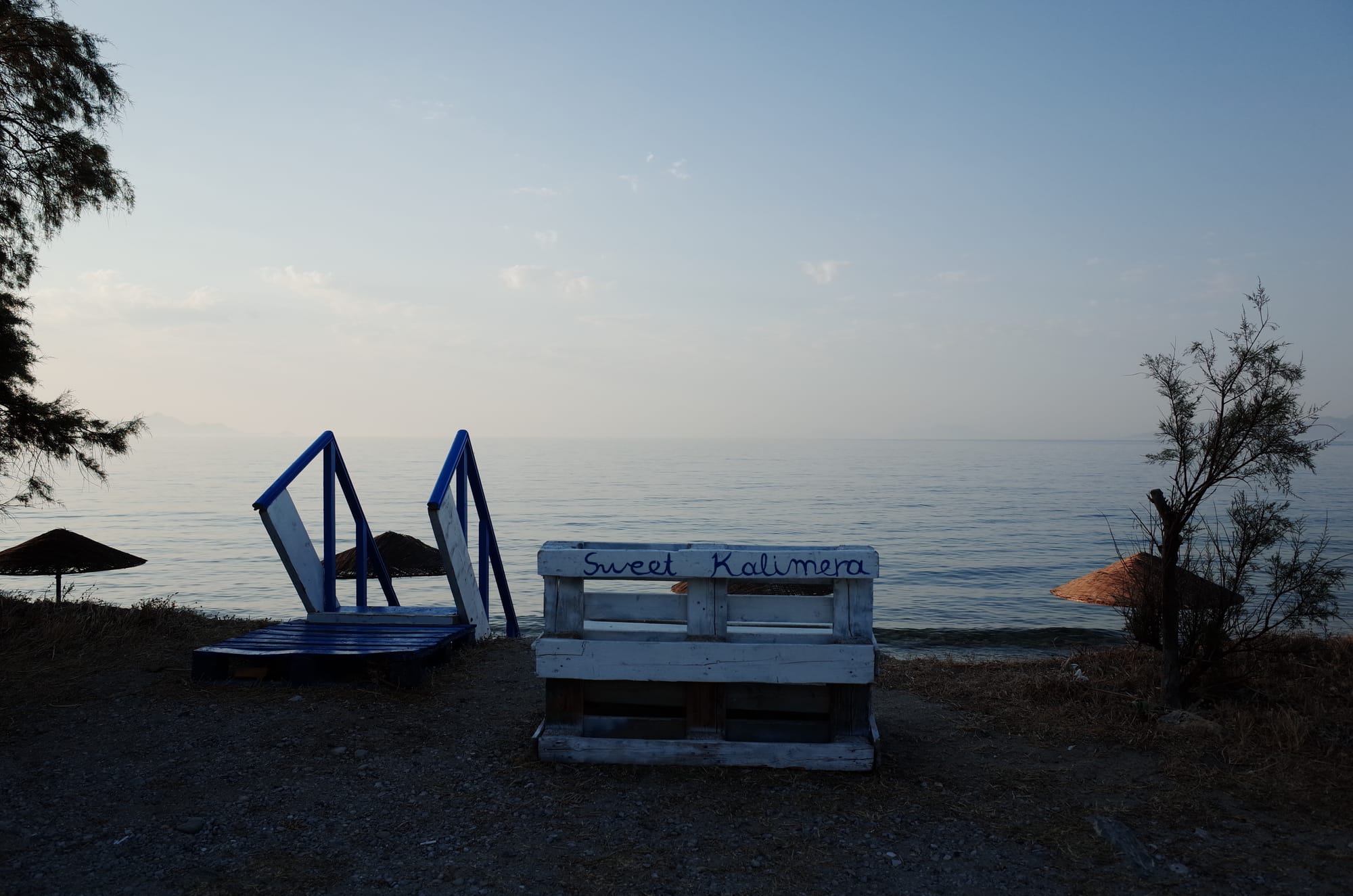
I finally said goodbye, shook Konstantinas's hand, thanked him for an hour I'll remember, bought some sun cream, lathered up and set off back up the coastal path – a couple of cats following me to the town's edge. Still to this day I don't know whether they were expecting treats or just making sure I'd left their territory.
That walk home was a gift. The sun high, hot and welcome now. My mind going over the morning's conversation. My nervous system twitchy from the caffeine. My notebook full of notes. And my Ricoh camera in hand.
Information becomes knowledge when it changes how you think and how you behave because of it. Everything Konstantinas and I had mused over for an hour was really just the long way of saying that – that the whole point of study isn't to be able to recite something with confidence, but to be changed by it.
My old communication lecturer used to say that a half-knowledge is not useless, but that it's very likely the other half is needed too. I think that's what he meant – half of it is the information, the other half is the learning done by putting it into action.
I think that's why deep learning never really finishes. It isn't a task you complete. It's a way of living – in observation, in studying, in reading, in trying, in doing the task itself and in dialogue with the world – and occasionally with a retired schoolteacher you meet by a harbour because you forgot to pack your sun cream.
Efharisto, Konstantinas. With an a.
Where this sits in the Atlas
Orientation·Idea to Value·Communication·Creativity & Climate·Learning
Books mentioned in this essay — Rob's reading list
Worth chewing over
Growing a Business
One of the few business books genuinely worth re-reading every year. Each reading produces something new because you bring a different self to it. A foundational text that rewards depth over speed.
Find on Amazon →Worth chewing over
How I Raised Myself from Failure to Success in Selling
Most sales books are rehashes of this one. Read the original, chew it slowly, and skip the derivatives. A masterclass in principles over tactics — and a good example of why foundational texts outlast the summaries built on top of them.
Find on Amazon →
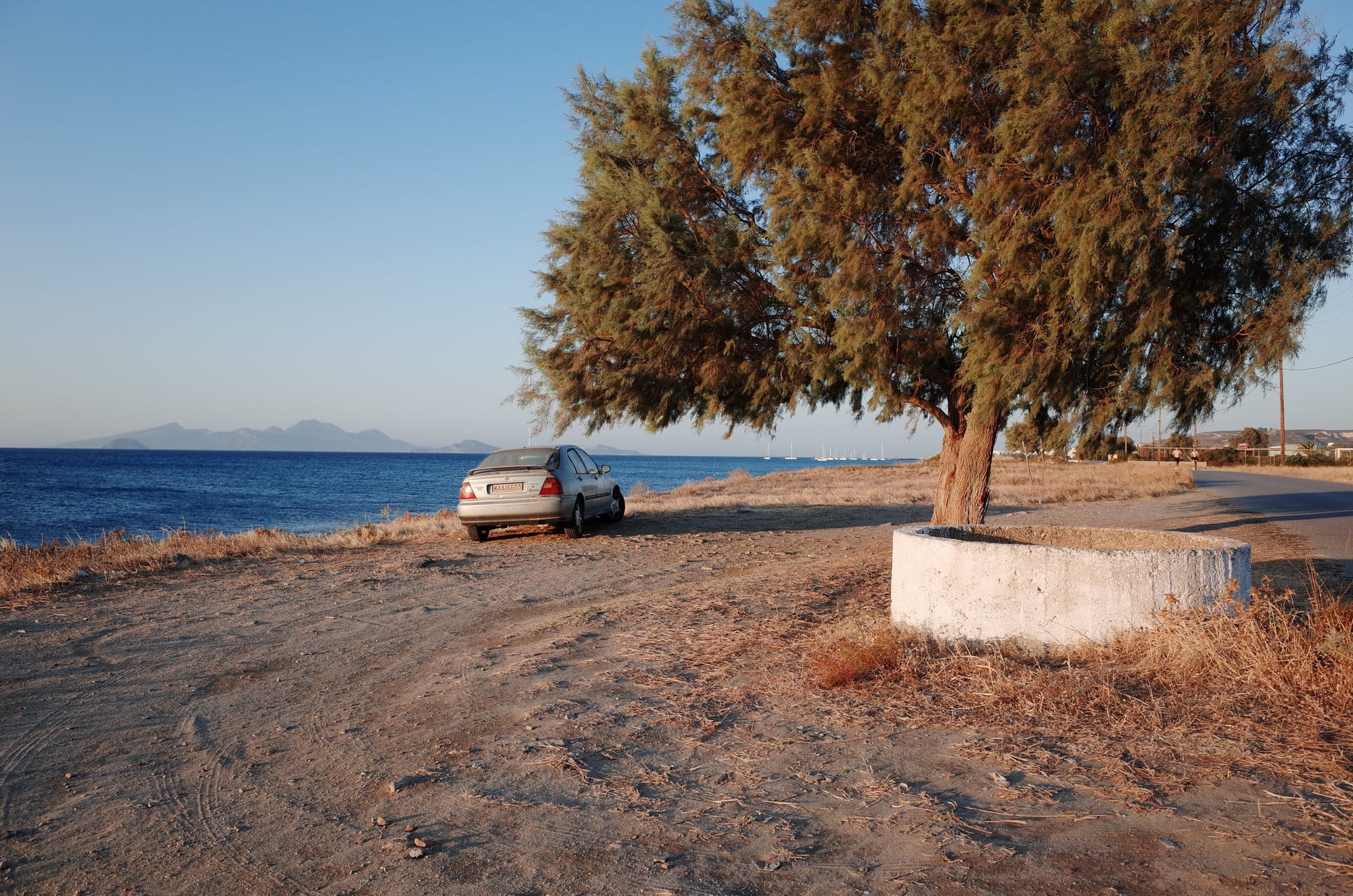


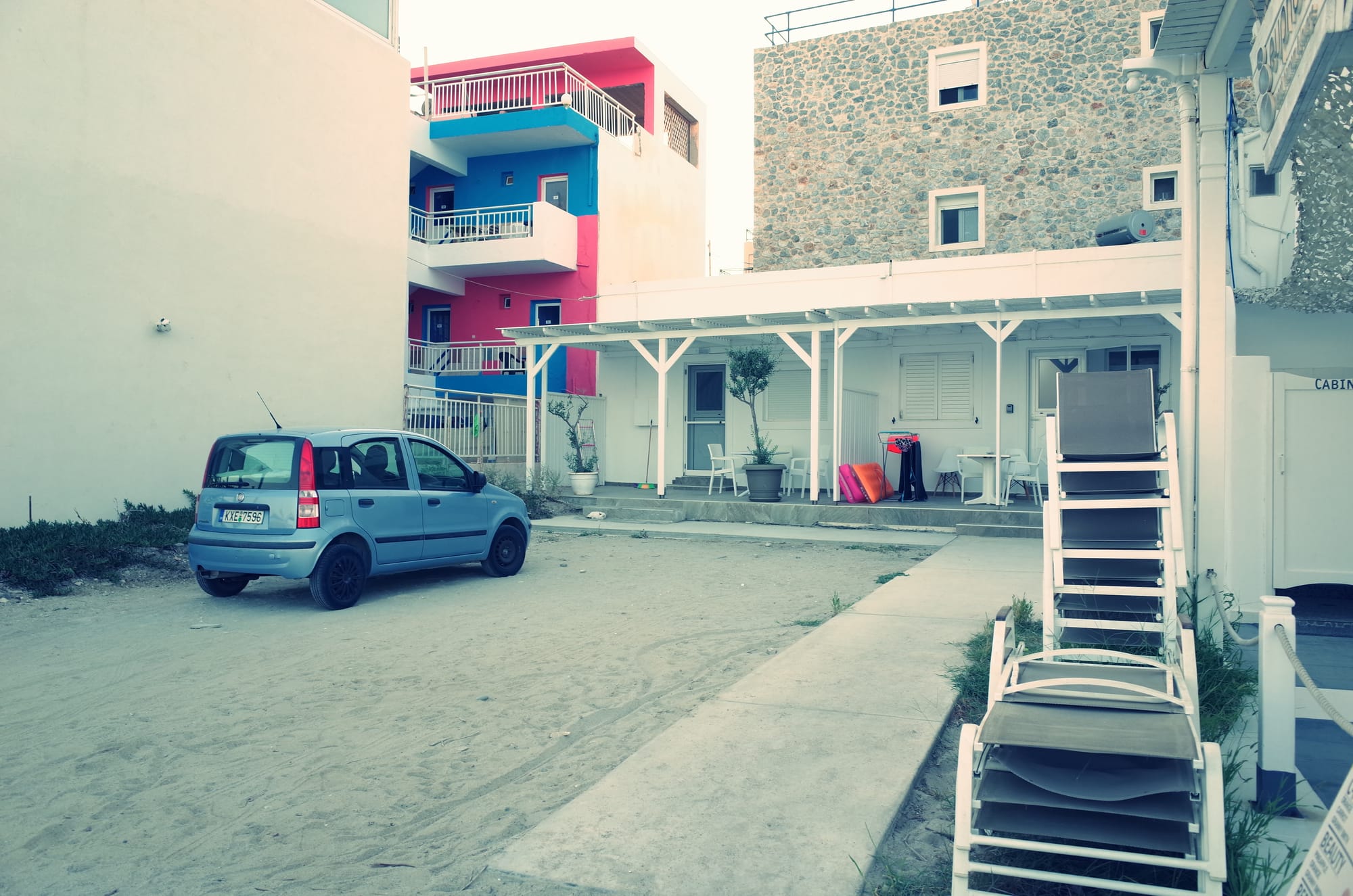



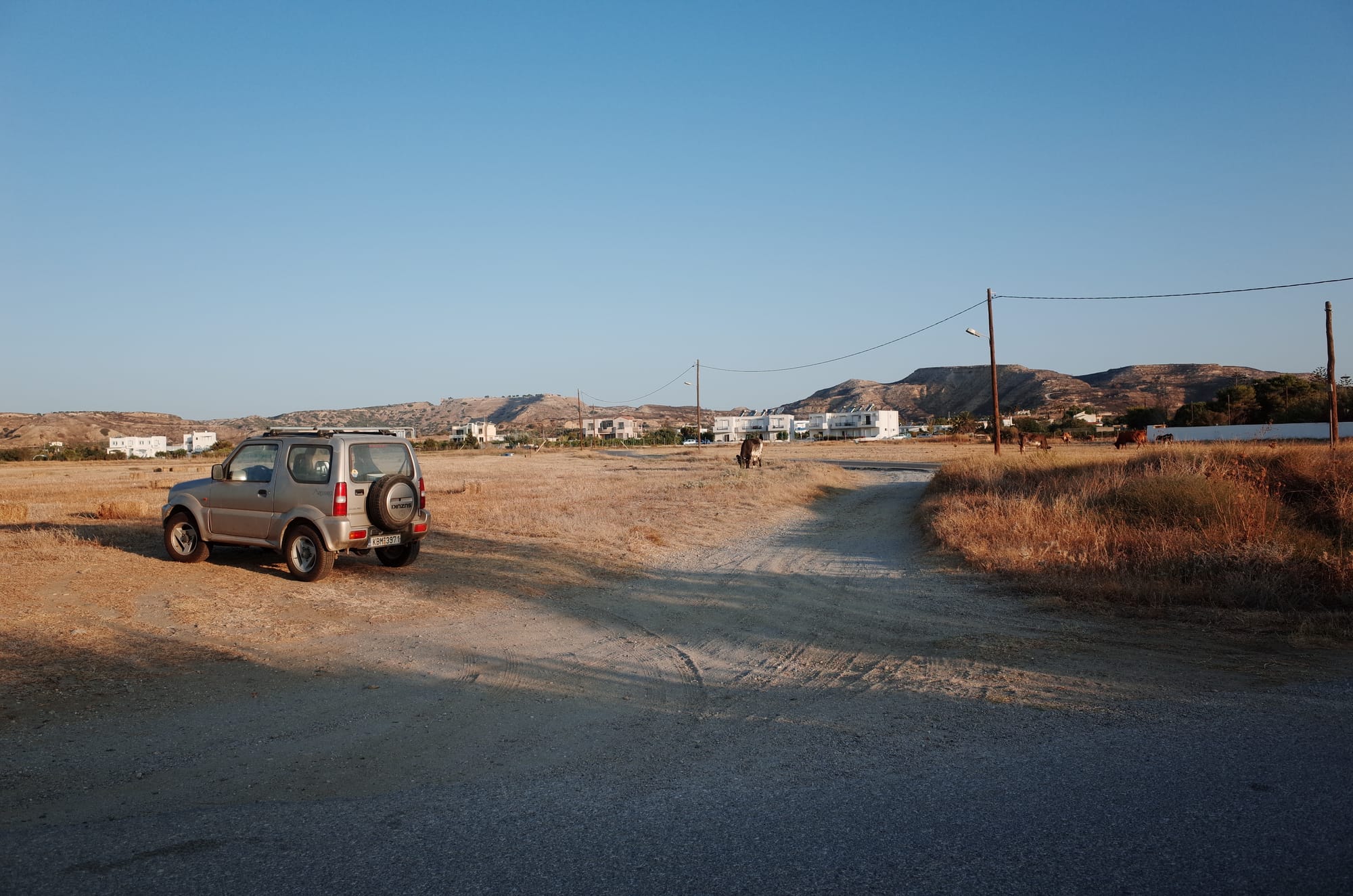
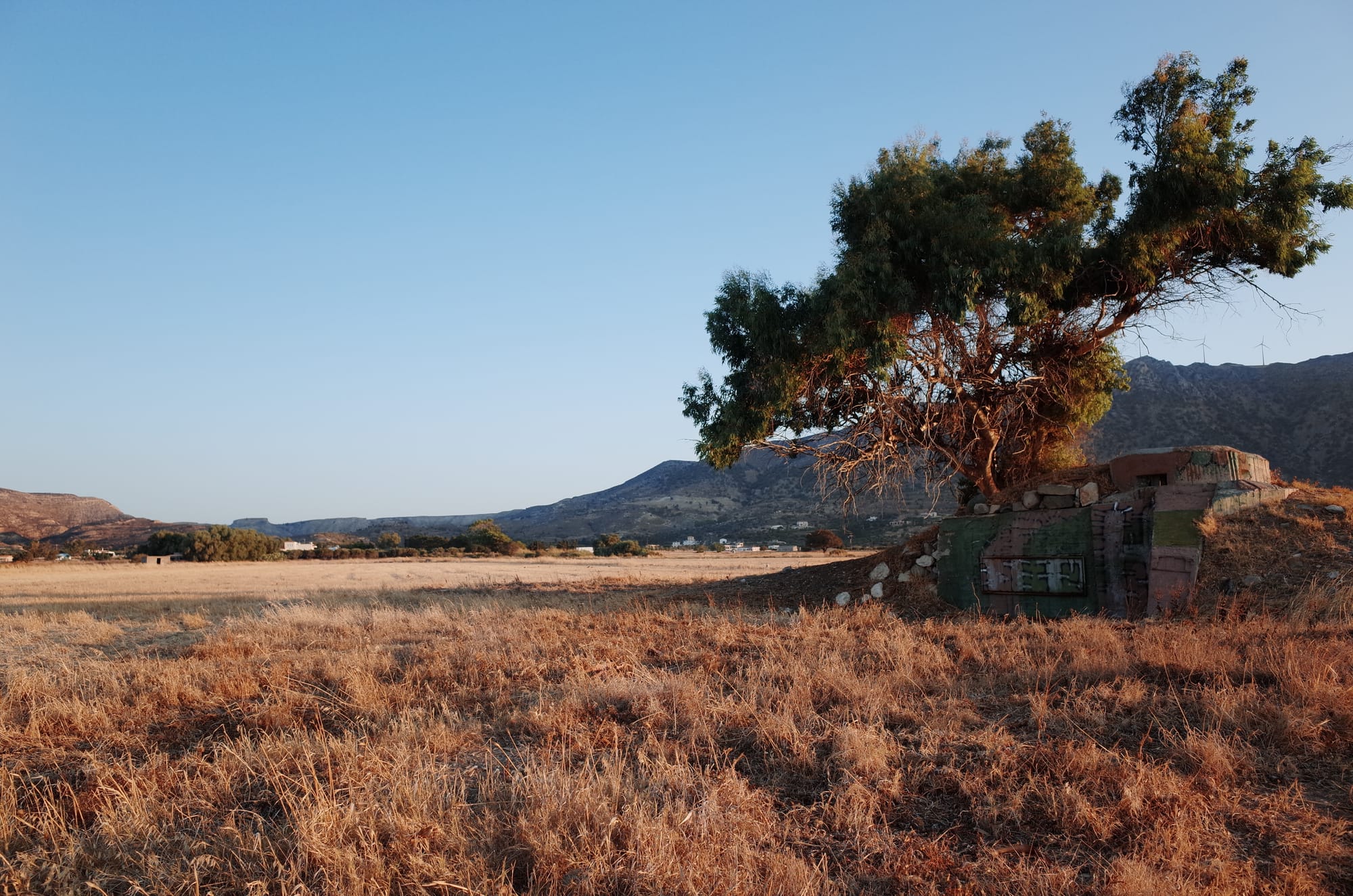
Photos from my morning walks in Kardamena, Kos, Greece.