The camera comes out at Waterloo
A London commute photo essay on one small rule, a pocket-sized camera with no zoom, and finding room for creative practice inside a working life that rarely slows down.
The rule is simple and likely ridiculous to other people. When I go to London, the camera comes with me. And it comes out at Waterloo. Always.
Not on the train. Not halfway across the bridge. At Waterloo, the moment I pass the ticket barriers. Some people check their phone, or their hair, or whether they left the oven on, or where they're going – I check I have my camera out.
I should say up front that I'm not wildly in love with London. I know many people who love it. Many people who work there and enjoy it. Quite a few people who would live nowhere else in the world. I respect it. I occasionally enjoy it. Mostly though, I find it overwhelming, like an enthusiastic puppy at a dinner party. Speaking from experience there.
I grew up in Sheffield, Yorkshire. When I grew up London felt like another country – distant, slightly mythical, not in reach to the average person from up North. Elegant, magnetic, somewhat unreal — the place where films happened, business got done and people in suits flocked about.
Before the age of 20 I'd only ever visited London once, on a school trip to see a museum. I don't recall much about it. These days London mostly means work, and work brings its own gravity.
Which is exactly why the rule about the camera exists.
The pocket of quiet
I don't often go into an office any more. Most of my work happens on video calls, across time zones, in cafes, from the studio, with people I rarely meet in the flesh. So a day in London is a bit of an event, and the train up is one of the best parts of it.
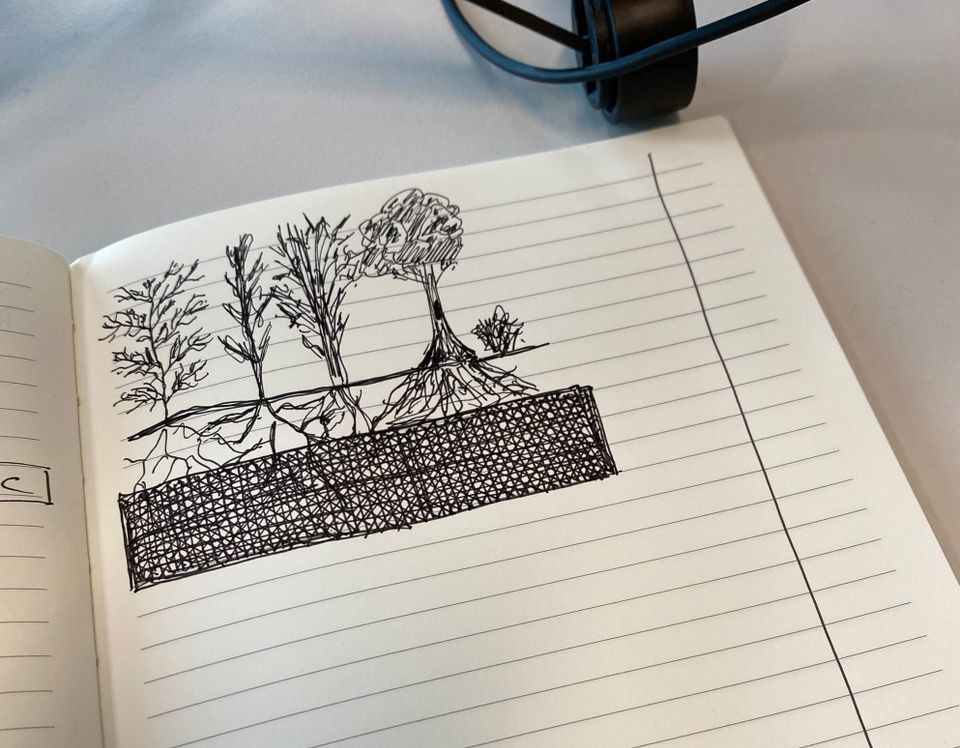
A train carriage is one of the few places left where nobody expects much of you. Sometimes I write. Sometimes I sketch. Sometimes I stare out of the window at the backs of houses and the occasional allotment, and let my mind idle. Not sure if it's just me, but I often imagine I'm riding an off-road bike and navigating the many hazards, hedges and fields trying to keep pace with the train.
Occasionally I do nothing at all, which is, by the way, a remarkable way to let your brain ponder issues and come up with ideas.
I carry an iPad for writing and design, and a notebook for thinking. Whole projects have started on that train. A few have also ended there, usually somewhere around Farnborough.
Then the train pulls in, and I switch modes. The notebook goes in the bag. The camera comes out.
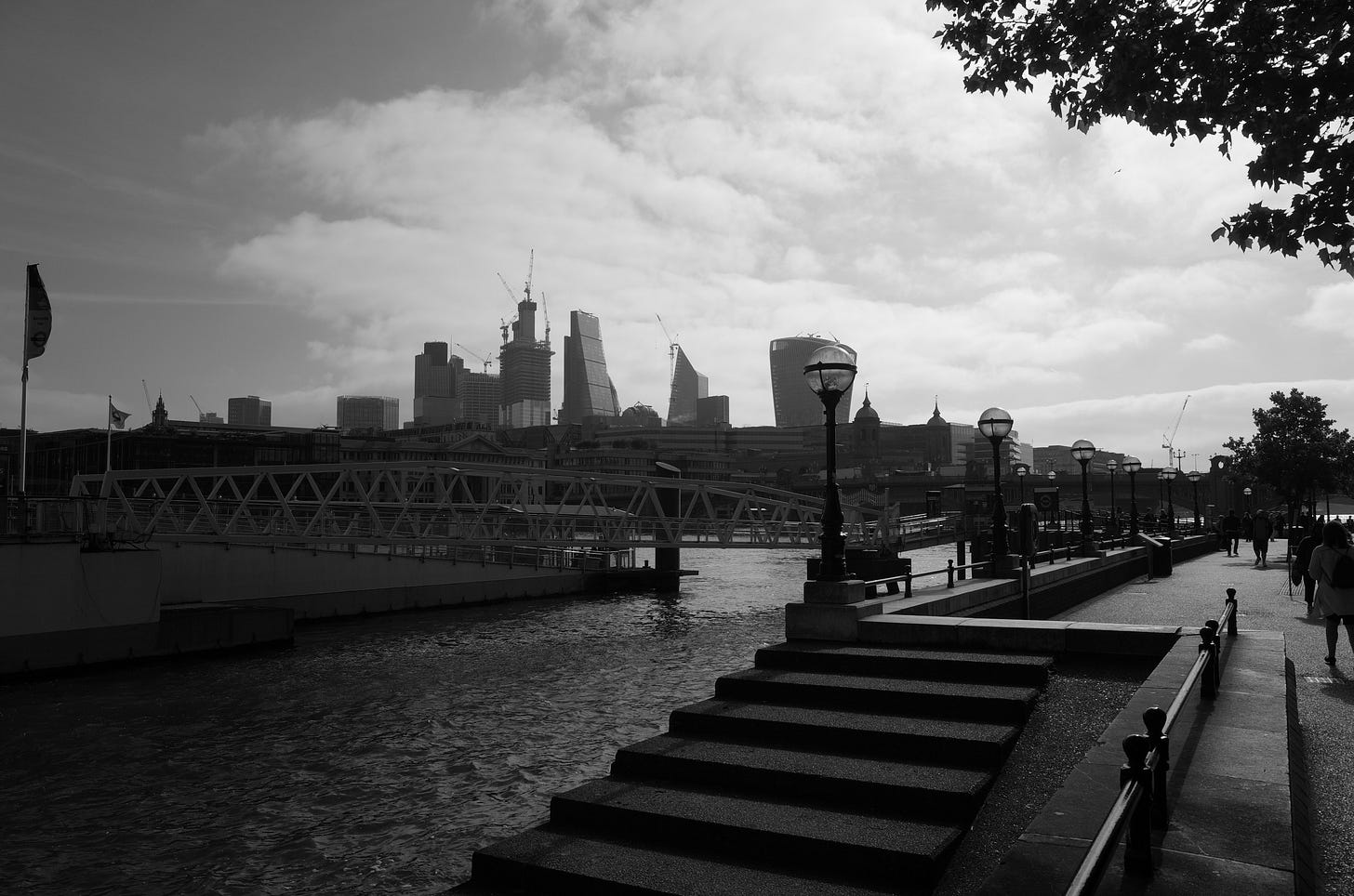
A camera with no zoom
The camera in question is a Ricoh GR, and it lives in my pocket for the walk. I prefer it to my phone, which sounds perverse, given the phone takes perfectly good pictures.
That's rather the problem to be honest. The phone is too perfect and too frictionless and too easy. It will take four hundred photographs of anything, none of which you'll look at again.
The Ricoh is humble by comparison: small, constrained and deliberately tech shy. There's no zoom. If you want something bigger in the frame, you walk towards it. You move closer, or you miss the shot.
That constraint is the point. It turns a walk into a series of small decisions. Is this worth three steps? Is that? (Usually, it turns out, yes.)
Here's what I've learned though. I rarely feel inspired before I start taking pictures. For years I waited for the feeling first. But the inspiration doesn't come first. The camera does. The moment it's out of my pocket, the city seems to rearrange itself. Streets become patterns. Light becomes a subject. A skateboarder clearing a bench becomes a story with a beginning, a middle and, whether the landing goes well or not, an end.
The noticing starts because I've given it something to do.

The time I don't have
I often tell myself I don't have time to be creative. I say it with real conviction, too, usually while scrolling through Instagram. It's mostly fiction.
The train is time. The walk is time. Even the drive becomes time when a podcast replaces the radio, or a voice memo replaces the podcast. The hours are there. We've just got to choose what we use them for.
Creativity isn't blocked by calendars. It's often blocked by attention and permission.
And permission, I've found, is far easier to give yourself in advance. Deciding in the moment whether today is a creative day is a negotiation I lose to the inbox most mornings or other people's demands.
Deciding once, and creating a personal rule, takes the negotiation off the table. That's all the Waterloo rule really is: a decision I made once, so I don't have to make it every time.

What comes back
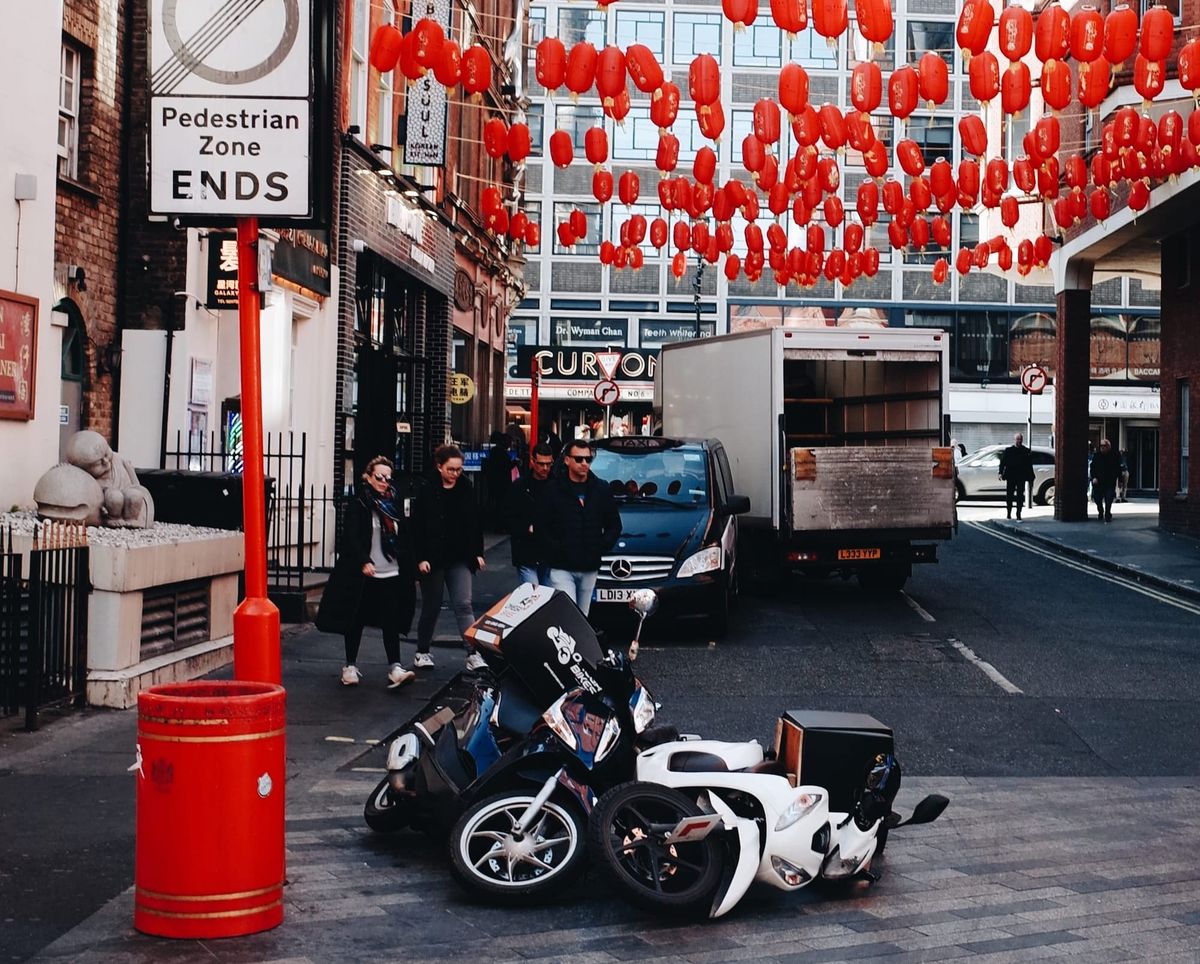
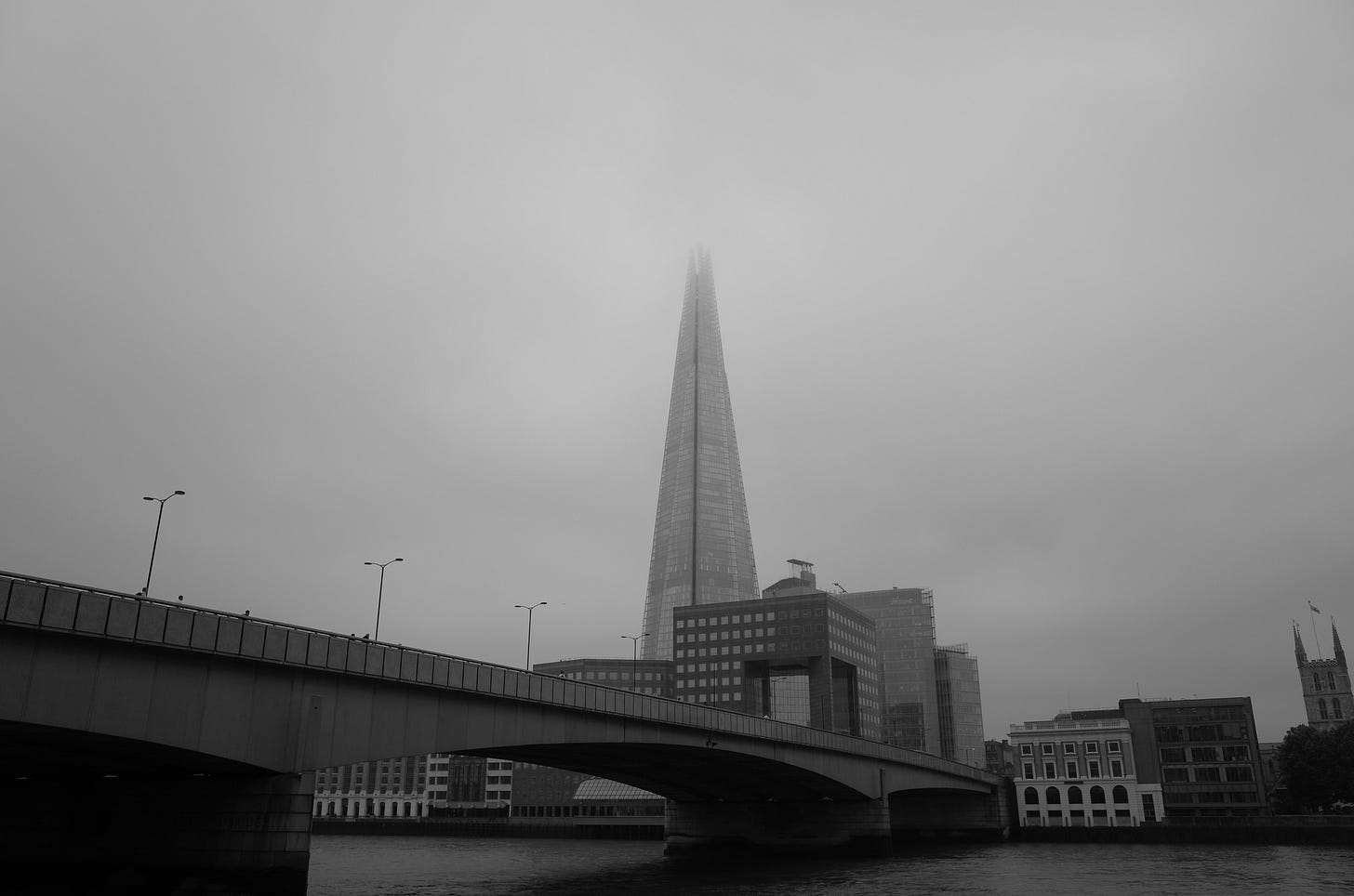
Some of the photographs are forgettable. Some repeat patterns I've shot a dozen times before. I have a lot of photographs of people crossing bridges. I have a lot of the London Eye. And I have plenty of Horse Guard's Parade.
The practice matters more than any one picture, and it pays out in places that have nothing to do with photography. I come home from a London day with ideas floating in my head: a better opening for a talk, a sharper start to an essay, a question to take to a client, a solution for a client's challenge.
The camera doesn't produce those ideas. It just keeps the noticing switched on long enough for them to land.
If you like to think in layers, this sits in creativity and climate — the conditions that let good work happen. Mine happen to include a train seat, a small camera and a busy station.
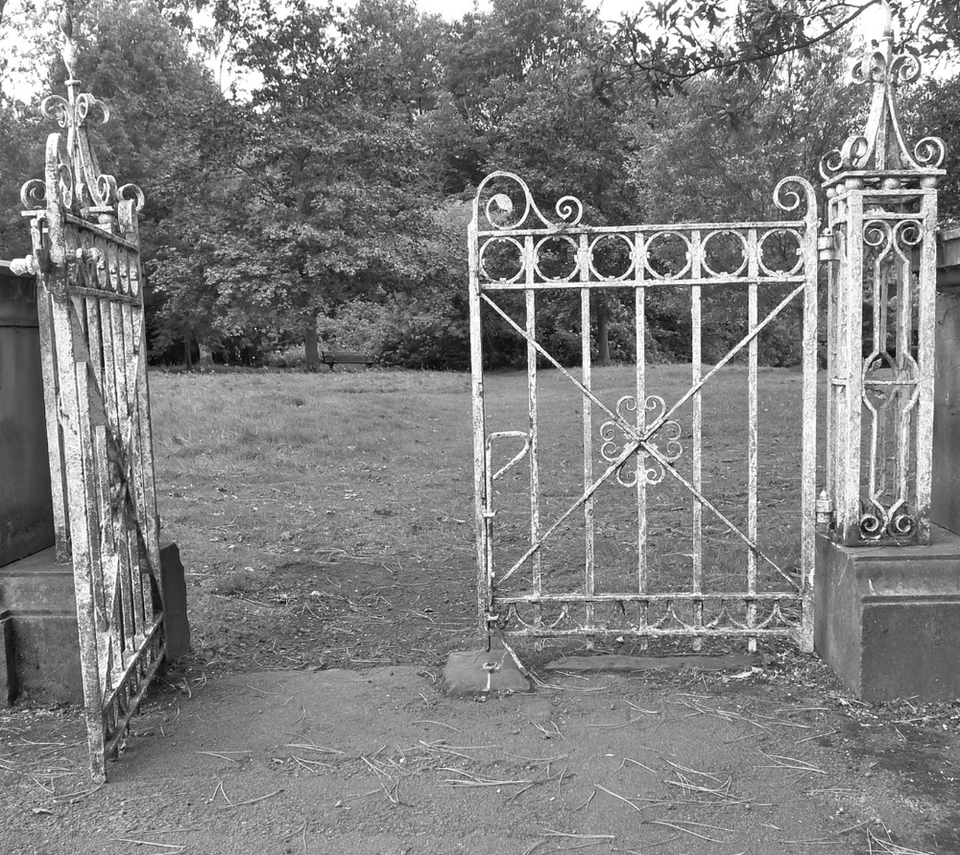
I suspect most of us could do with our own Waterloo. Not the station, necessarily. The idea: one ordinary point in an ordinary working day where the practice switches on without needing to be argued for. The second coffee. The walk from the car park. The ten minutes before the first call. The garden gate.
Mine happens to be a London terminus with a famous clock. Plenty of people have met their Waterloo. I prefer to start mine there.
Where's yours?
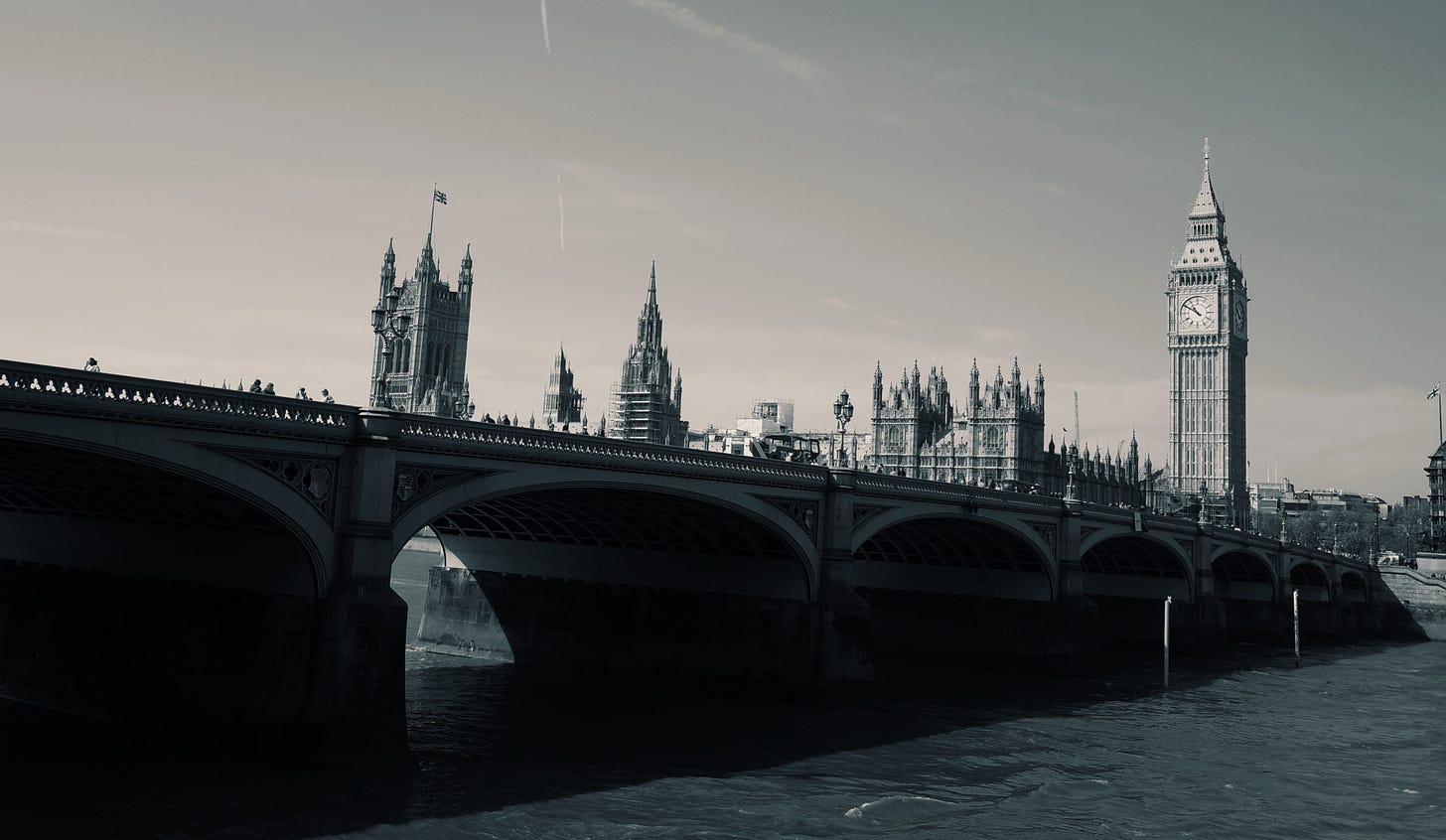
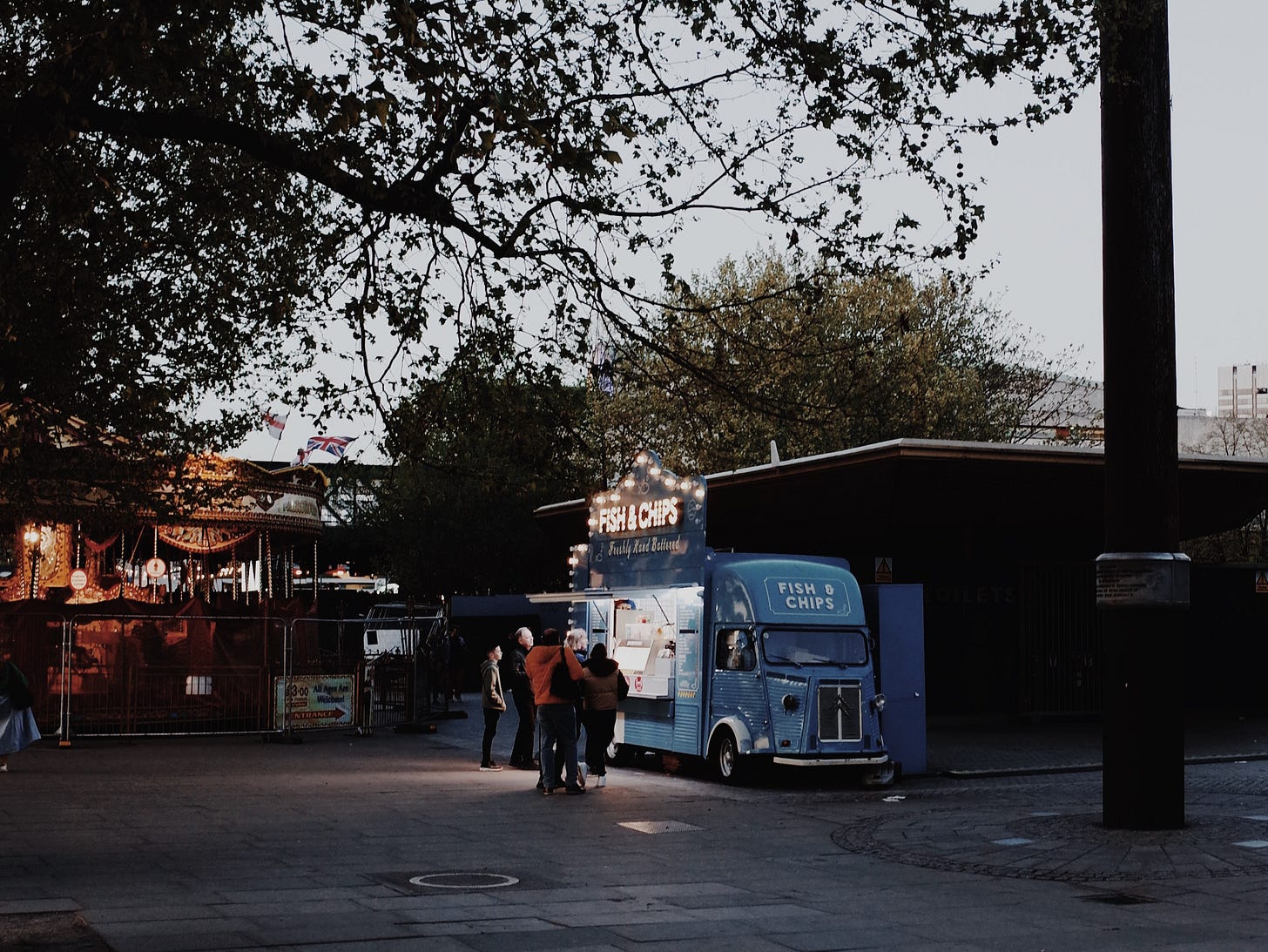
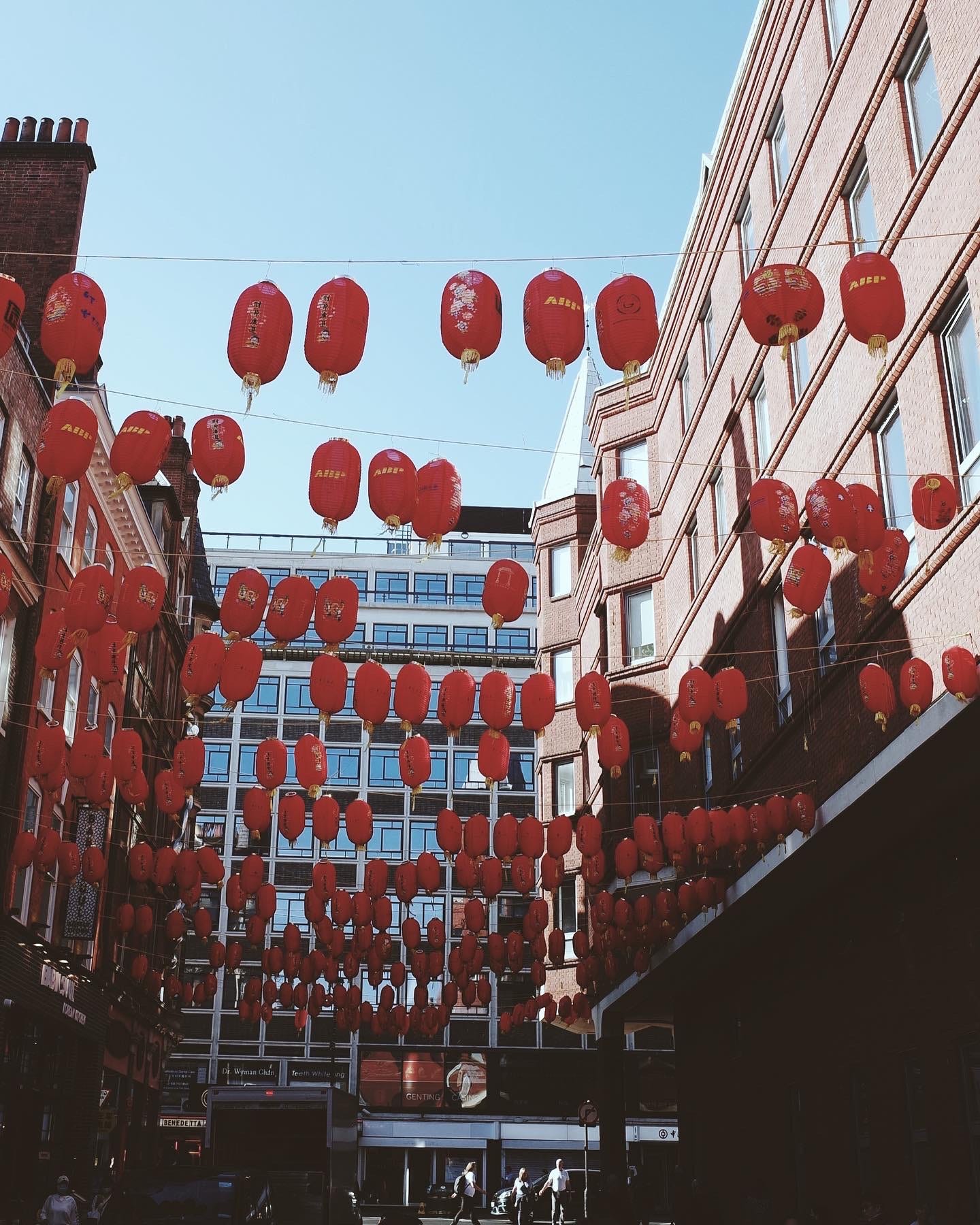
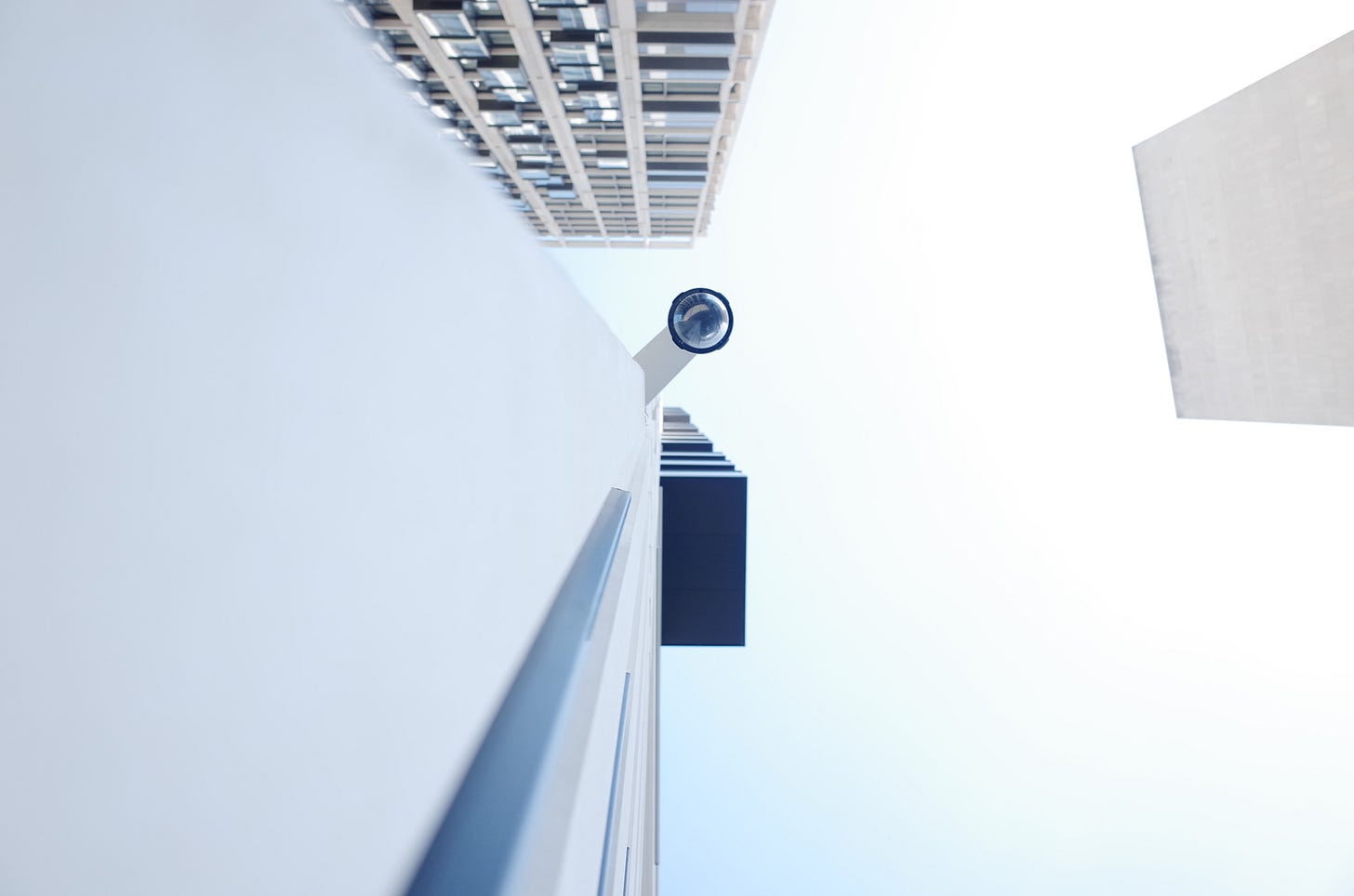
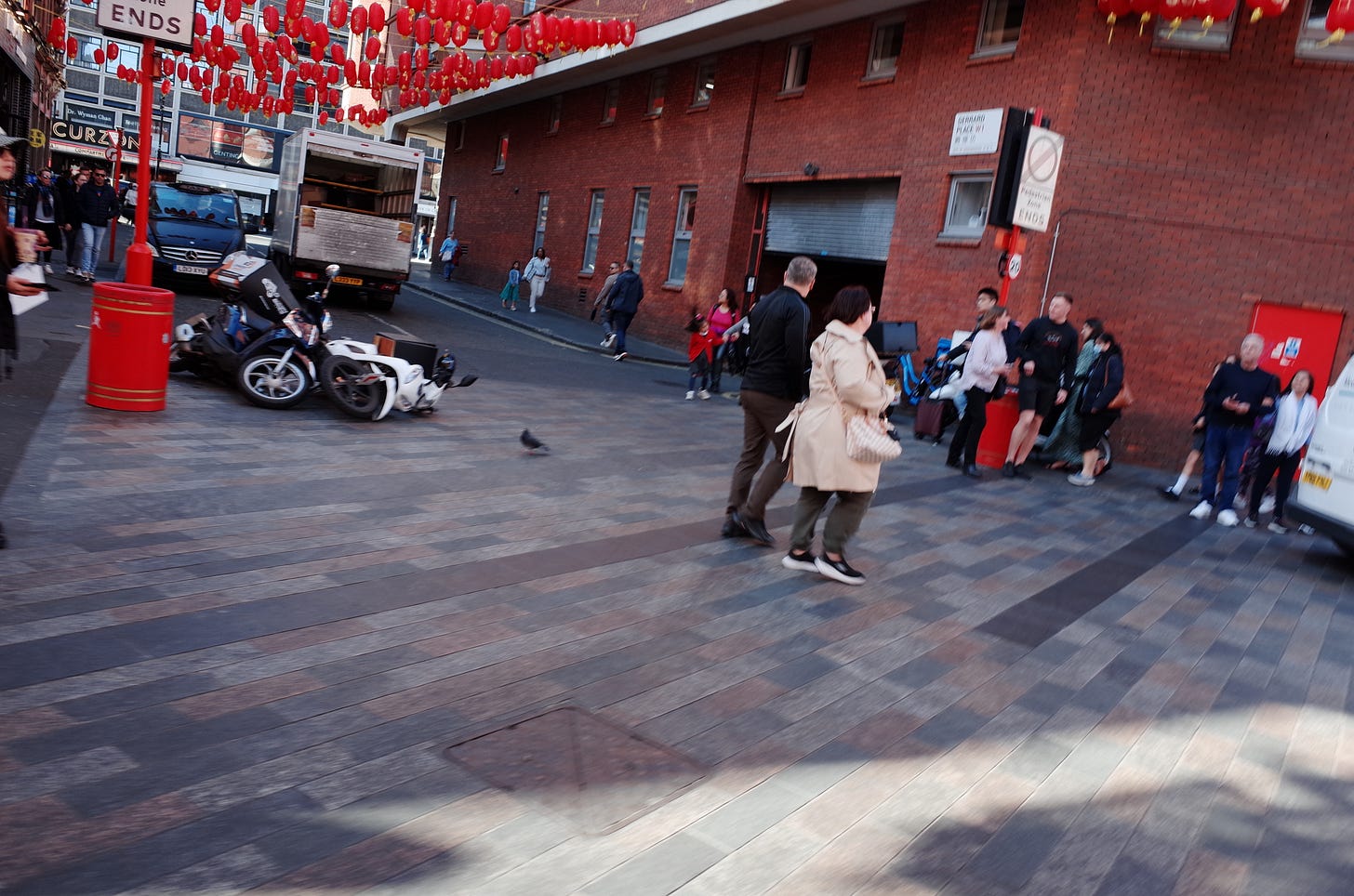
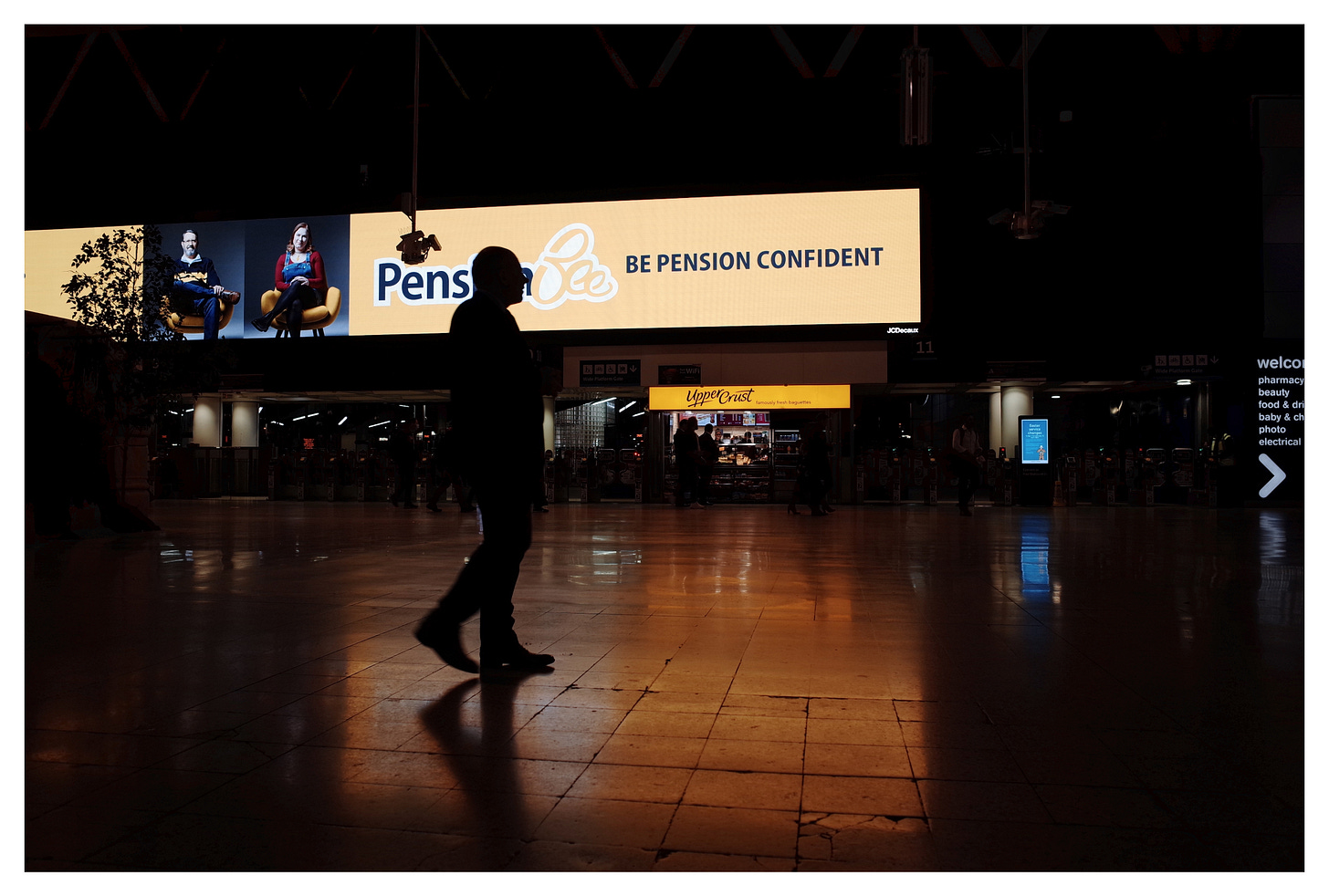
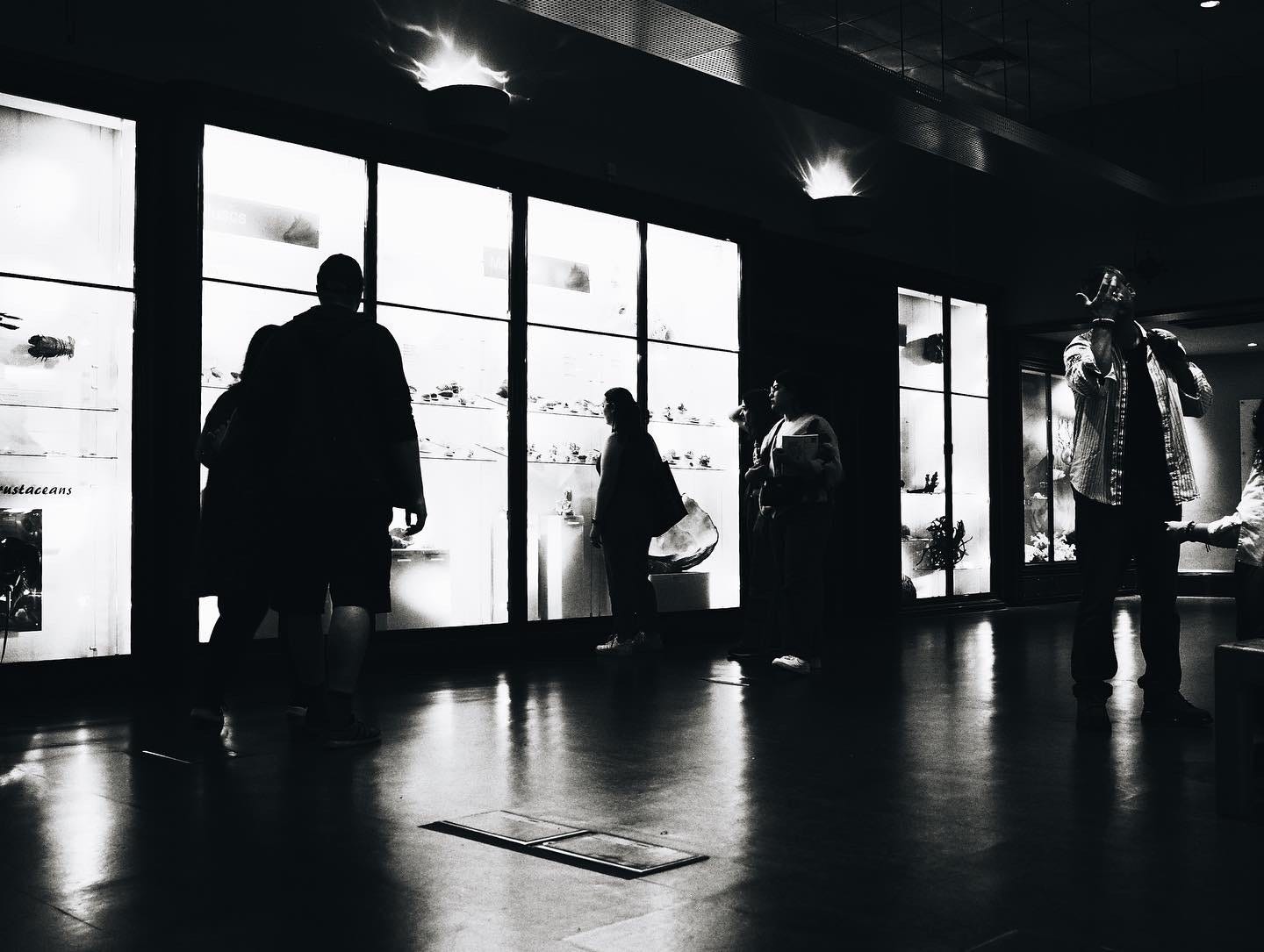
A collection of photos taken on the London Commute
More from this series
Other Photo EssaysOther essays on noticing, creative attention, and the spaces that shape how we think.
Zurich — conferences as creative pilgrimage
On attending, paying attention, and what professional travel can offer beyond the agenda.
Decay | Repurpose — an essay on workplaces
What the spaces we work in reveal about how we value the people inside them.
Cultivated — notes on seeing, work and travel
A collection of observations from the edges of professional life.
What a weekend retreat taught me about creating space
On stepping back deliberately — and what becomes possible when you do.
Where this sits in the Atlas
Orientation·Idea to Value·Communication·Creativity & Climate·Learning