I'd avoided starting the podcast for over a decade, then gave it one weekend in a tiny, noisy Airbnb. I planned fifty episodes and recorded twenty-three. On fear, constraint, and why a change of place doesn't change who you are - it just leaves you nowhere to hide.
I'll be honest. I was a little broken, so I won't pretend this came from a place of balance. My pillars of life had started to topple and the tension was obvious. Work was heavy and lacking some meaning; lockdown had left a lingering residue I hadn't fully admitted to; and beneath all of it sat a nagging sense that I ought to be creating more and doing more with my life. All of this was tangled up with a persistent fear of what "creating more and doing more" might actually involve. So, I figured I'd take a little time to reset and get to know myself. I booked a very short retreat in a tiny building.
Not the romantic sort. No monastery where I'm not allowed to speak, no digital detox on a windswept cliff with local goats to join me for yoga at daybreak, no spa weekend with herbal juice as the daily meal plan. Nope. Just a tiny Airbnb in Essendon, Hertfordshire, a bag of recording and filming gear, some notebooks, some beer, some BBQ food and one clear absolute intention: to finally start the podcast I'd been avoiding, quite successfully, for over a decade.
The work of recording itself was never the problem – we'd been going strong on Stationery Freaks for a few years already. The hesitation about doing something of my own, and what it would become, had been the problem. For years I'd been afraid to begin – afraid of being seen, afraid it would distract from the "proper" consulting work, afraid that starting meant committing, and committing meant one day producing something that fell publicly short, as almost anything creative will do.
So the idea sat. And sat. And appeared in every painted picture for years, and sat as a goal being ignored, and as sketches in a notebook. Then it sat some more. Until that remarkable moment when the fear strikes in a different way. When the fear of not doing something outweighs the fear of getting it wrong.
So, I gave it a weekend. Let's see what I could make happen.
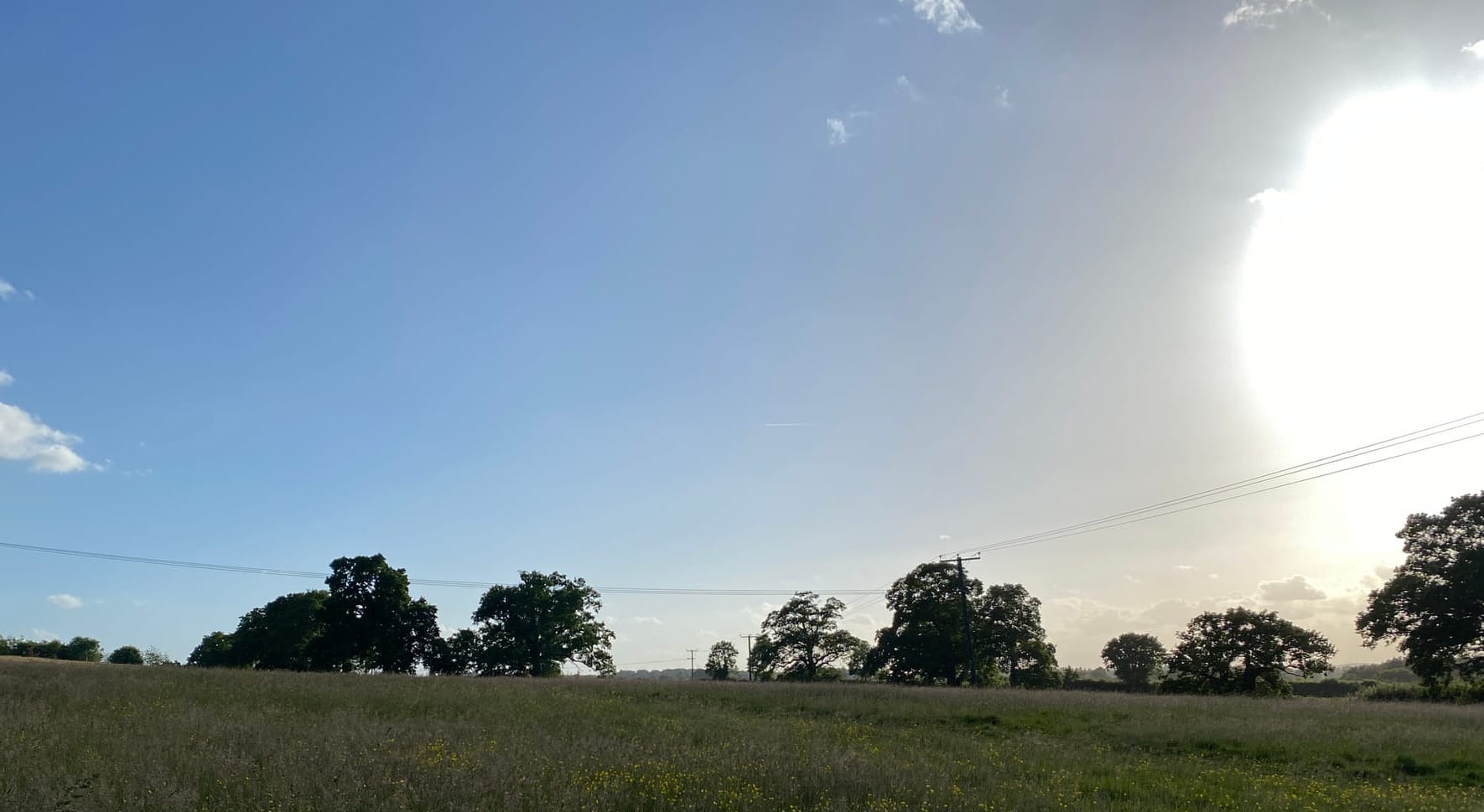
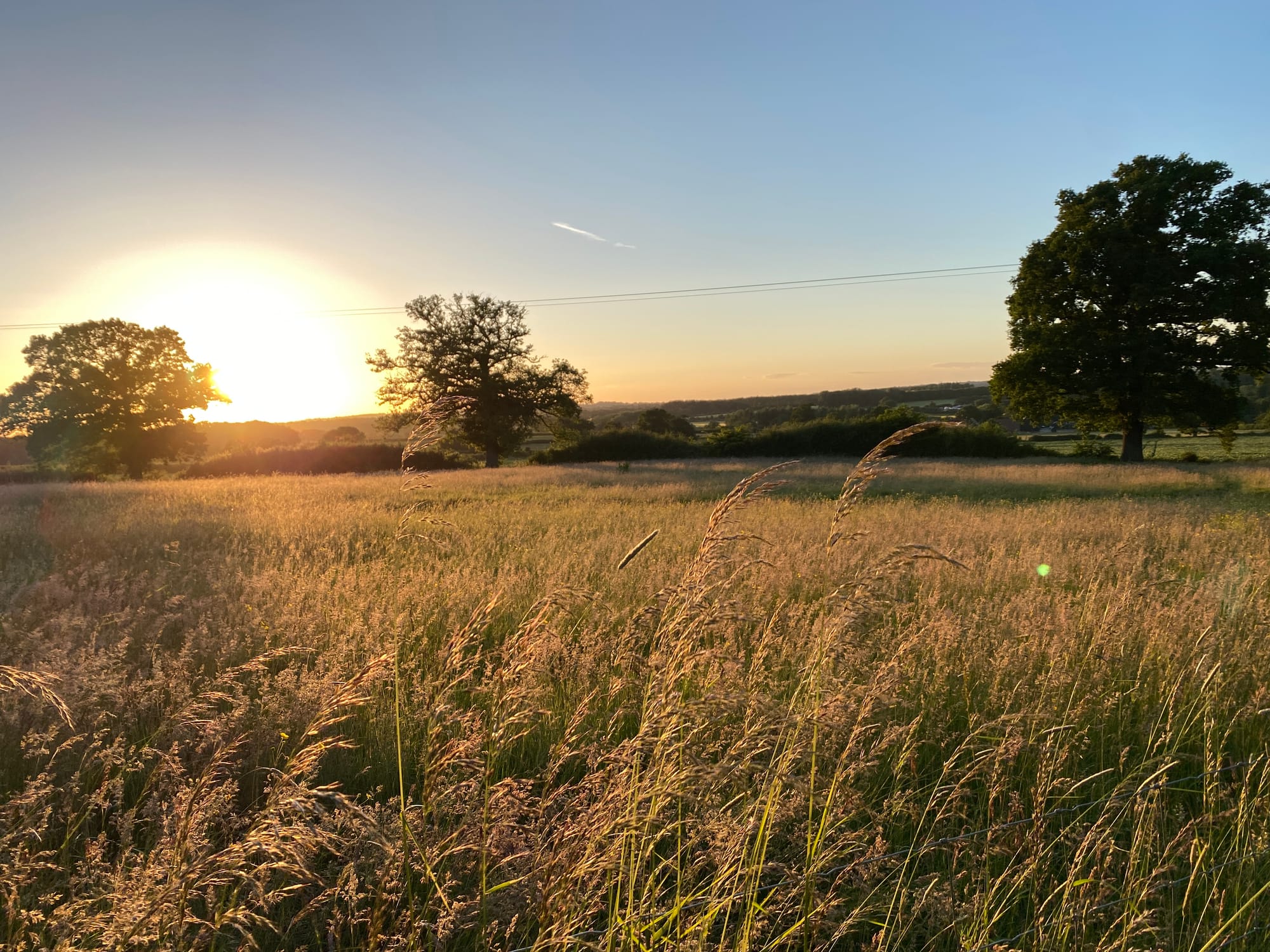
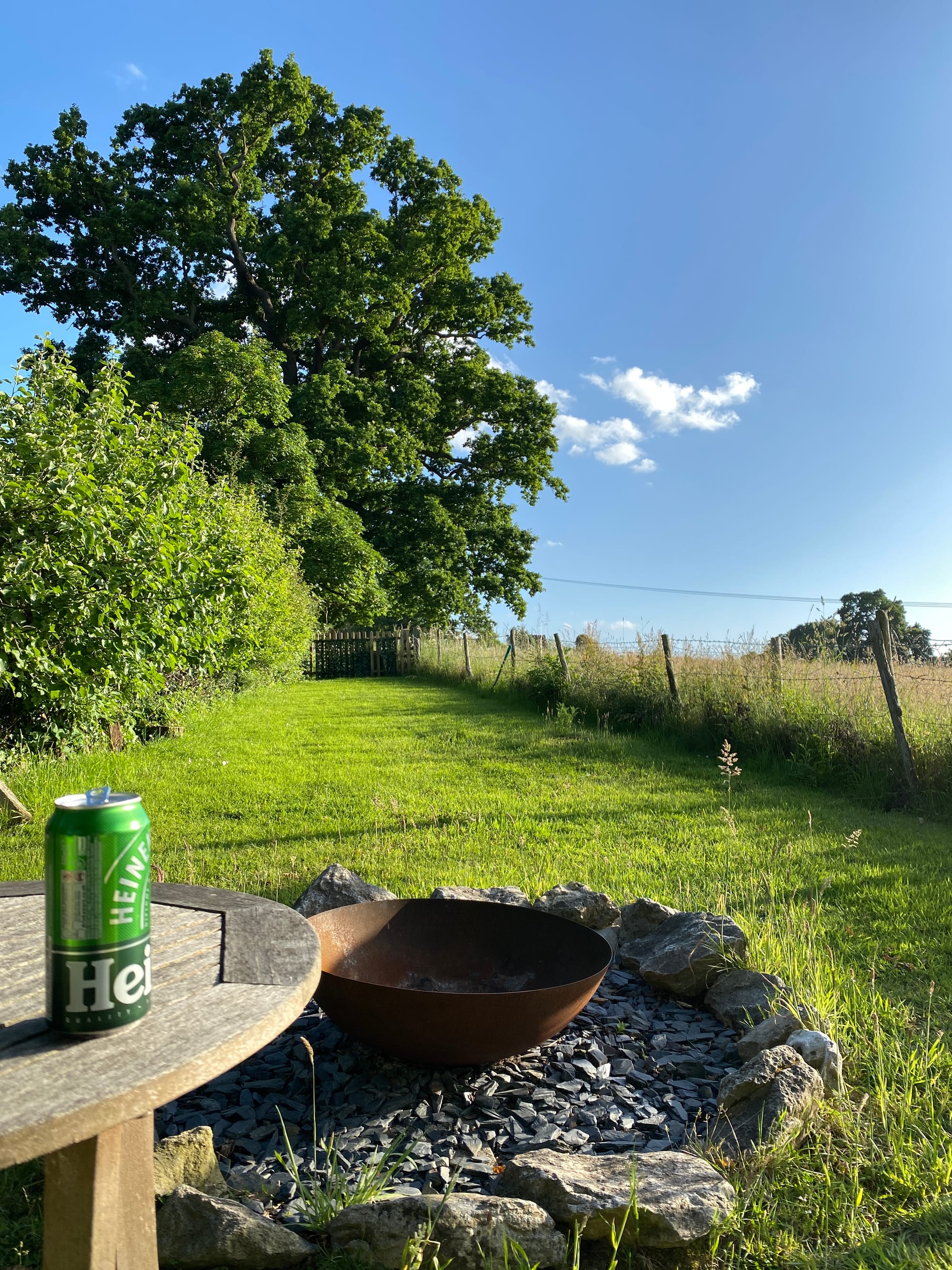
The view from the garden
I'm not one to follow the masses, and maybe that was to my own detriment here, but I ignored the usual retreat advice – the no-goals, no-agenda, let-yourself-be-carried-by-the-quiet school of thing. It doesn't work for me; my mind becomes impatient and wants to create or rebel, without something solid to push against.
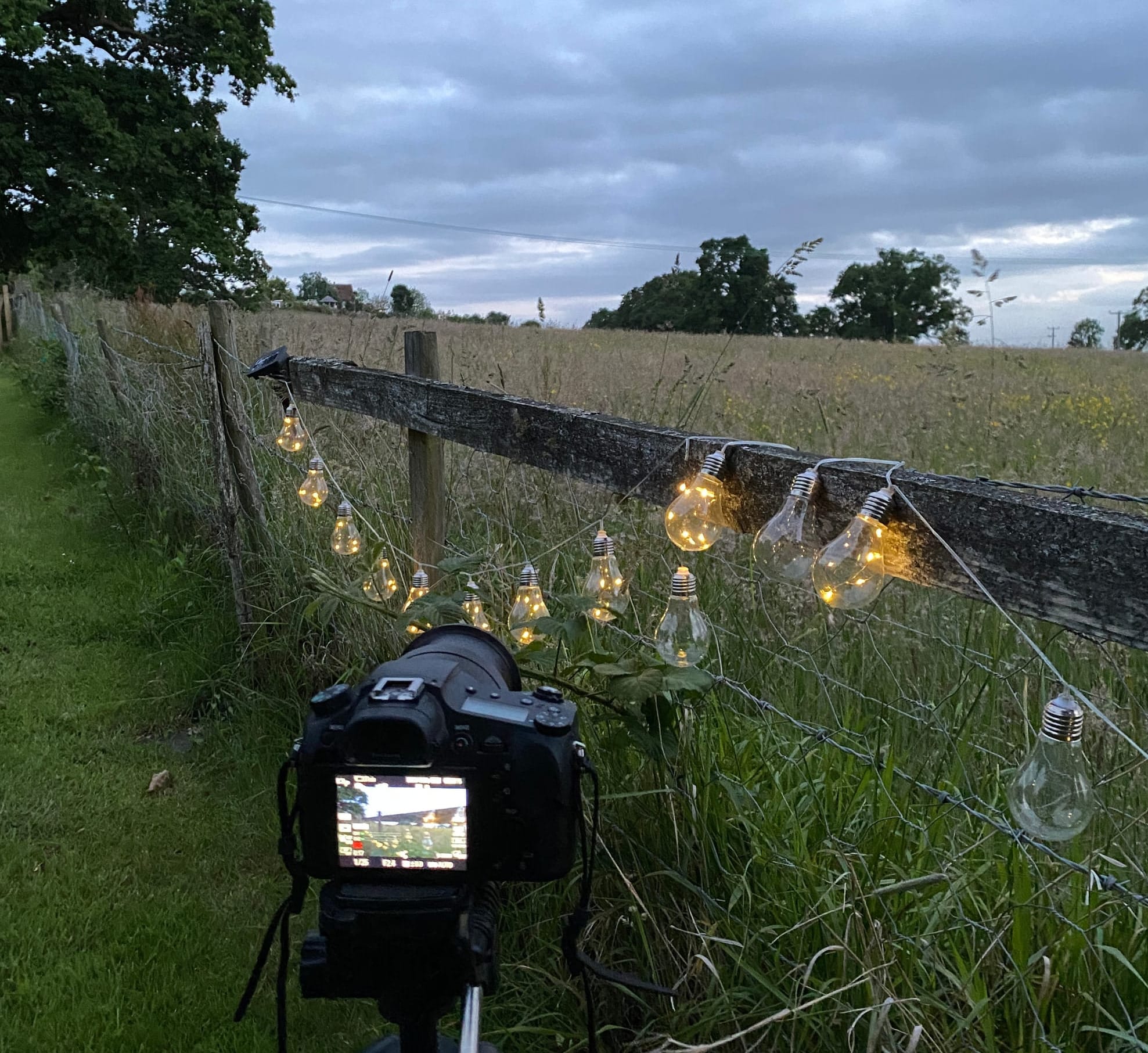
So I set myself a target that was, in hindsight, absolutely ridiculous: record fifty podcast episodes over the weekend. I recorded twenty-three. Also some how-to videos, a batch of photographs, some beautiful footage (YouTube video towards the end), and a perfectly lovely amount of time spent sitting in the garden, with a beer, at sunset with a pen and a bit of paper, doing nothing in particular.
Capturing the setting sun and flickering lights
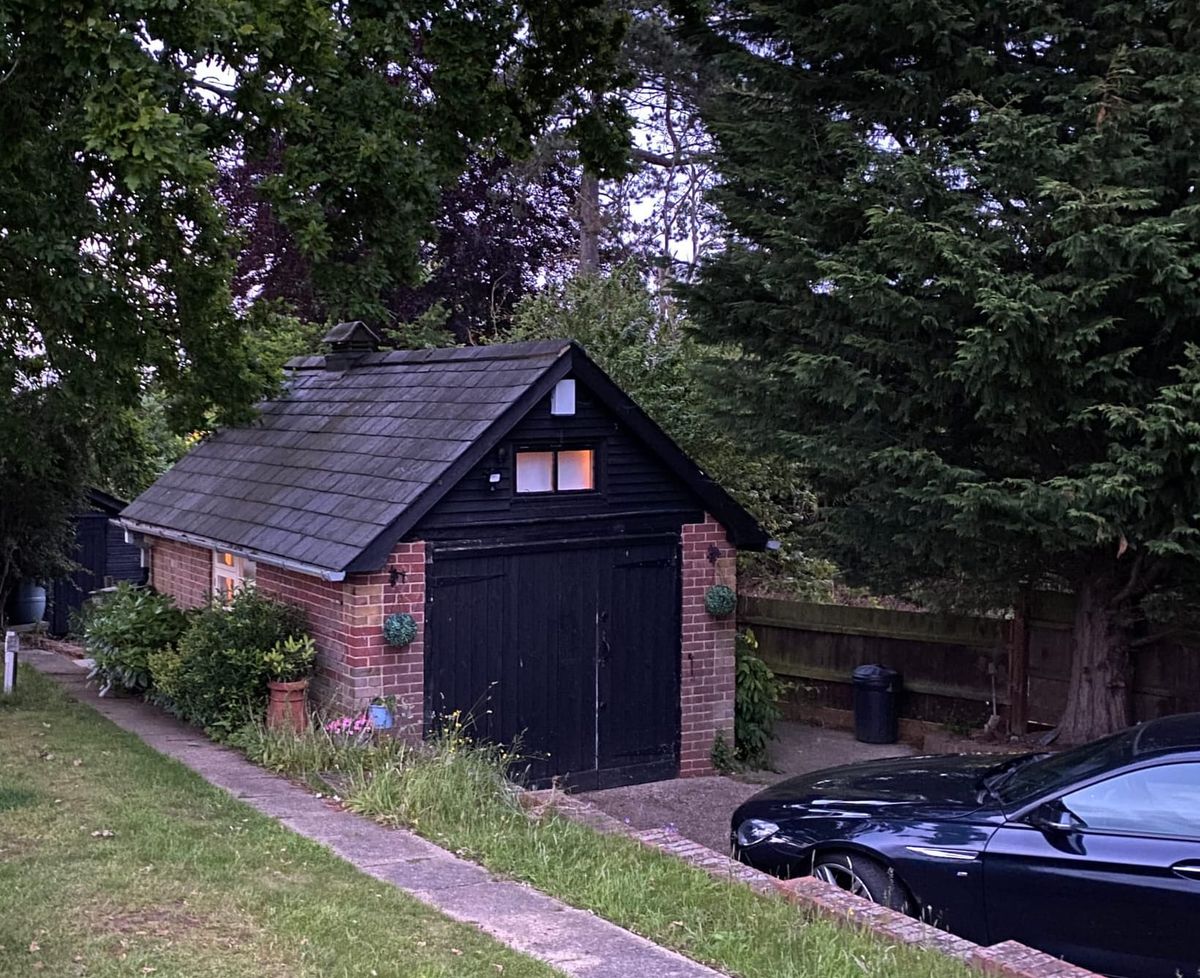
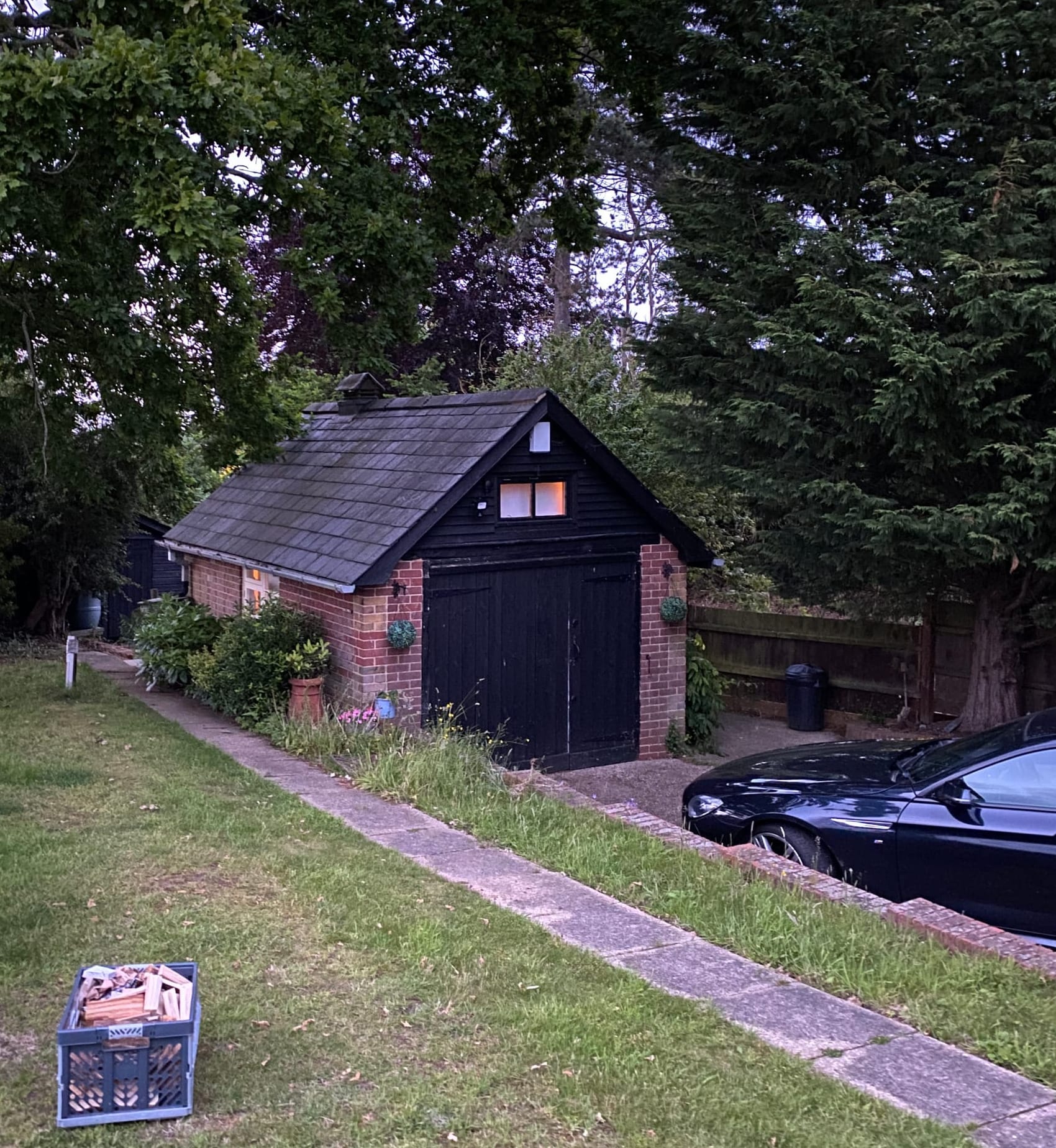
The tiny Airbnb.
I'd booked this Airbnb in Essenden, Hertfordshire for one very specific reason. It's rather embarrassing to be honest. It sits not far from where one of the most formative television shows of my childhood was filmed – The Avengers. Not the superheroes; the other one, all bowler hats, fine suits, judo throws and umbrellas.
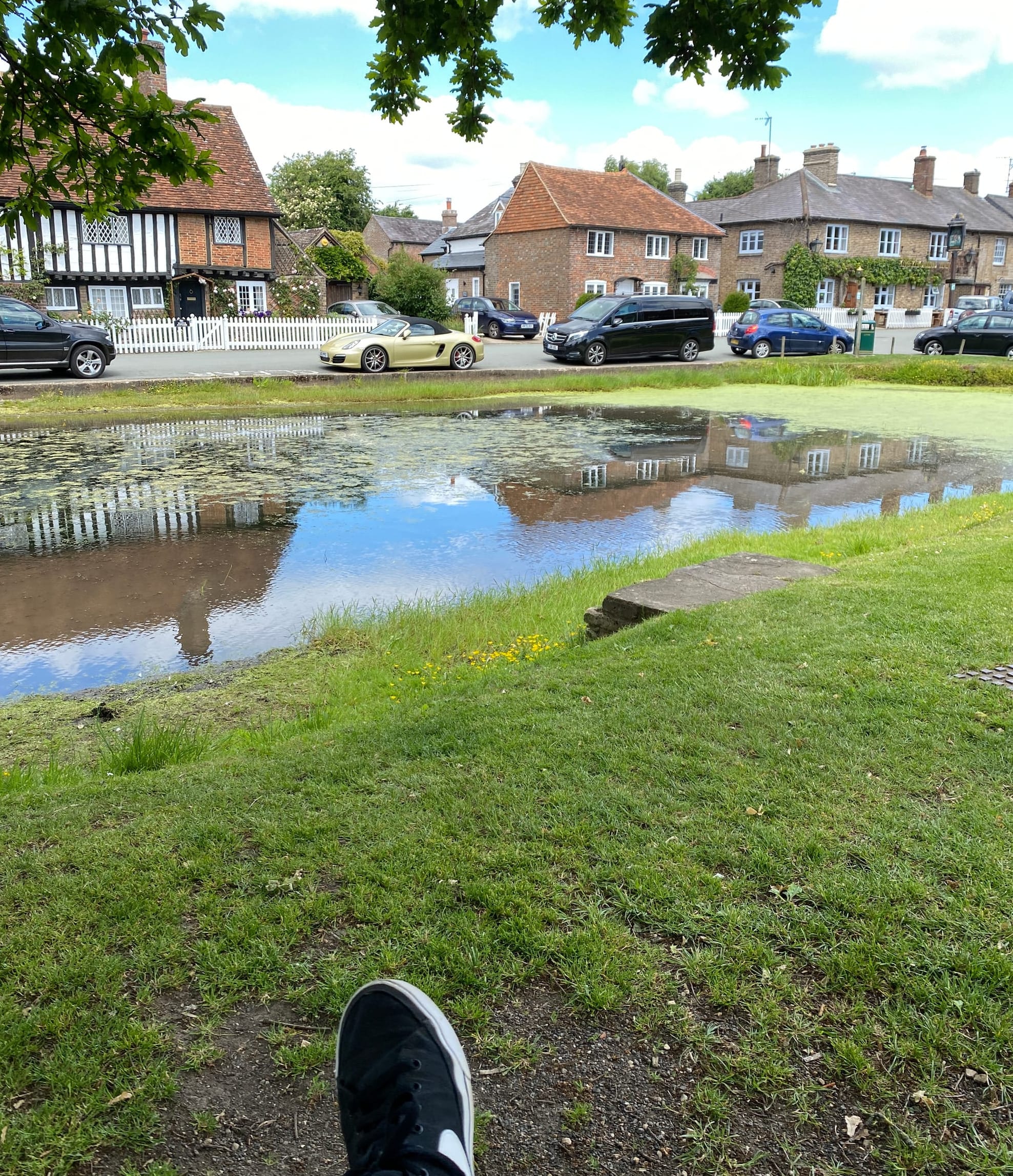
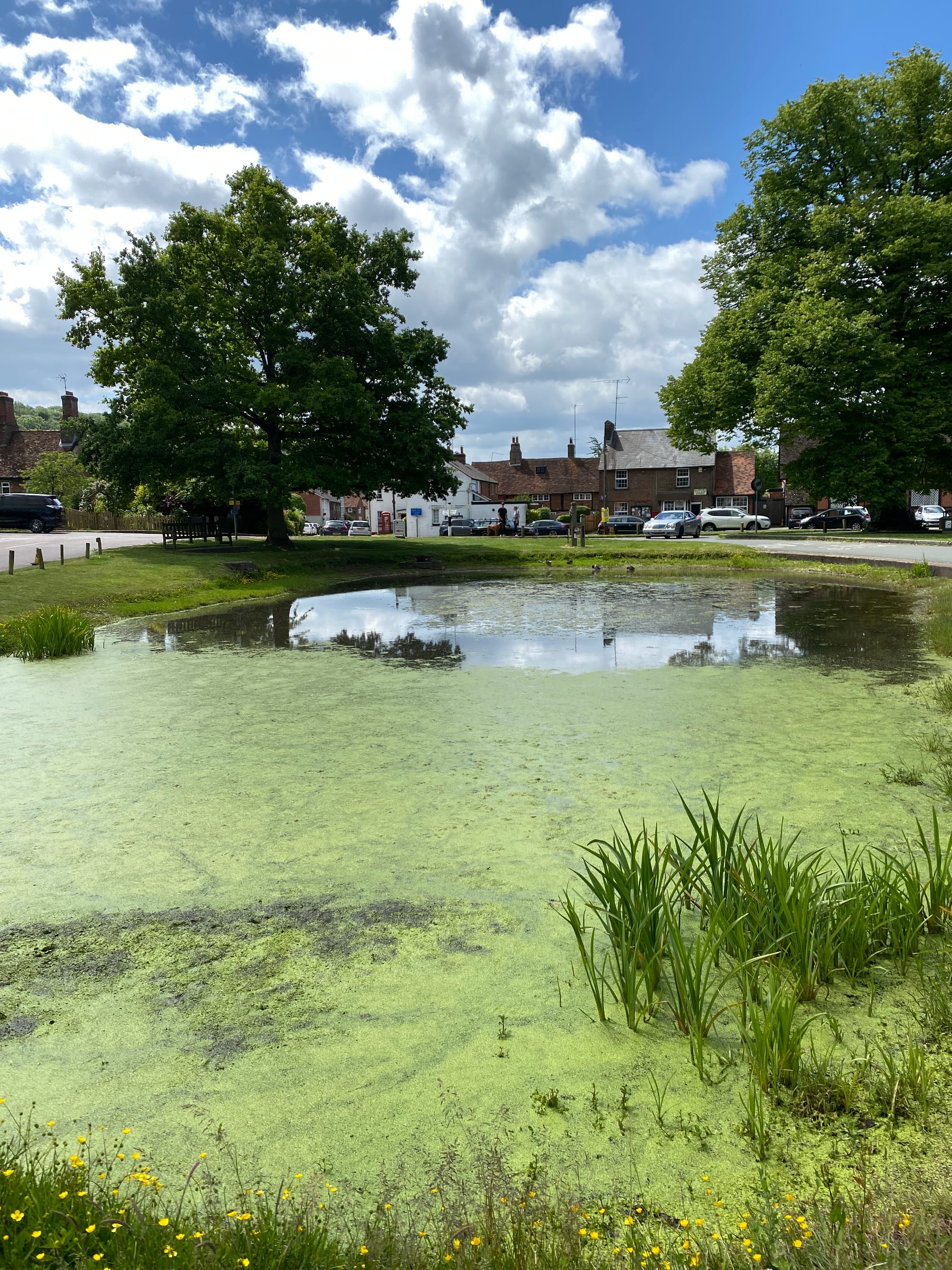
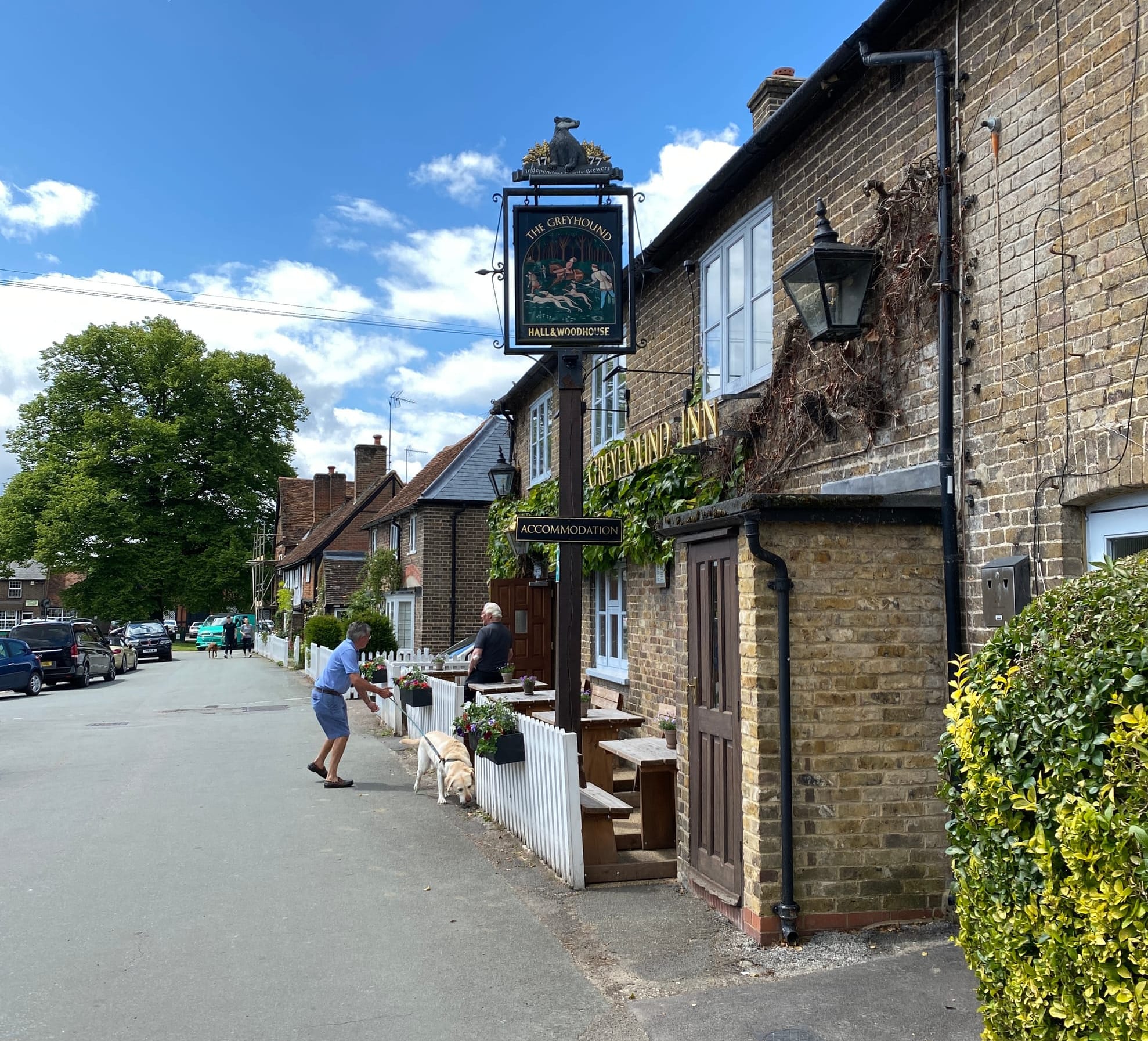
One episode in particular, "Murdersville," set in the sinister fictional village of Little Storping, was shot in the entirely real and considerably less murderous village of Aldbury, just up the road. So somewhere in my already heavy weekend schedule I had pencilled in a small pilgrimage: to go and stand solemnly at the famous duck pond, and have a proper lunch in the pub that also appears in the episode.
The duck pond in Aldbury. You can see the pub in the background - top right
The Airbnb was small – I cannot overstate just how small. The gate to get in was miniscule and, given the car I have is on the large size, the in and out to the property required nerves of steel and a good amount of back and forth.
A country road ran directly past the window and turned out to be a much-loved route for motorbikes and sports cars of the loud-exhaust type. Now, I love a good exhaust note, but not at three in the morning.
It was not peaceful, but it was perfectly formed.
The tiny AirBNB
And yet something changed over those two days – not because it all went smoothly, because it absolutely didn't, but because I stayed with the discomfort long enough to actually see it. The noise, the plan that fell apart, the banging my head on everything in the room, the gap between the planned fifty episodes and the final twenty-three: none of it mattered anywhere near as much as I'd assumed it would. What mattered was that I'd taken myself out of my usual surroundings and, crucially, left myself nowhere to hide.
I've come to think that is why retreats work, whatever shape they are. Changing location doesn't change who you are – Jon Kabat-Zinn got there first: wherever you go, there you are. What a change of place does is strip away the familiar distractions, the small domestic tasks and excuses, that let you keep not doing the thing that matters most to you.
The washing-up that suddenly seems urgent. The inbox that must get to zero first. The important task that wasn't important at all. In a tiny room on a noisy road with the microphone already set up, those excuses simply have nowhere to live. They are forced out, into the light.
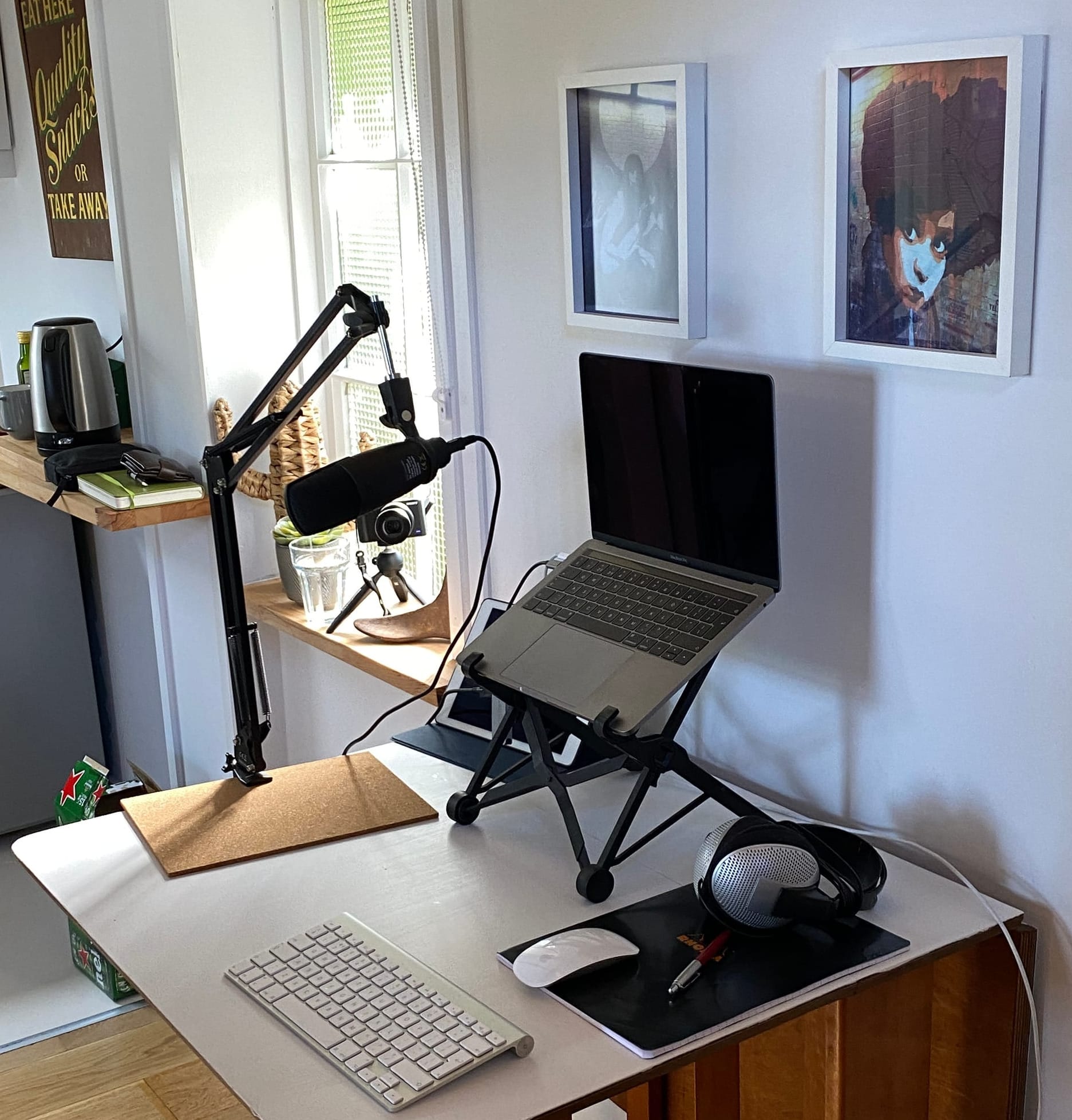
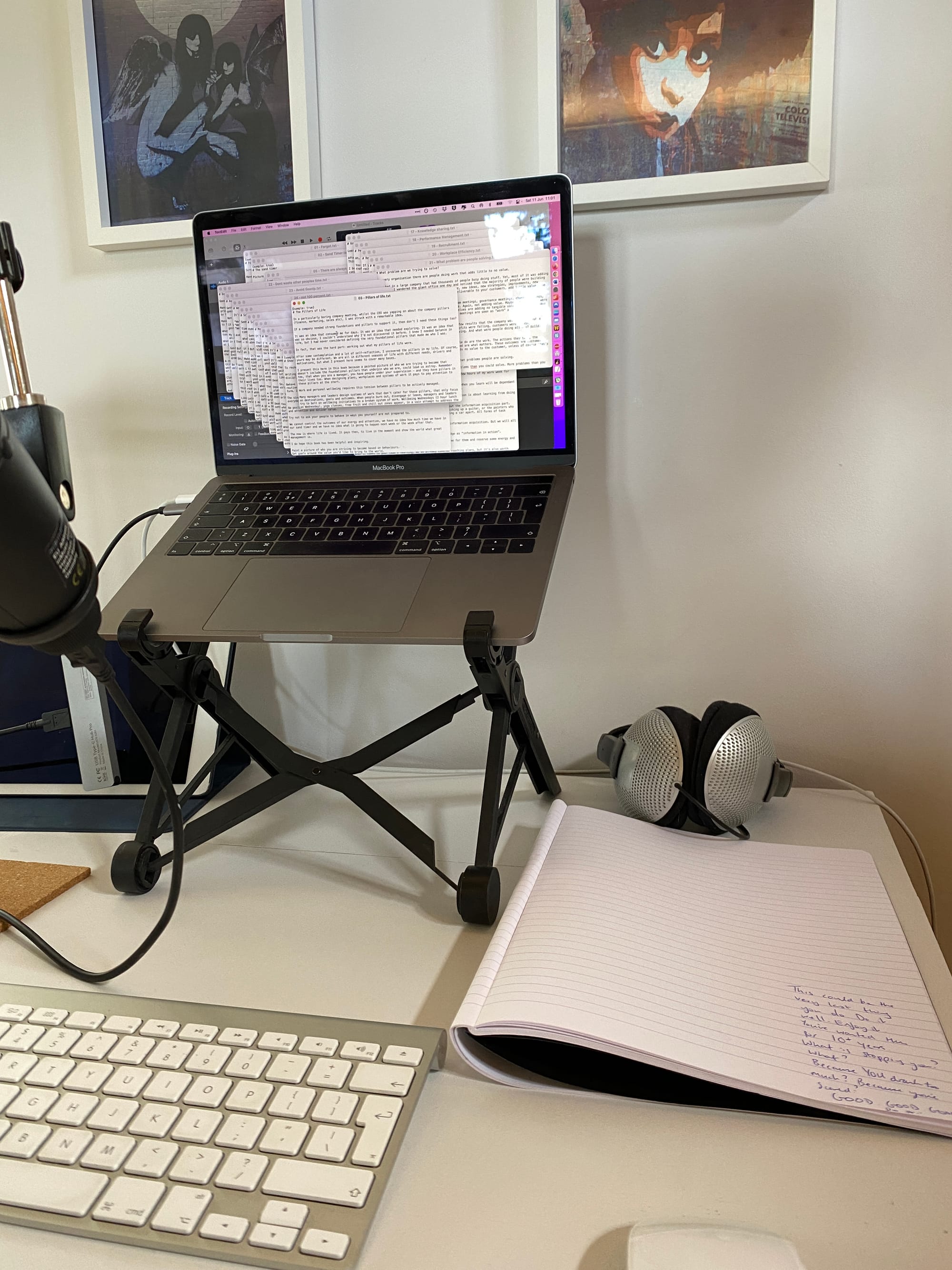
The recording station
A few things emerged out of that weekend that I've kept a tight hold onto since. The first is that fear loses most of its power the moment you sit down beside it. The hesitation I'd felt for over a decade didn't survive the weekend intact – not resolved, exactly; I didn't stand up on the Sunday feeling suddenly fearless – but cut down to a workable size simply by beginning. By sitting down and doing the work. The imagined consequences of starting turned out to be enormously larger than the actual ones, which is very nearly always the case.
The second is that momentum comes from starting, not from planning. Ten years of thinking about the podcast produced exactly nothing. An idea, in itself, holds no value. It needs turning into something. One weekend of imperfect recording produced twenty-three episodes. That isn't an argument against planning – it's an argument against planning as a trap of letting the value go unrealised, which is a different and far more seductive thing. At some point the only sensible next step is to make something, rather than think a little more about making it.
The third surprised me most: creative work often needs constraint, not freedom. The unrealistic goal gave me something to put my weight against. The tiny room meant I couldn't spread out and lose an afternoon to the fun activity of "setting it up just right." The single weekend meant I couldn't defer the whole thing to tomorrow. Constraint, it turns out, is one of the most underrated creative tools there is.
And the fourth is the one I'd put on a wall: a retreat isn't an escape. It's a mirror. I'd gone imagining I'd come home calmer and surer of myself, soothed by a bit of distance from the usual pressures, somehow rediscovering who I really am. What I actually came home with was a much clearer view of what I'd been avoiding, and why. The weekend didn't make the fear disappear at all. It made it visible enough to work with – which, as it turns out, is the only kind of progress fear ever really allows.
Sunsets were magnificient
If you're ever tempted to do something similar – creative, strategic, or simply restorative – a few things I'd suggest, if you don't mind. Somewhere cheap and functional, near a bit of nature, ideally with a garden or a fire-pit and, non-negotiably, a good pub within walking distance. A creative goal, but one sized better than mine – my fifty was far too big and added a level of anxiety exactly where I'd wanted and needed momentum; achievable-but-stretching is the sweet spot. And only you will know what that means to you.
Less gear than you think you need, because I took far too much and spent more time managing it than using it. Paper and a pen for the unstructured hours, which turned out to be worth more than any of the recording. And limited connectivity – no internet sharpened my focus dramatically, though I'd allow myself a little next time, for the dull practical reasons.
None of which is really about podcasts, or Hertfordshire, or me, or The Avengers. The same thing that's true of one person on a noisy weekend is true of almost any creative or thinking work: it rarely comes out of crowded schedules, constant availability, and the absence of proper thinking time. We're remarkably good at talking about the conditions that let good work happen – the right space, the room to think – and then denying ourselves those very same conditions in the name of being productive. That weekend wasn't an indulgence, although I am blessed to have the ability to do it. It was a working condition I'd refused myself for years.
A good life isn't the absence of tension. It's learning how to work with it. And sometimes stepping away even imperfectly, even noisily, even twenty-seven episodes short of the plan, even in a room too small for you – is exactly what lets you see where to begin again.
Where this sits in the Atlas
Orientation·Idea to Value·Communication·Creativity & Climate·Learning
A gentle, image-rich reflection on work, rest and the pace we set for ourselves. Less a productivity book than a permission slip — a reminder that stepping back is part of doing good work, not a break from it.
Made to be picked up and enjoyed, in print or digital. A warm, slow read for anyone who suspects they've been going a little too hard.
There's a video that goes with this piece, on Creative Soul Projects. Same person, same observation — just followed on camera instead of on the page. Explore the channel.
The link has been copied!
Your link has expired. Please request a new one.
Your link has expired. Please request a new one.
Your link has expired. Please request a new one.
Great! You've successfully signed up.
Great! You've successfully signed up.
Welcome back! You've successfully signed in.
Success! You now have access to additional content.