A trip to Zurich to give a keynote, and what happened when I carried a microphone around the city instead of just my usual camera. On church bells, a man eating a kebab on a bicycle, and why the most productive afternoon of the trip looked, on paper, like doing almost nothing.
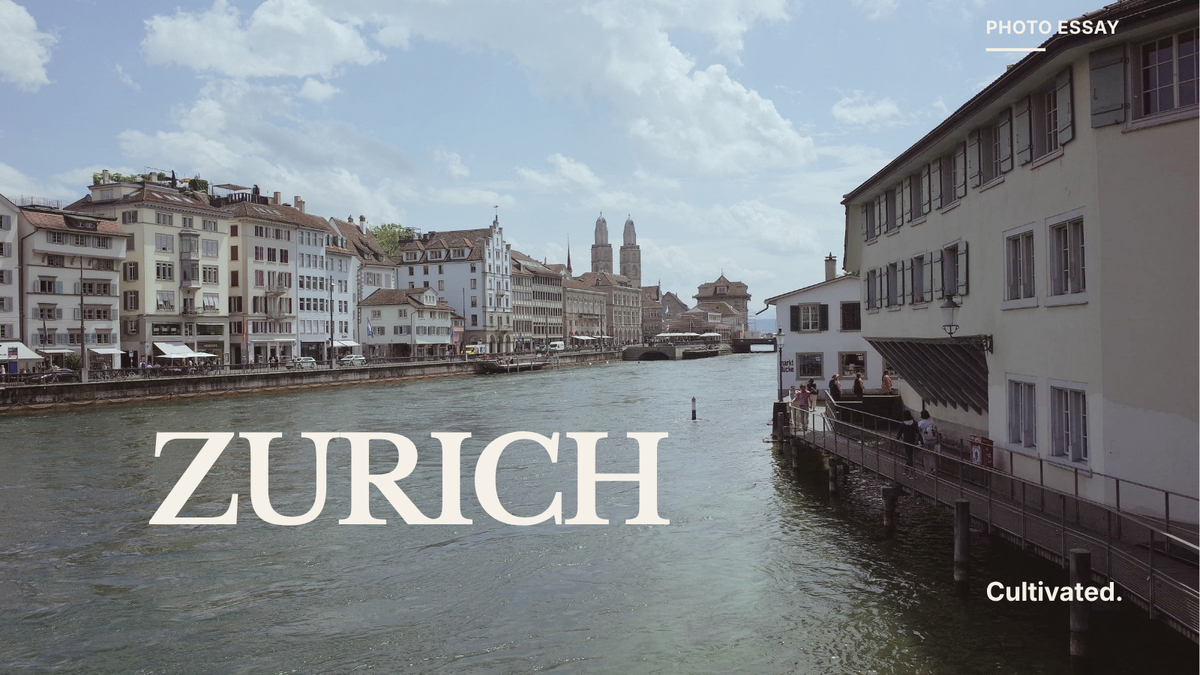
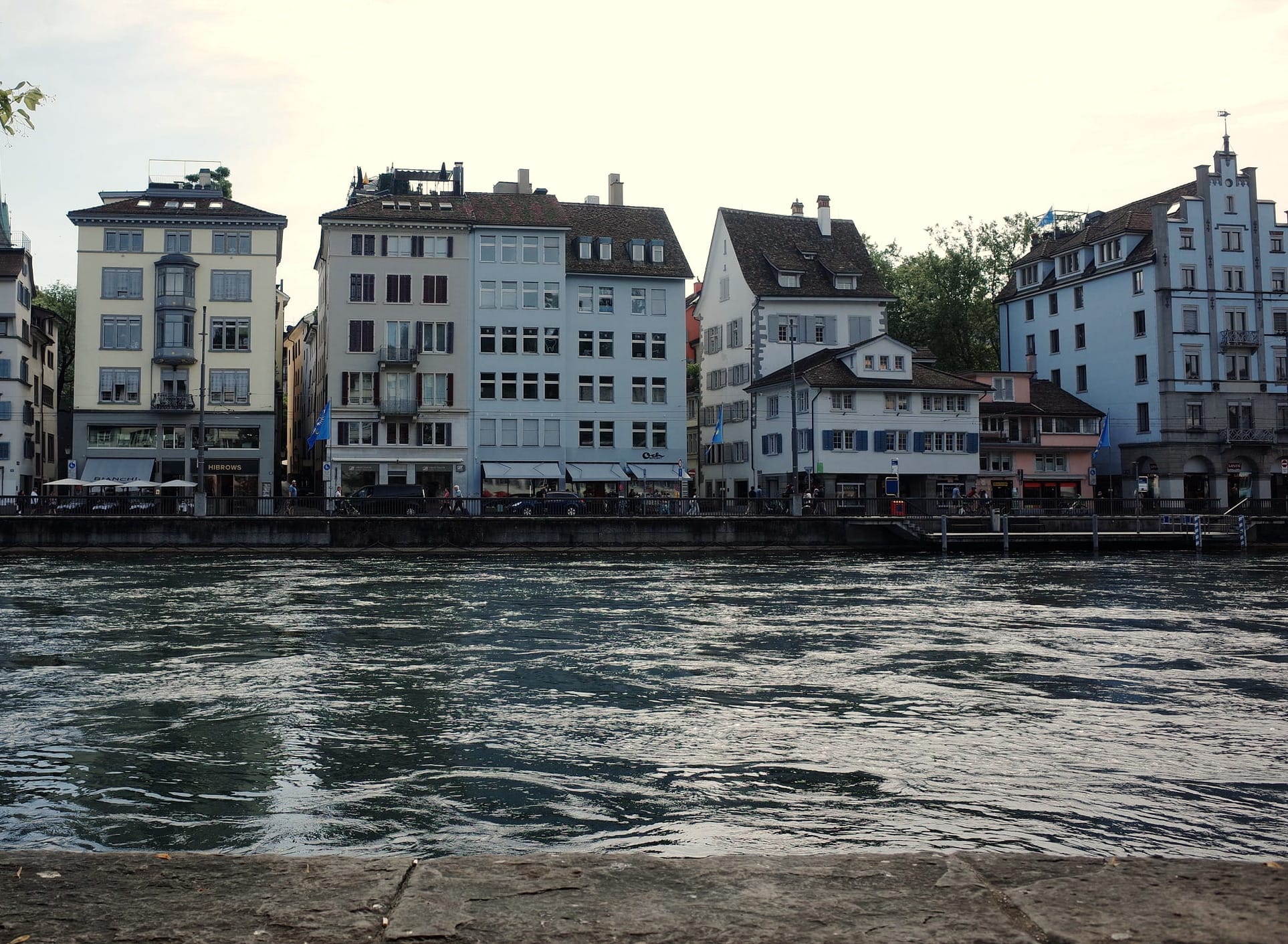
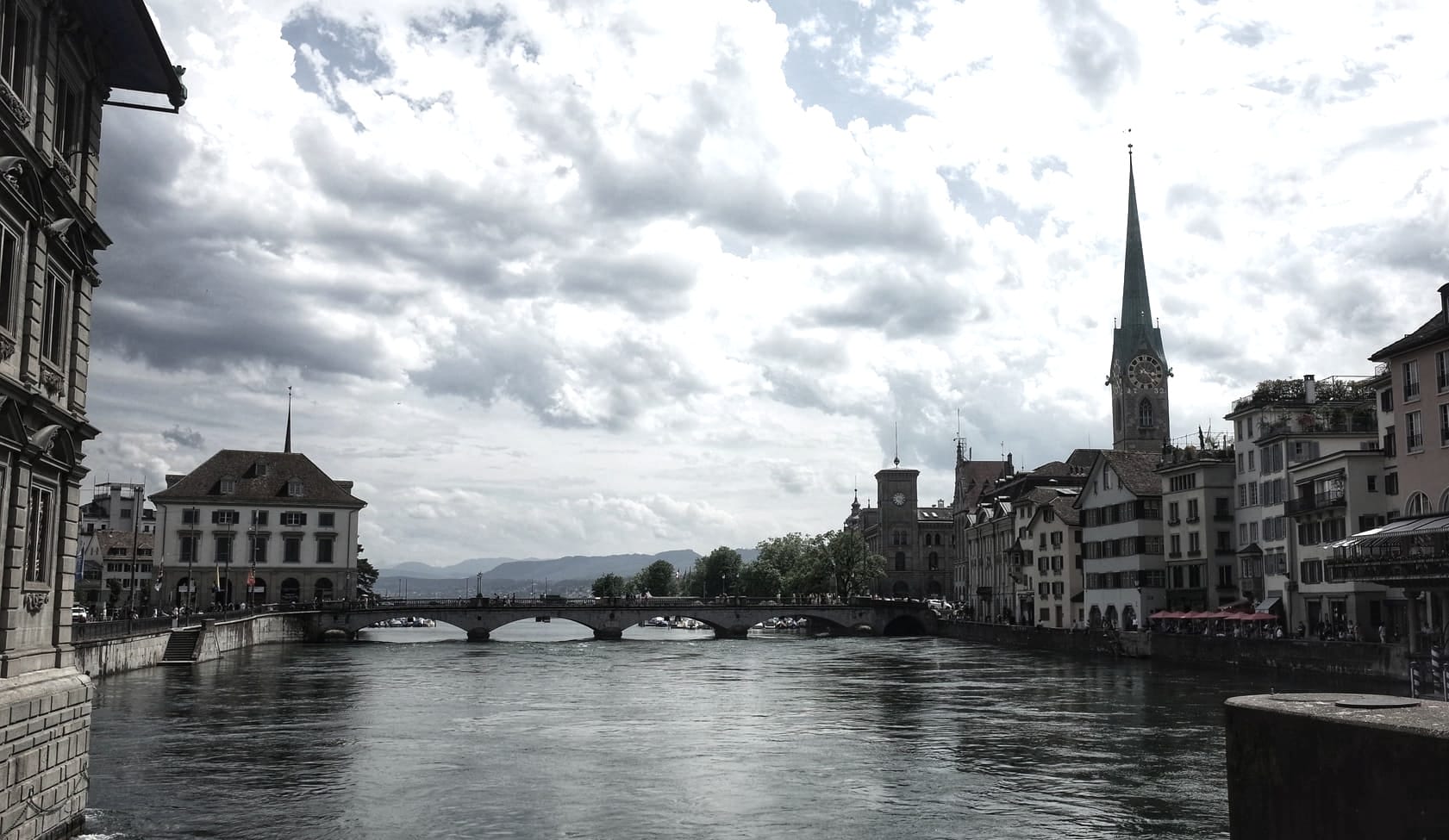
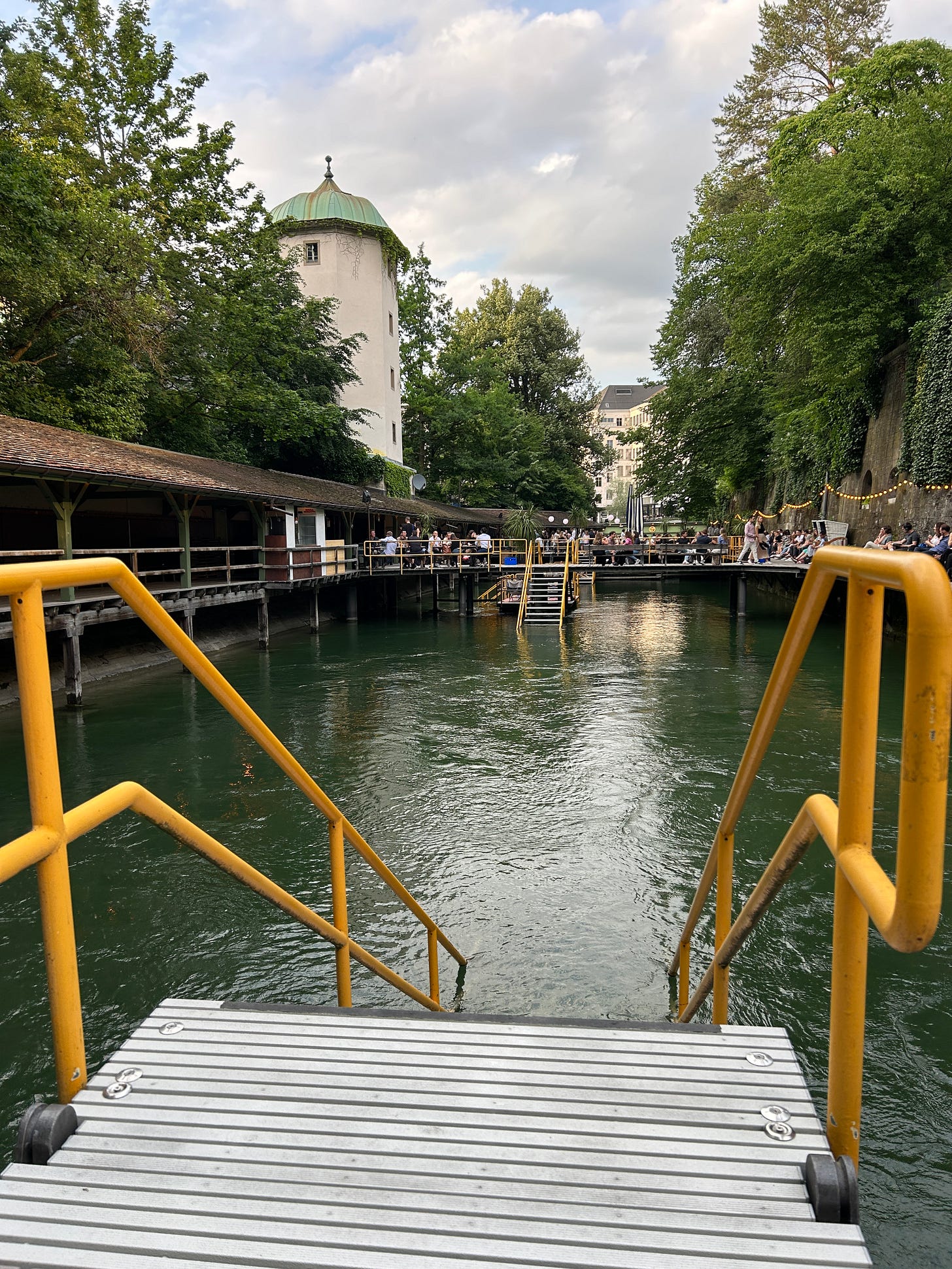
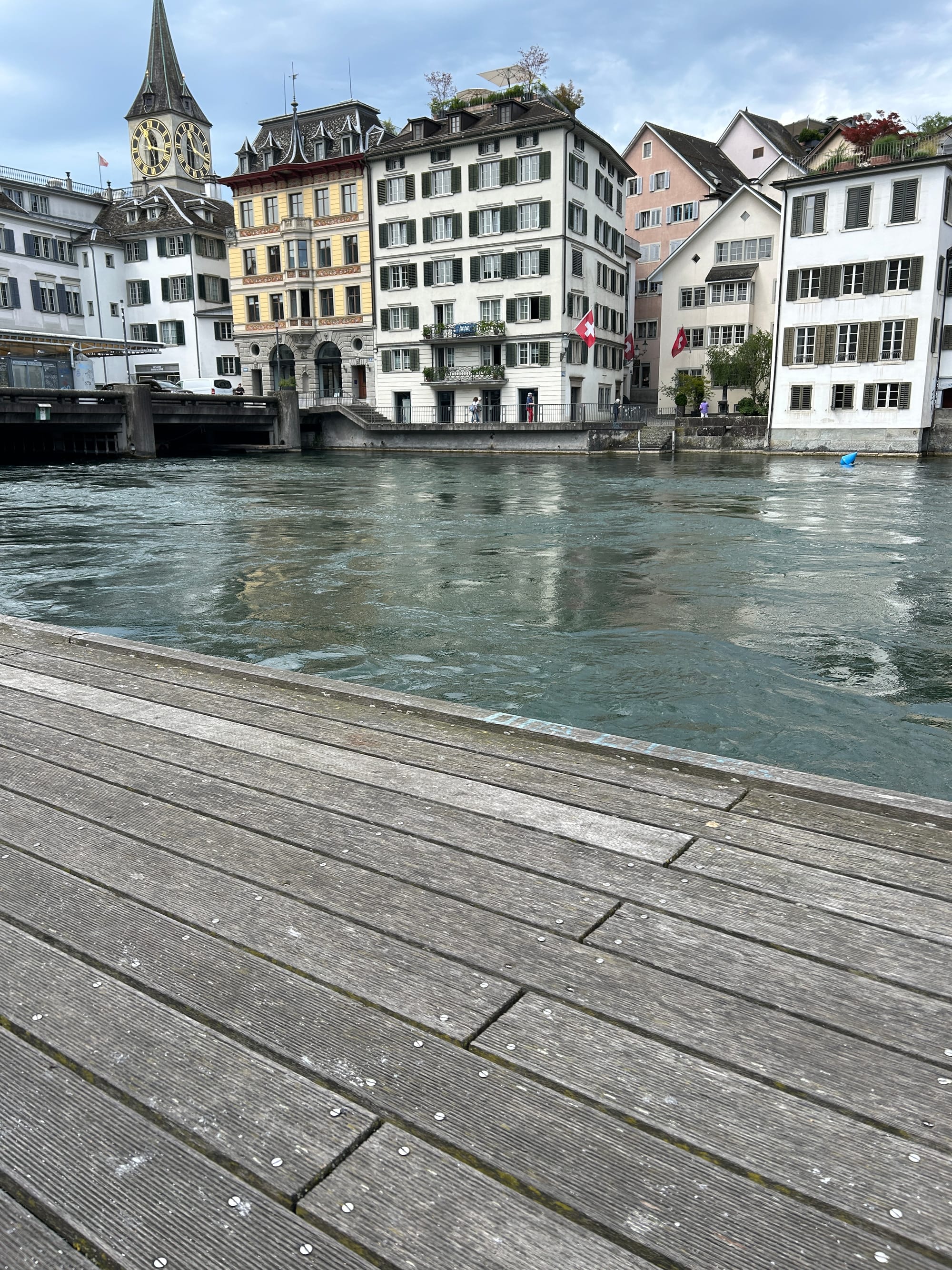
The river running through Zurich, with old churches and buildings along the bank — from a Cultivated photo essay on travel and attention.
A photo essay : a trip to Zurich to give a keynote, a microphone instead of just a camera, and what happens to a city – and a mind – when you actually pay attention to it.
At the beginning of June, I boarded a British Airways flight to Zurich. I was travelling to deliver a keynote and somehow ended up spending forty minutes recording church bells while watching a very well-dressed man drink a staggeringly expensive espresso.
The keynote went well, by the way.
The day after the talk I wandered from the hotel towards the river. There are, of course, the usual things people tell you about Zurich: it is expensive, neat and efficient. All of these appeared to be true.
But one of the first things I noticed was something rather less useful for a travel brochure.
The bags.
The people of Zurich are well dressed, stylish and, in places, glamorous. But they also seem to put a remarkable amount of thought into what they carry around. Bags appear to be chosen rather carefully. Not showily. Just thoughtfully.
I was the obvious exception.
My bag was stuffed with camera gear, an audio recorder, oversized headphones and a large coat which, in my defence, the BBC Weather app told me I needed.
I didn't. It turned out to be considerably warmer, and drier, than I expected.
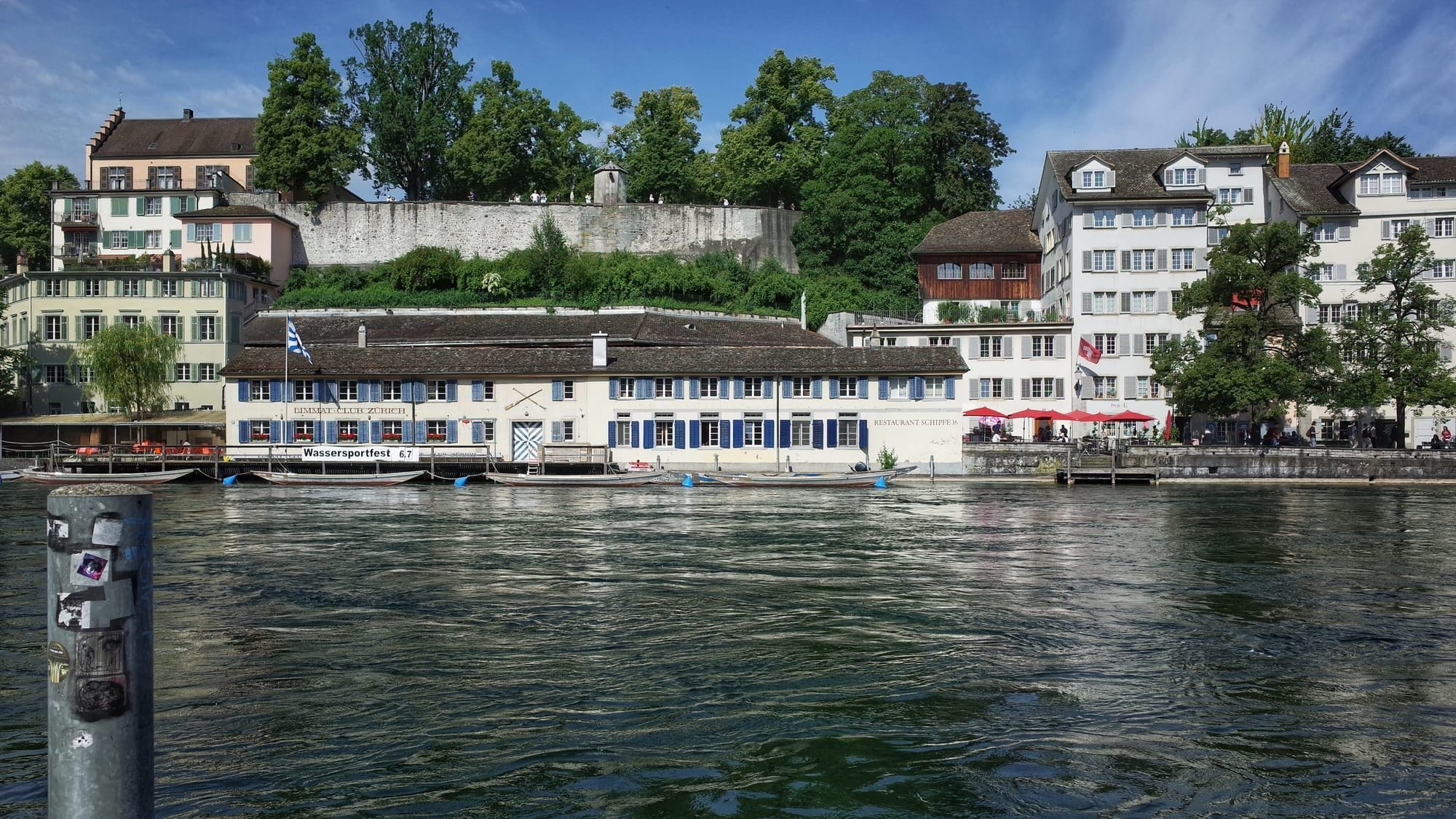
The Limmat River in Zurich
The city itself is very beautiful. Old buildings mingle with newer ones without much drama, almost like they'd been that way since the beginning of time. Narrow alleys, old steps, walkways and arched bridges seem to have been designed by people who had considered that people might actually want to move through them. Not by car, necessarily. On foot.
There is something pleasing about a city that understands that walking is not simply what happens when you haven't found your car yet. Budapest feels the same, as too does London and Berlin. Orlando. Less so.
My plan for the day was simple: explore, take some photographs and capture some audio for a podcast.
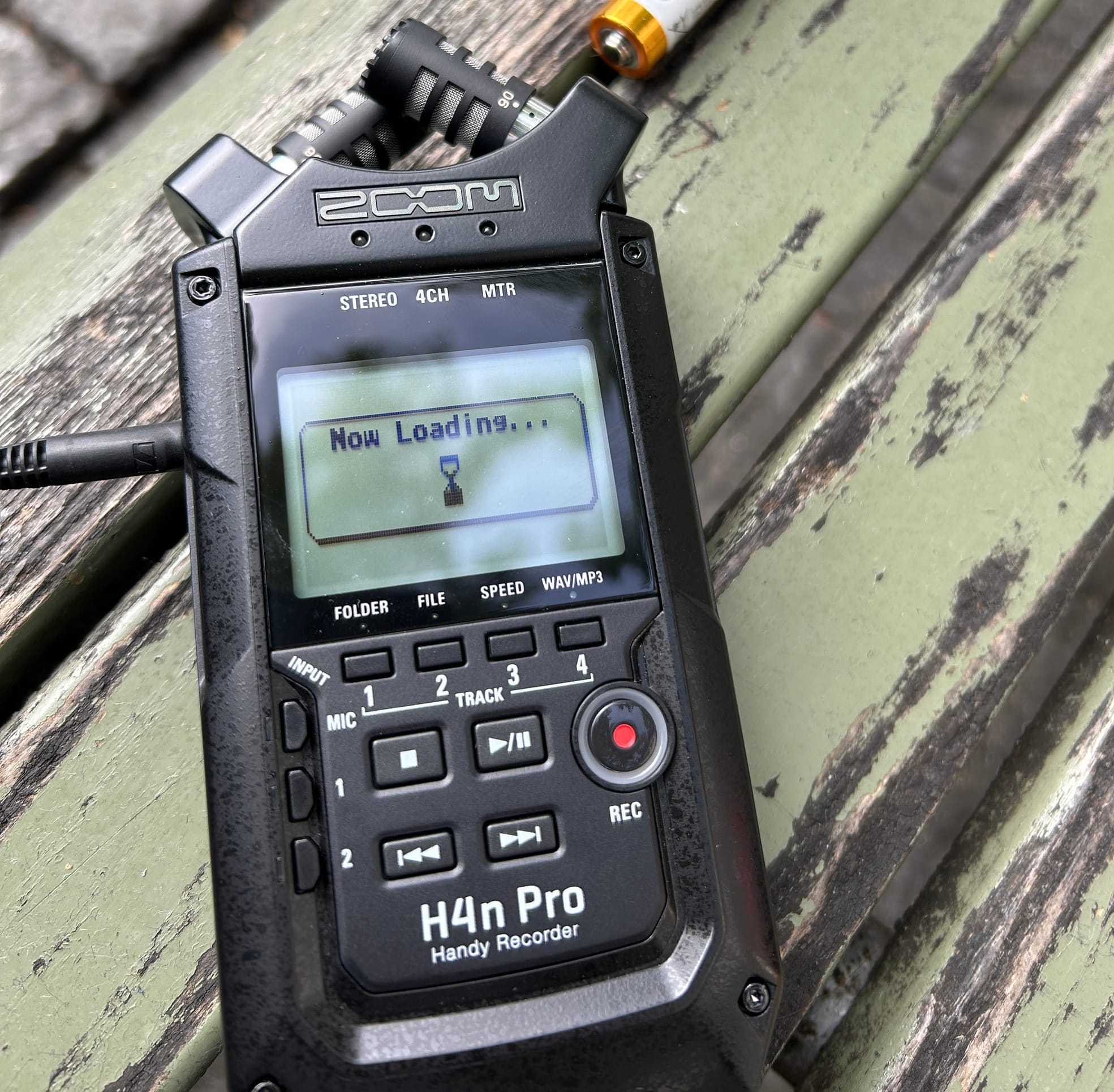
My zoom H4n recorded - taking ages to boot up
Something rather interesting happens when you carry an audio recorder around a city.
The city gets louder. Not literally. You just start hearing more of it.
The church bells I'd spent forty minutes recording were, in themselves, nothing unusual. They were the sort of church bells I would normally acknowledge, enjoy for a moment and then forget about. Europe is full of them.
But when you have a microphone in your hand, church bells become even more majestic. So I sat on the banks of the river, with my over-sized headphones, watching the well-dressed man drink his espresso, recording the bells.
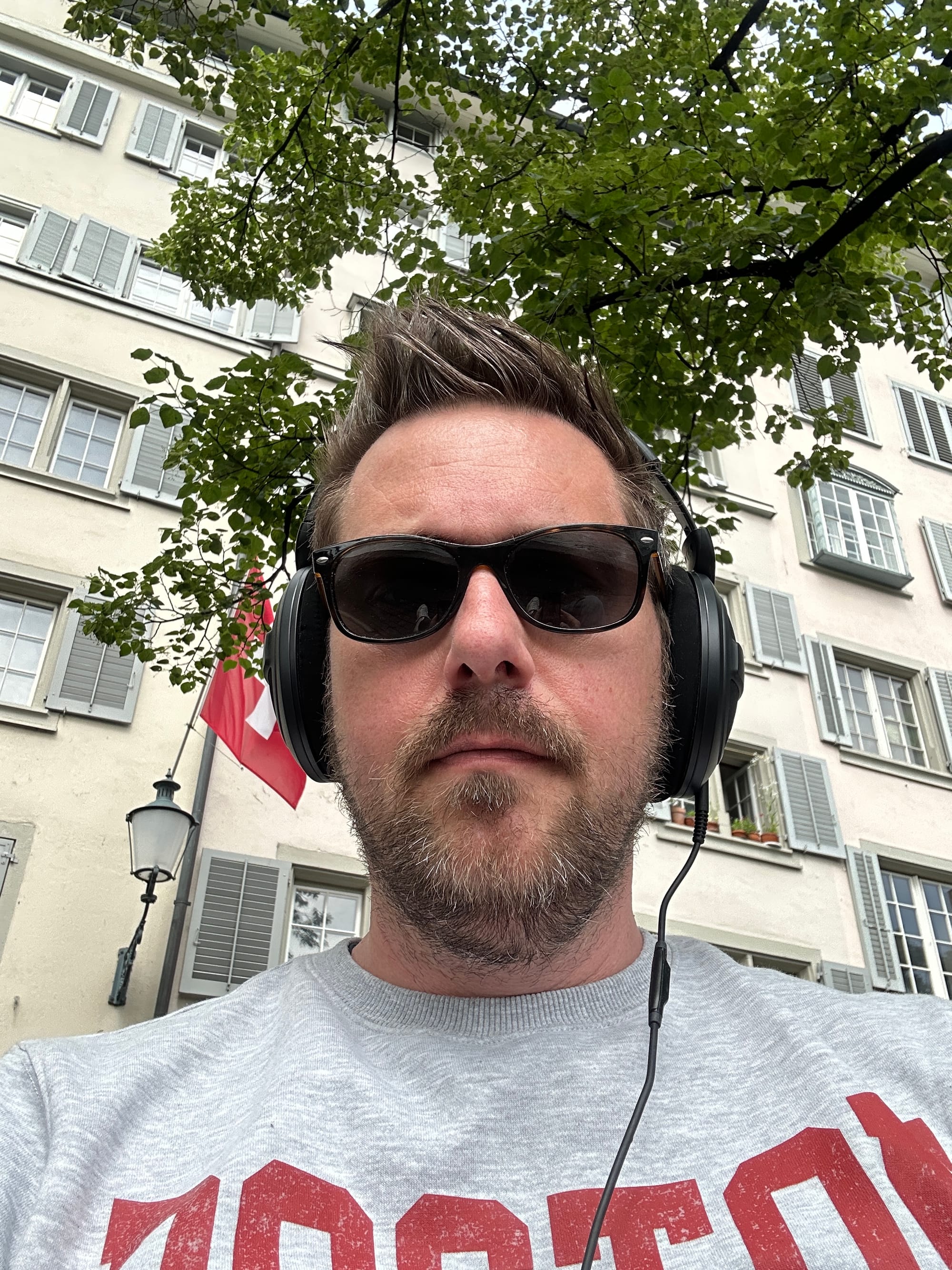
Selfie recording the Cathedral bells
The bells were obvious though.
What surprised me was everything underneath, around and on top of them. The trams. People talking. Bicycles. Boats. Coffee machines. Footsteps. A door opening somewhere. The clinking of glasses on a serving tray. The general murmur of a city waking up. It was early.
And, of course, you don't actually need the microphone at all to hear this. Attention is the microphone.The environment hadn't necessarily become more interesting. I had become more interested in it because I was paying attention.
That seems obvious, but we forget it remarkably easily.
My spot for recording - not too many people, the river running past and the church bells in the distance
The downside to recording in any city is that finding somewhere quiet enough to record your own voice is surprisingly difficult. I eventually found a little spot beside the river, next to a bar, and laid down some words.
It wasn't my finest recording.
I'm still trying to find the fortitude to give absolutely no damns about recording myself in public. There is something maybe uniquely British about sitting beside a river talking into a microphone and imagining that everyone is wondering what on earth you are doing. And commenting on it.
Nobody was. Or if they were, they had the good manners not to say so. The important thing was that it got done.
I then moved to the bar and did what I do best. I watched people.
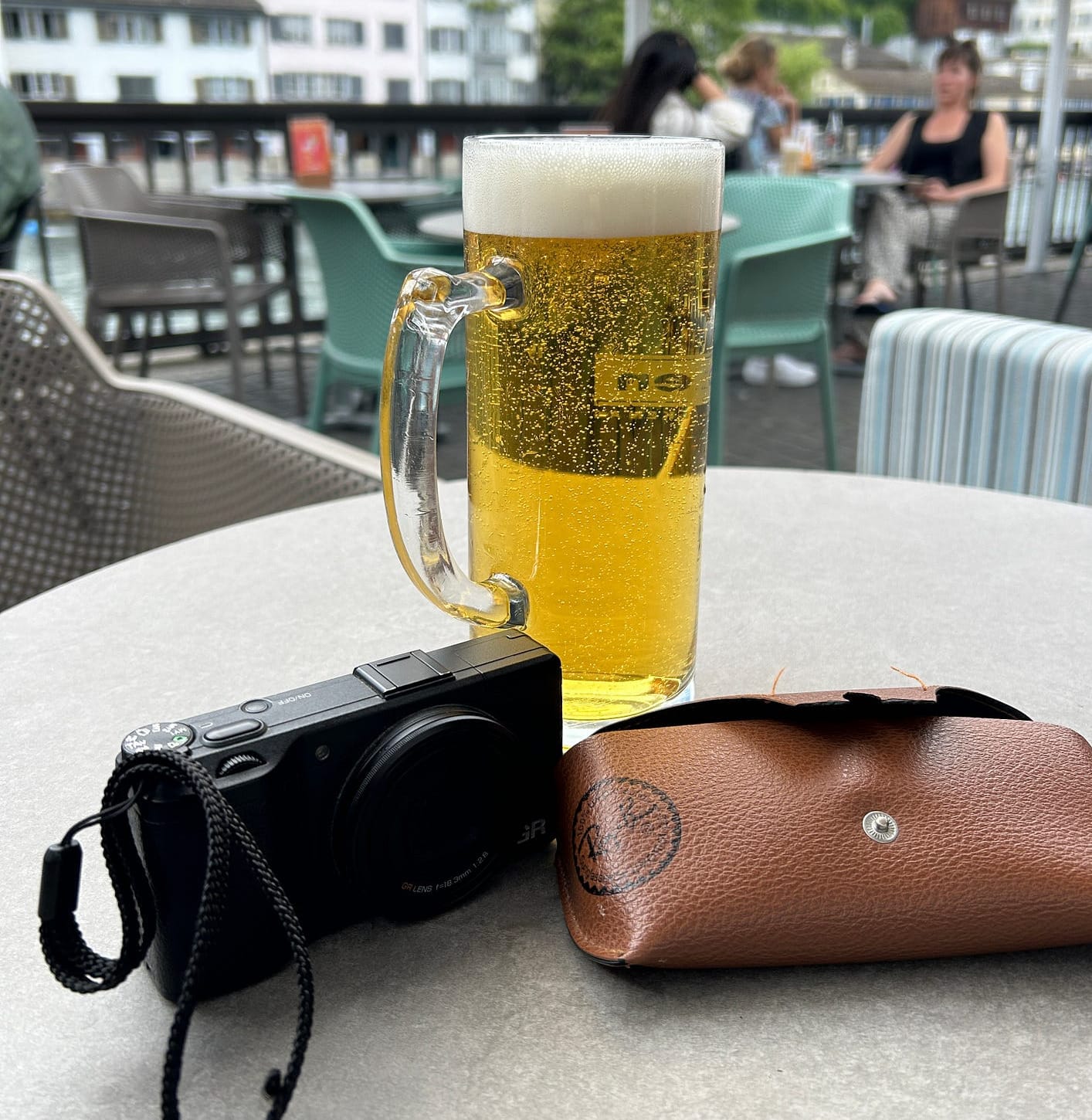
Enjoying a beer in Zurich - the camera is never far away
People-watching is an underrated skill.
We spend enormous amounts of time at work trying to understand customers, employees and colleagues through surveys, dashboards, interviews and carefully constructed team events.
Occasionally, it is useful to just sit somewhere and watch what people actually do.
Zurich was, broadly speaking, a rather orderly place, which suited my own temperament very nicely. But even the most orderly cities contain people who appear to have missed the memo about that.
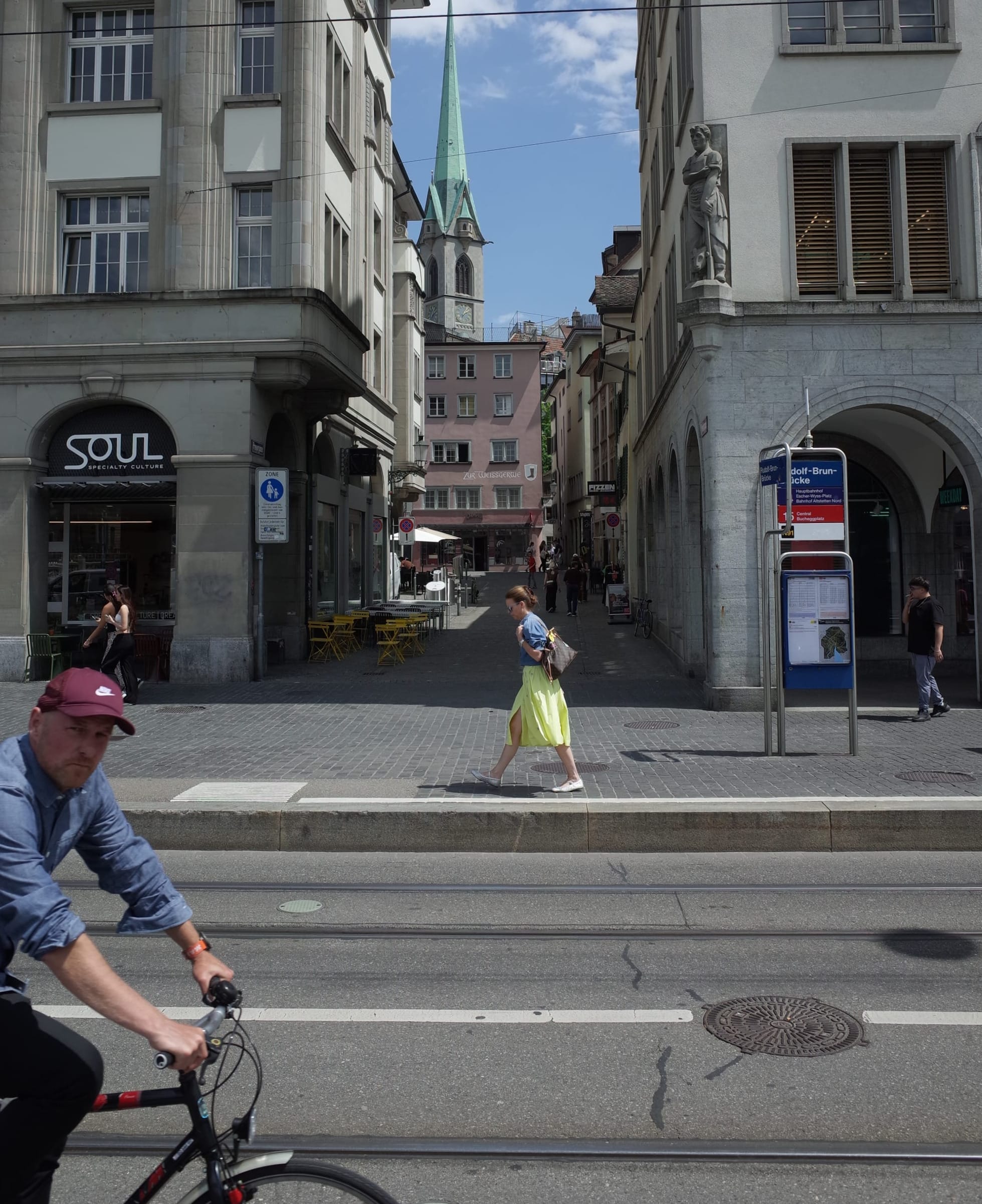
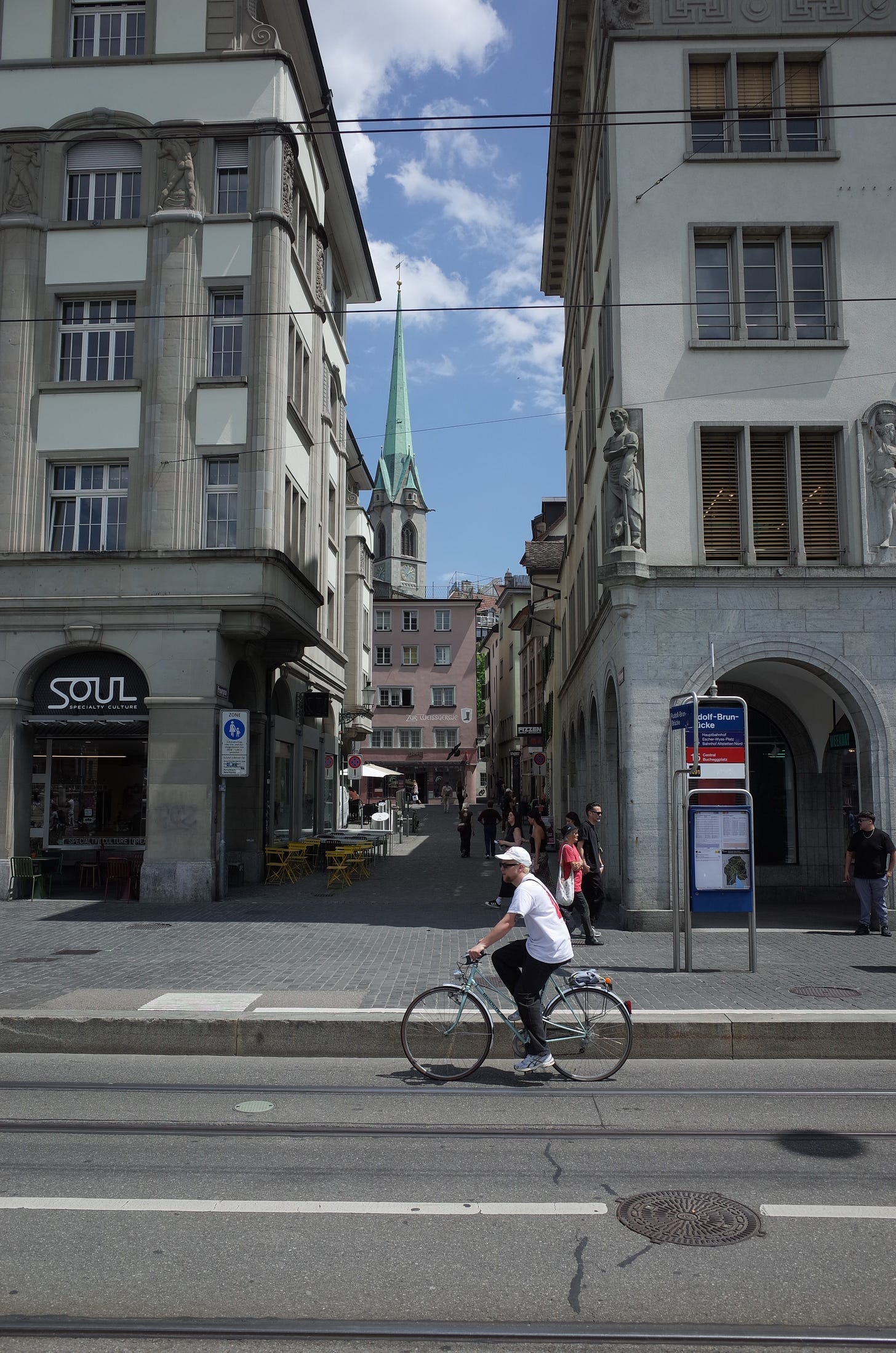
As smartly dressed people queued for a tram, I watched a man in a suit hurtle past on his bicycle, attempting to eat a kebab with one hand while talking on the phone with the other. He didn't crash. But the colour drained from his face when someone stepped into his path.
There was something reassuring about this. Every city has its systems. Every city has its exceptions.
After a quick drink I grabbed the Ricoh and wandered through the marketplace and along the river.
Zurich is a very nice place.
Zurich is, objectively, a very nice place.
The obvious tourist locations are extremely photogenic, but as with almost every city, the more interesting things start to appear when you stop looking for the things you're supposed to look at.
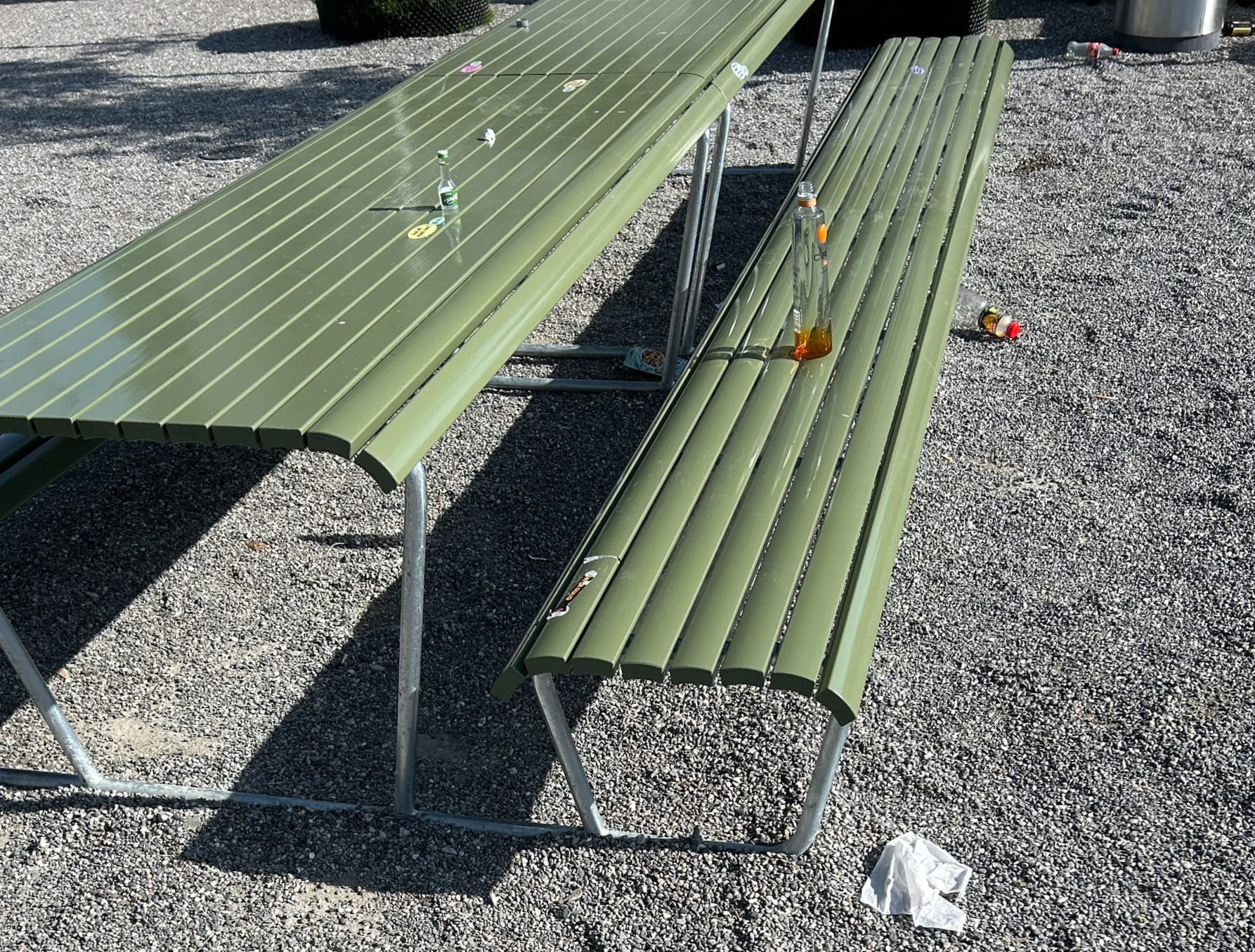
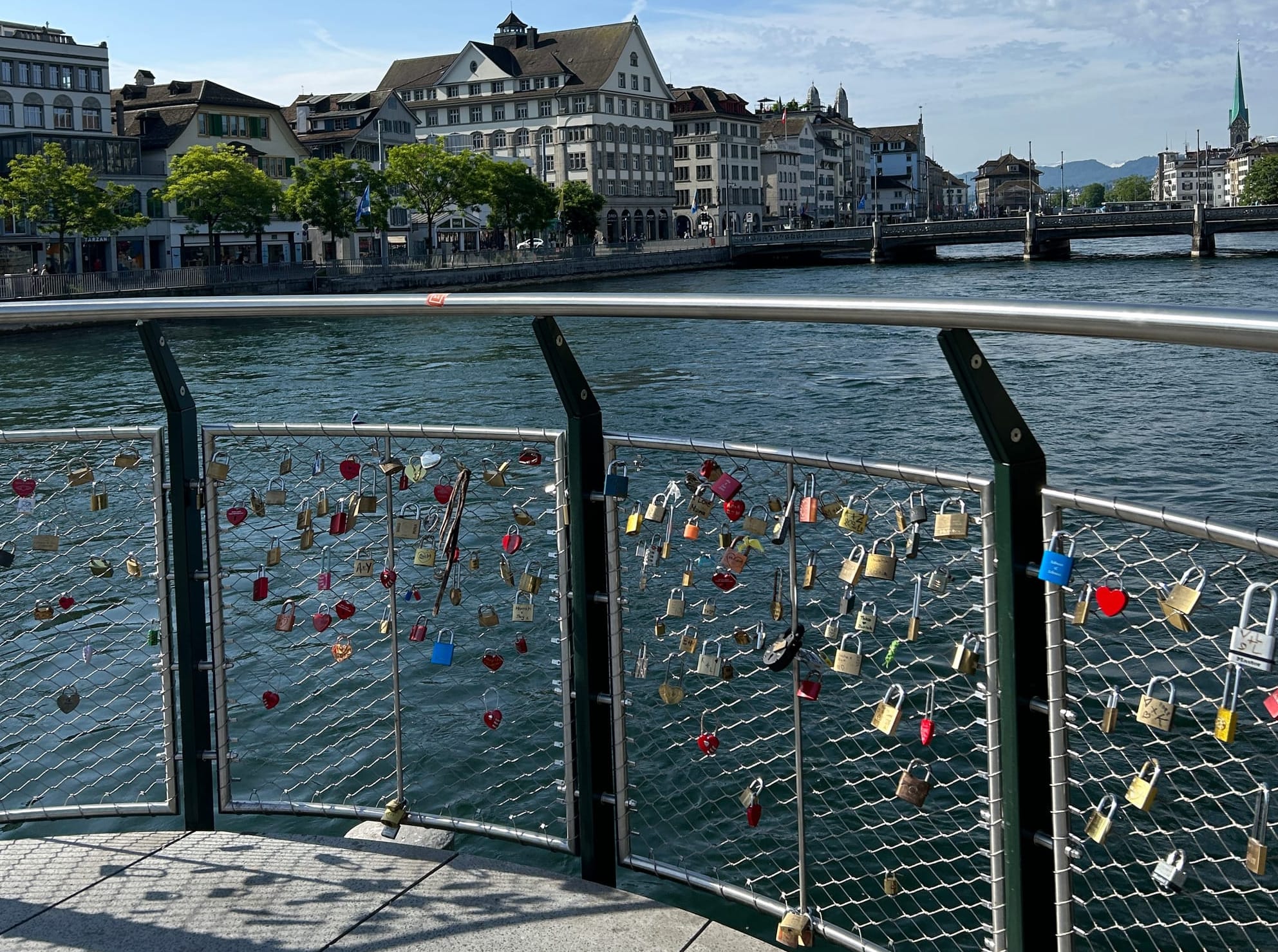
A shop window. A chair. A badly placed sign (I do like my signs). Someone's shoes. A tiny balcony. Padlocks. A building detail that nobody else seems to have noticed. I took a lot of photographs of things that were, in the grand scheme of things, completely irrelevant.
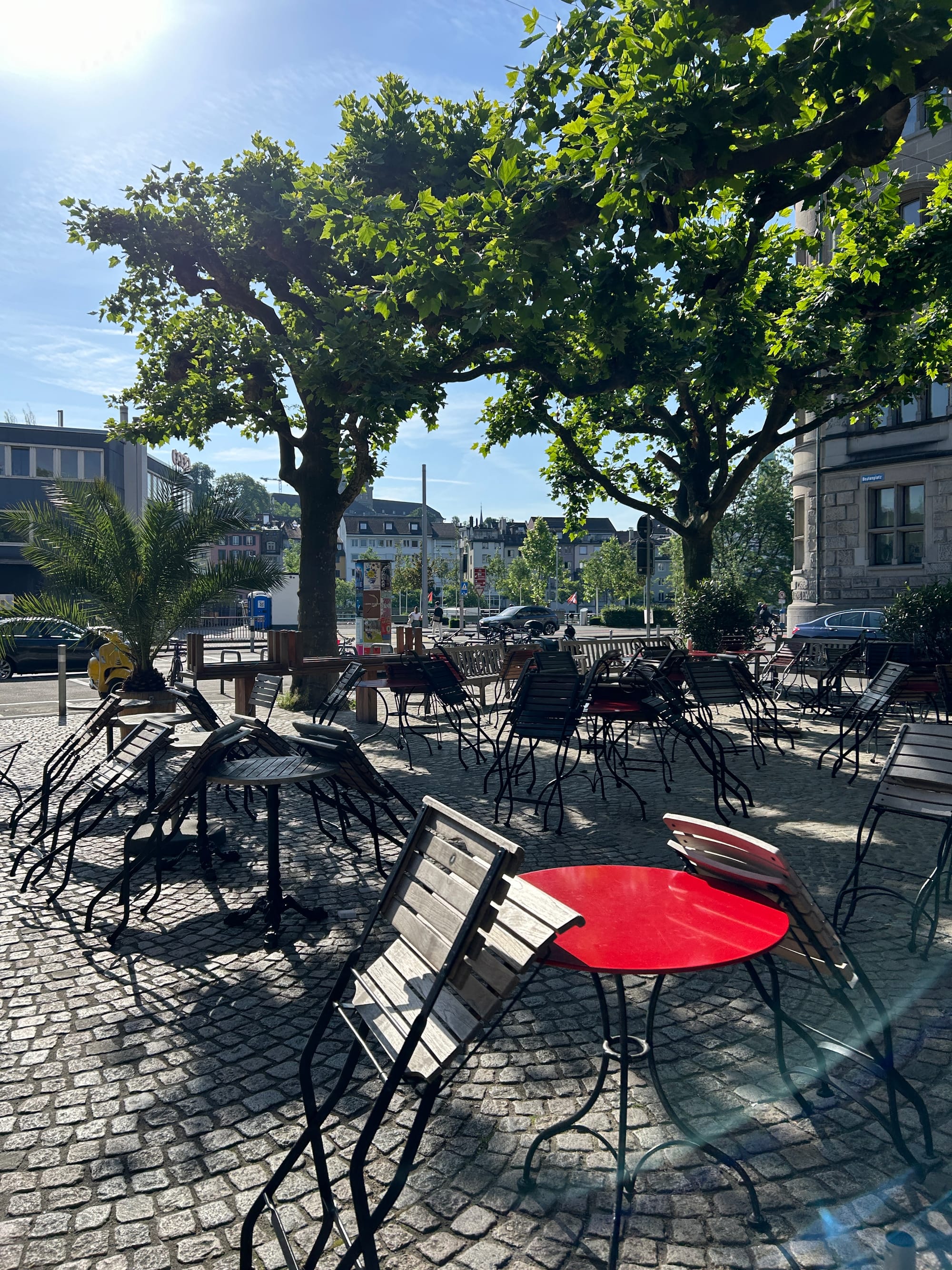
A collection of random snaps from my walk in Zurich
This is one of the reasons I like photography so much.
Photography teaches you to notice, and see, and observe. You walk around with a camera and suddenly you're making decisions about what is worth looking at. What deserves to be inside the frame. What can be left outside it. What story you are trying to tell.
And that is a surprisingly useful way to think about creative work, including plenty of work in your organisation you'd never think to call creative.
You see, most problems aren't caused by a lack of ideas. They're caused by too many things competing for the frame. We have too many possibilities, too much information, too many voices, too many things we could build, improve, fix, measure or worry about.
The creative act is often less about finding something new than deciding what is worth paying attention to.
By five o'clock I was ready for another beer, so I headed to a wonderful little bar called the Old Crow, which, as luck would have it, was just opening its doors.
A Falken beer was swiftly ordered, and I dropped into a rather nice chair located by the window. I then spent the next few hours thinking about a new course and a book – all inspired by today's wander.
This is the bit that looks really suspicious on a time sheet.
If you measured the day by conventional measures of productivity, I had wasted most of it. I'd walked around. Drunk coffee. Listened to church bells. Looked in a stationery shop – obviously. Watched people. Taken photographs of things I found interesting. Sat in a bar. Sure, the podcast recording had been completed, although it wasn't exactly a masterpiece.
I had, by most objective measures, spent a considerable amount of time doing almost nothing.
Except something was happening. I was thinking again. Pondering. Making connections between my notes. Piecing together apparently unrelated ideas and seeing whether they might belong together.
We have somehow arrived at the idea that every hour away from the desk needs to justify itself. I suspect this is partly because we've become very good at measuring work and rather bad at measuring thinking.
The walk wasn't productive in the usual sense. The afternoon wasn't a heroic push of concentrated work followed by a late drive home with apologies to the family. And yet I came back with three ideas I wouldn't have had if I'd stayed at my desk attempting to have three ideas. One of them subsequently became a breakthrough for a client.
That isn't an argument for wandering around all day and calling it work. Far from it. It is an argument for recognising that thinking doesn't always look like thinking. Sometimes it looks like a man taking forty photographs of padlocks.
As darkness crept in, I pottered back towards the hotel, took some more photographs, popped into another stationery shop, had a look around a small souvenir store, popped into another stationery shop and eventually went out for dinner with some of the other people from the conference.
Not sure about the stickers
There was another reason the day had felt liberating.
Nobody in Zurich knew what I was supposed to be doing. And, barring the occasional bizarre coincidence, nobody knew who I was either.
That is surprisingly freeing.
I could sit beside the river and record audio with pigeons wandering around me and a man drinking espresso. I could stop on a bridge and take forty photographs of padlocks. I could walk into a shop and spend ten minutes looking at notebooks and nice pens.
Nobody was waiting for me to behave like the person they already knew. Nobody expected me to be the consultant. The speaker. The writer. The guy who normally has something sensible to say.
I was just a man in Zurich with too much camera equipment and some oversized headphones.
There is something creatively useful about that.
Some people manage to achieve this state wherever they live. I admire them enormously. For the rest of us, there is something rather helpful about going somewhere where nobody has any expectations of you.
You temporarily become unknown. And when nobody knows what you're supposed to be doing, you get to find out what you actually want to do.
I came to Zurich to give a talk. I came home with a finished podcast, some audio recordings, several hundred photographs and a notebook full of things I probably didn't need to know.
It was, ironically, a very productive trip.
Not because I worked particularly hard. I clearly didn't. Because I paid attention. And sometimes the best way to think differently about your work is to temporarily stop being the person who does that work.
Go somewhere unfamiliar. Walk around. Listen. Look at what people are carrying. Sit in a bar. Drink an espresso. Take a photograph of something completely irrelevant. Listen to the church bells. Let your mind wander somewhere it wasn't planning to go.
The useful thing about travel isn't necessarily that it gives you new ideas. It's that, for a little while, it gives you a different place from which to look at the old ones.
Some more photos from the walk in Zurich.
Where this sits in the Atlas
Orientation·Idea to Value·Communication·Creativity & Climate·Learning