The wrong thing, beautifully done
Be effective first at achieving your purpose. Then be efficient — because there's little joy in making the wrong thing faster. All you've done is reach the wrong place a little sooner.
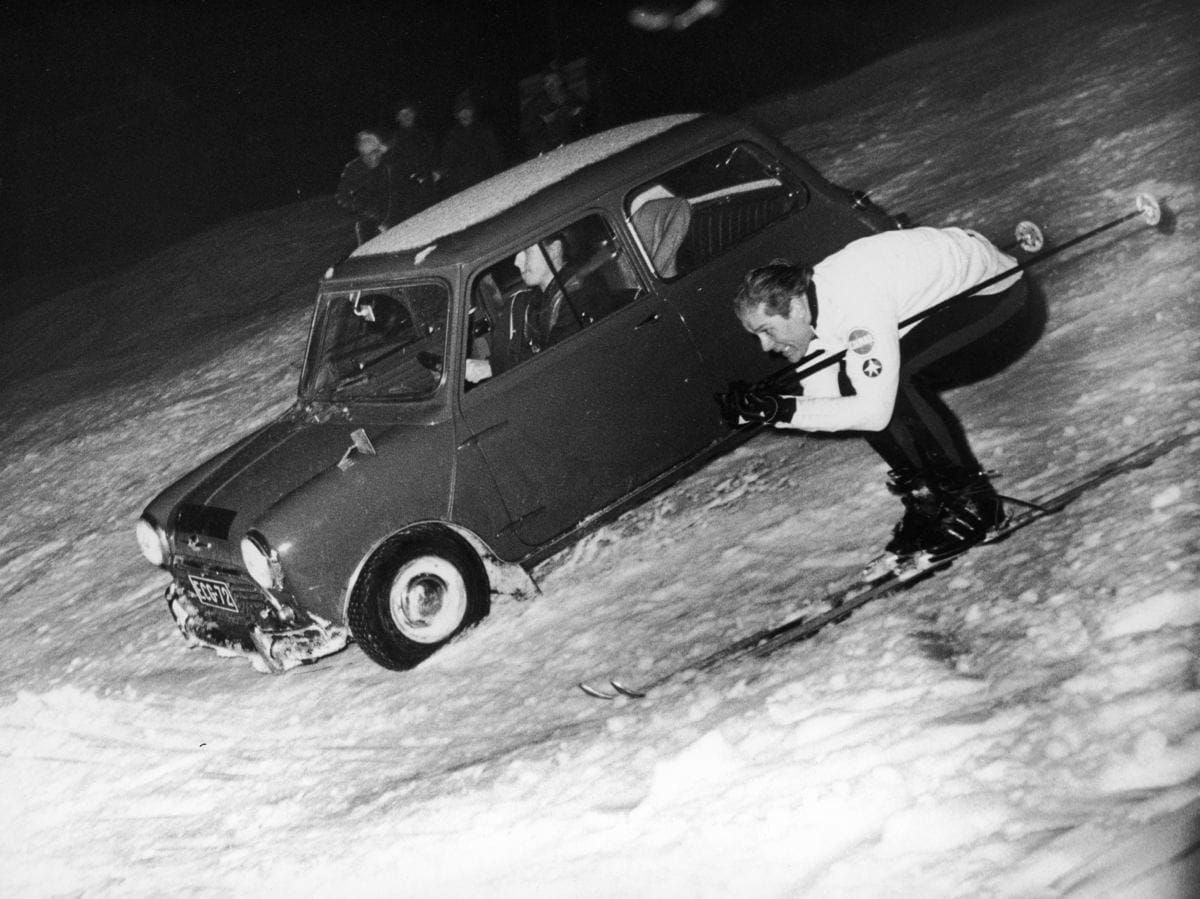
We love efficiency – the tidy process, the time saved. But efficiency always smuggles in a question: efficient at doing what? On the difference between effectiveness and efficiency, why one has to come first, and a hotel doorman who was worth far more than the door he opened.
Updated 13th October 2026 – location in Atlas, new footers, article refresh.
Efficiency vs Effectiveness: Why Being Effective Comes First
I'll own up to it straight away. I have a great fondness for efficiency – the tidy spreadsheet, the satisfying click of a thing running smoothly, the kettle boiled whilst I'm still peeling the carrots.
The neatly ordered drawer, the process that hums, the four minutes saved on the drive to the shops that I waste looking at houses I can't afford. There's a real, honest pleasure in doing a thing quickly and efficiently. Which is why it took me years to notice the trap: it is entirely possible to do something quite brilliantly that never needed doing at all.
I once saw a company spend something in the region of half a million pounds to save thirty thousand. And before you reach for the calculator – no, not thirty thousand a year, rolling on into eternity. Thirty thousand. Once. A single, lonely, non-recurring thirty thousand, chased with the energy and expense of a small nation.
The process they were so determined to improve was a gnarly old thing that several brave souls had wrestled with over the years. I'd given it a wide berth myself, mostly because I was never convinced the process needed to exist at all. But improved it was – examined, timed, refined, and genuinely made quicker. Everyone had worked hard and done good work. The sums simply never met in the middle, and somewhere underneath, the real question – does this need doing? – had gone unasked.
I tell it fondly, because I've done the miniature, domestic version of it more times than I'd like to admit. Creative ones too - being efficient at producing things people didn't want. We all have. There's a satisfaction in making something run faster, and that satisfaction is exactly what stops us looking up to check whether we're running in the right direction.
Because here's the idea worth playing with when it comes to efficiency: it always comes with a question attached. Efficient at doing what?
You can make something faster without making it any better. You can shave the cost of a task while raising the total cost of the thing you were actually trying to achieve. You can help people tick off more and more, without helping them get anywhere that matters or deliver anything of value to the customer. You can build a wonderfully slick operation for producing something nobody especially wanted.
None of which means anyone's doing a bad job. Quite the opposite usually – it tends to be the diligent, capable people who get furthest down this road, because they're responding sensibly to what they were asked to improve. Ask people to go faster and, trust me, they'll go faster. The only snag is whether faster was the thing worth being.
Which gives me a principle I've leaned on ever since. Be effective first at achieving your purpose. Then be efficient.
It's a small distinction but it changes the way you look at something. It's also the beating heart of the Idea to Value philosophy – shrinking the distance between a good idea and the value it was meant to create. Everything in that gap is an investment in the idea's potential, and it's worth making sure the investment is pointed somewhere worth arriving.
Rory Sutherland tells a lovely story about hotels swapping their doormen for automatic doors.
It's a perfectly reasonable idea – if you begin with the door. An electric door opens when someone approaches. It asks for no salary, no uniform, no lunch break. It doesn't have emotions and bad days. It will perform its one task all day and all night for nothing more than electricity and the occasional repair. Judged purely on the opening of doors, it's a marvel and a triumph.
But a doorman does a great deal more than open doors.
A good doorman welcomes you, takes your bags, hails your taxi, points you to the good restaurant and the bad one, and makes you feel well looked after. They gently discourages the wrong sort of visitor and move on those intent on hanging around for no good reason. It's a human face, a little reassurance, a little safety, a warm welcome and a signal about the kind of place you've just walked into. They add to the experience of the hotel – and the experience is a good fair slice of what people are happily paying for.
The electric door does its job impeccably. It just doesn't do all the other jobs the doorman was doing when nobody was writing them down.
And that's the interesting bit.
Start by asking what it costs to open a door, and the doorman looks like an extravagant way to achieve a simple thing. Start by asking what makes the hotel worth staying in, and they look rather different. Ask what generates value and you get a different answer.
I'm not claiming every hotel needs a doorman – plenty of places are perfectly fine with a sensible automatic door and automated check-in. The point is only that it helps to know what you're trying to achieve before you decide how to achieve it. Sometimes the most expensive-looking part of a thing is doing far more than its job description lets on.
We tend to treat efficiency as a straightforward force for good, and why wouldn't we – who's against saving time, or waste, or money, or bother?
But picture a team happily shipping more every month. The output climbs, the numbers look splendid, everyone has a reason to feel pretty chuffed about the whole thing. Now picture the subtler possibility sitting alongside it: that half of what's shipped goes untouched, that some of it comes straight back to be redone, that all that lovely motion isn't actually making anyone's life better. That all of that busy activity isn't actually generating much value for the business. The team has got marvellously good at producing things. Whether it's got any better at producing things worth having is a different and far more interesting question.
Now picture the same team spending a little of that energy working out what people actually need – and then making fewer things, more useful ones, and getting them right the first time. Less to show on the tally. Rather more to show for it, especially in the bank and meaning balance.
You see we're not aiming to create the greatest possible pile of activity done efficiently. It's to make something worthwhile and valuable – and once you know what that is, you can go after it beautifully, with far less waste, less cost, less struggle and less wheel-spinning.
Effectiveness gives efficiency its direction
Here's how I hold the two in my head, because they're co-workers and friends, not rivals.
Effectiveness is the bridge between an idea and the value it creates. You start with an intention and purpose – something to change, make, mend or understand – and you pour in time, money, energy and attention. Effectiveness asks the simple, slightly nervy question of whether all of this investment is actually carrying you towards the thing you intended. Efficiency asks how neatly you're using the resources as you go.
Both are needed, both are required, both are marvellous. And they're genuinely better together – once they're pointed towards the right things. A process that reliably makes something valuable is a joy to make quicker and simpler. A team that's cracked a real problem deserves every bit of friction taken off its back. Strip out a pointless step or process and lots of people cheer. Efficiency is a brilliant tool for getting more from what you've got. It just can't tell you what's worth getting.
So a few questions earn their keep before you start improving anything. What's this actually for? What's the purpose? Who's better off when it's done? How would we even know it worked? And the powerful one: if we simply stopped doing it, what would we miss?
You don't need a strategy off-site or a room full of clever consultants for that. They're basic first principle questions, really. Sometimes they reveal that a thing needs improving. Sometimes that it needs rethinking entirely. Sometimes that a thing we've always done has stopped earning its place – and, every so often, that the expensive-looking thing we were about to trim was holding the whole experience together, doorman-style.
There's something very hopeful in all of this, and something we often miss when we're in the throws of "improving" what we do. We have permission to do far more than wring another drop of performance out of everything we already do.
You get to choose better things to work on. To set down the work that isn't adding much. To pour your effort into the parts that actually move the needle and generate value for the customers and the business. And to give people the room to get things right rather than merely finished quickly. Sometimes the most effective move is to make a thing more efficient. Sometimes it's to redesign it from scratch. And sometimes it's to stop doing it altogether and go for a pint in the Crown and Anchor.
The goal isn't to make everything as cheap and fast and frictionless as humanly possible. It's to make the best possible use of the time, energy, money and attention you've got – which are, when you think about it, the only things any of us are really spending.
And that starts with knowing what you're trying to achieve and why.
Be effective first at achieving your purpose. Then be efficient. Because there's precious little joy in making an ineffective thing more efficient. All you've really done is arrive at the wrong place a little sooner.
Where this sits in the Atlas
Orientation·Idea to Value·Communication·Creativity & Climate·Learning