Why I called it Cultivated
A second-hand book, a stranger's handwritten inscription, and the real meaning of the word cultivate — to tend, not to force. On why the company has the name it does, and what it means to grow good work rather than demand it.
Growth can't be forced. But we can do a great deal to create the conditions in which it becomes possible — which is the whole reason the company has the name it does.
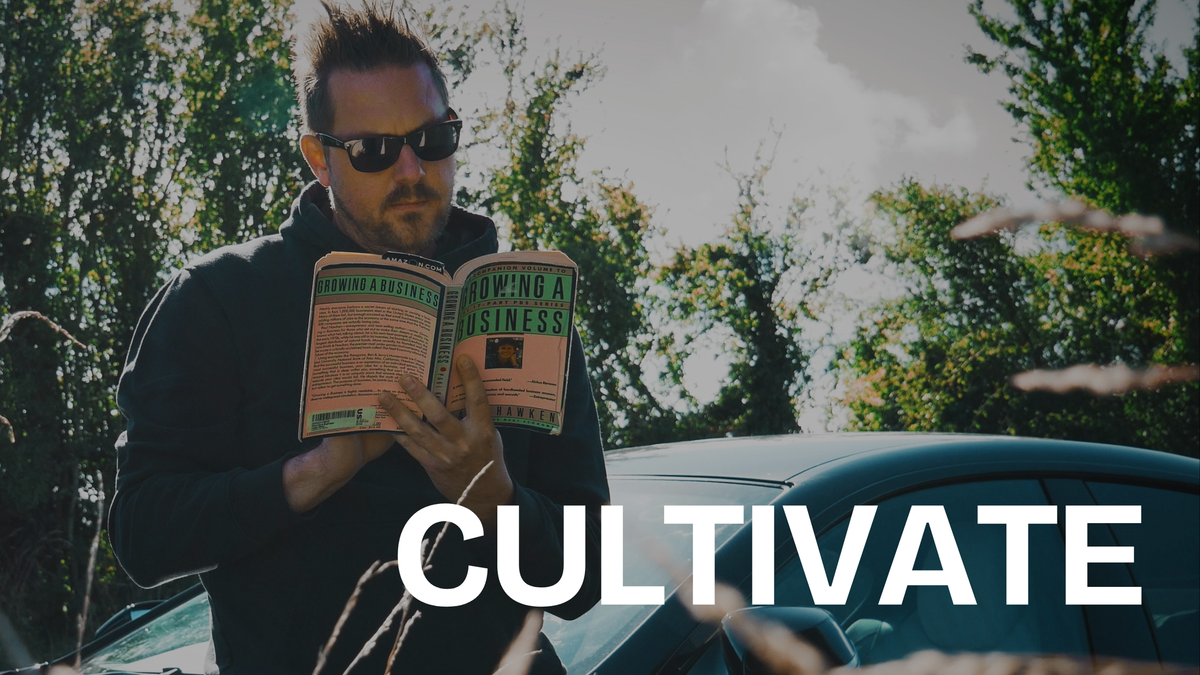
I bought my copy of Growing a Business second-hand. It's written by the wonderful Paul Hawken, and I reread it every year.
When it arrived, I opened the cover and found a line written by hand on the first page. A father, by the look of it, passing the book to his son, dated 11/95.
To Todd, may this nurture the seed. Love Dad.
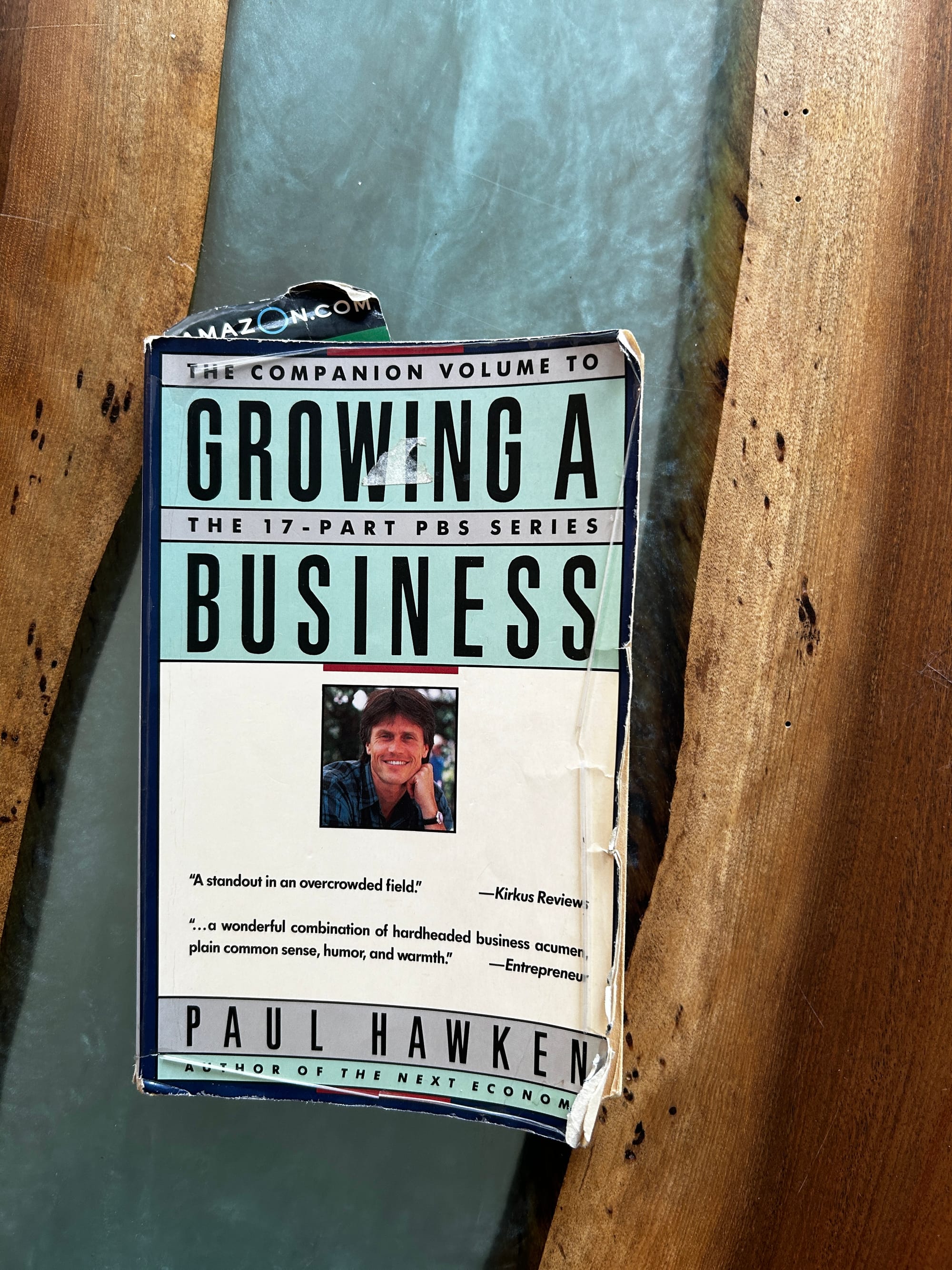
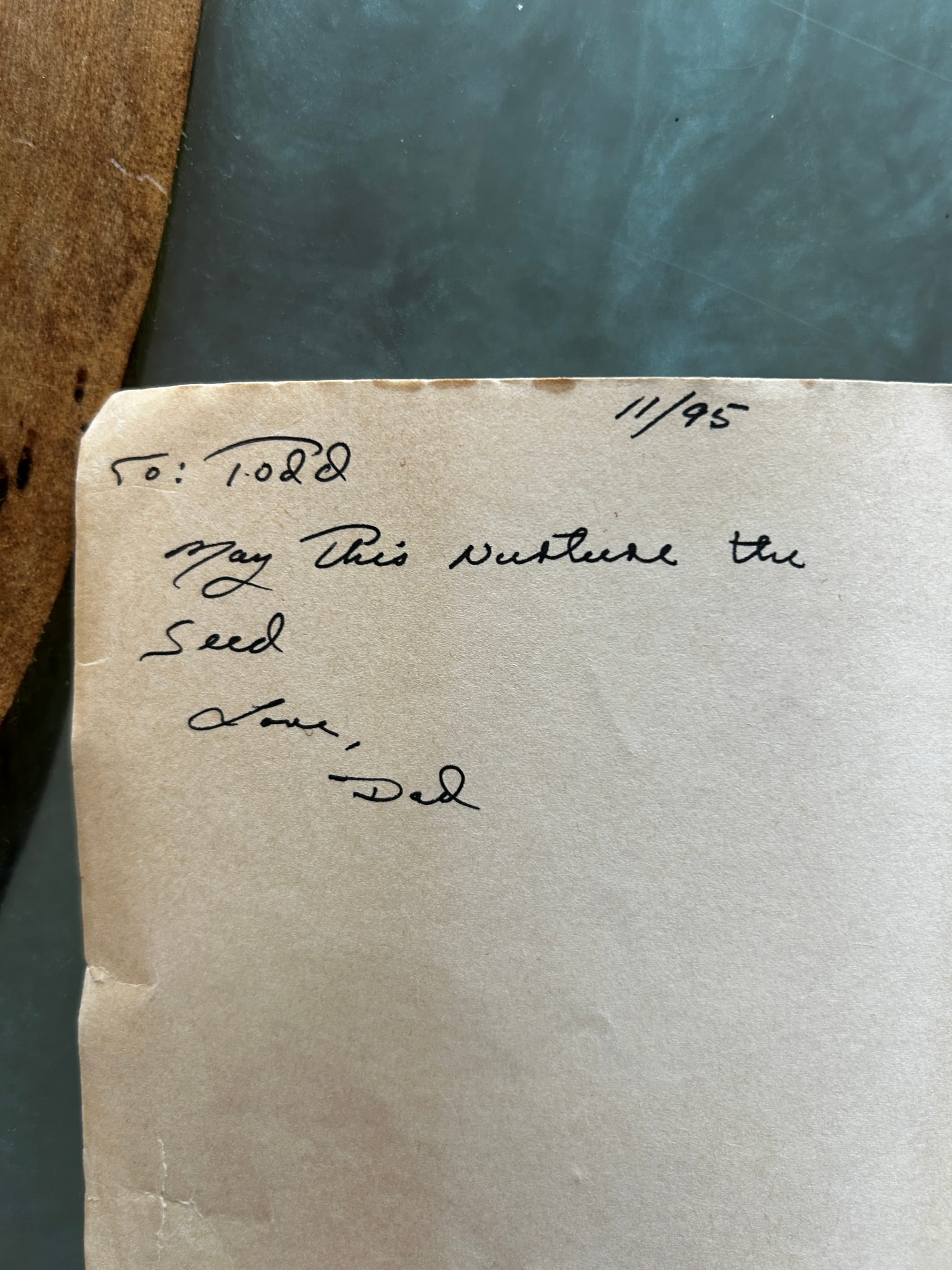
Nurture the seed.
Four words that happen to hold almost everything I believe about people, ideas, and the work we try to do together – and that go a long way to explaining why I called my company Cultivated.
But let's start with the word itself, because the word does a lot of the arguing for me.
A word about tending
Cultivate comes down to us through the Latin cultivare – to till, tend and care for the land – and behind it colere: to inhabit, to care for, to tend.
It's the same family that gives us agriculture, horticulture and, tellingly, culture. The meanings have wandered off in their own directions over the centuries, but a single thread runs through all of them: sustained attention to something that can grow.
A gardener doesn't scatter seed and hope. Well, I do, but I'm no gardener. Nor do they loom over a seedling demanding it hurry up. They don't create a performance plan, nor a dashboard of value per seed, nor do they put it on a PIP when it fails to grow.
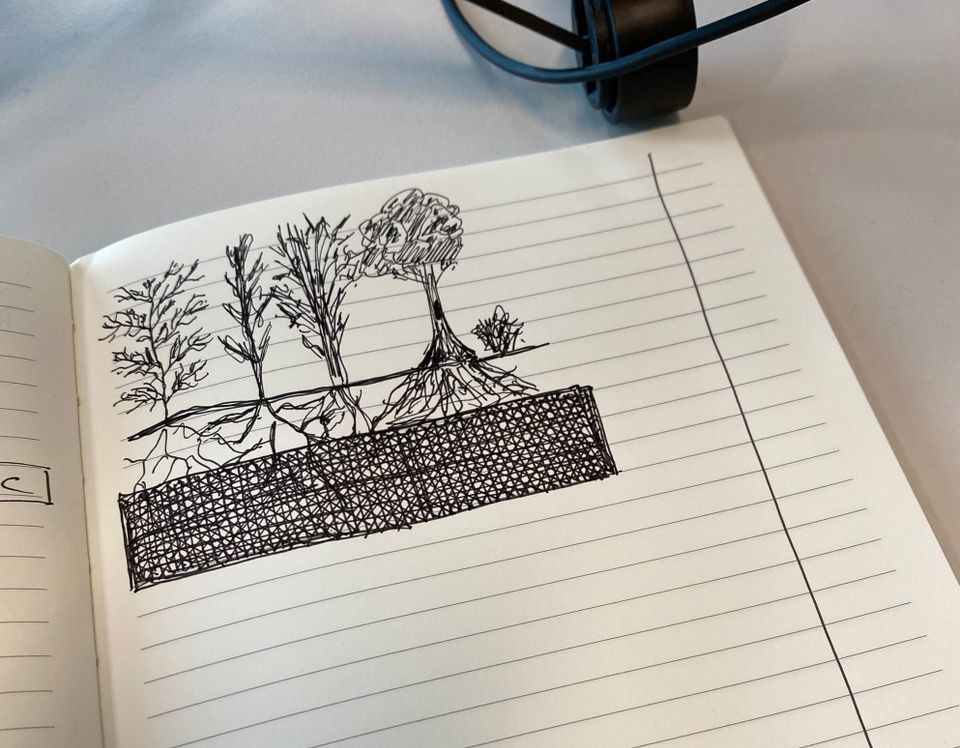
They tend to the soil. They consider the light, the water, the space and competing demands on the environment. They notice when something's struggling, clear the weeds, shelter the tender growth, prune when pruning is called for. They learn what the plant actually needs, and adjust. They cannot summon growth by force of will or highly influential speeches – but they can make an enormous difference to whether growth is possible at all.
That distinction travels a long way past the garden.
Why Cultivated?
I've spent most of my working life obsessed with one question: why do some people and teams and organisations turn good ideas into valuable things, while others, no less talented, watch their best intentions dissolve into confusion and competing priorities and ways of working that make the important things needlessly hard?
I've worked in software, helped grow businesses, led engineering teams and people functions, sat alongside organisations trying to change something that mattered. And the reflex, almost always, is to reach for more. More pressure. More money. Set a bolder target. Add a process. Add a meeting. Tell everyone to communicate better, collaborate more, take more ownership – as though the problem were simply a shortage of effort and good intentions.
Sometimes a firm, direct push is exactly right. But pressure is a poor stand-in for understanding. If people can't see what they're aiming at, working harder only gets them lost faster. If three teams are rowing in three directions, "align better" won't settle what's actually pulling them apart. If a capable person is hemmed in by conditions that make good work difficult, another rousing speech will bounce straight off.
The problem isn't usually the people. Often it's the conditions we've asked them to work in. And conditions, unlike character, are something we can actually do something about.
That's where cultivation comes in, and it's why the name fit. My instinct is to tend to people and the climate around them – to understand what's really going on, notice what's getting in the way, and help build the conditions in which good work becomes the natural, almost inevitable, thing to do. Not to force growth. Not to leave it all to chance. To pay attention, make a thoughtful intervention or two, and clear away what's blocking the light. It's simply a different place to start.
Tending means weeding, too
There's a catch too, though. People hear "cultivation" and picture only the adding of good things. Half the gardener's work is subtraction.
Sometimes a team needs more clarity; sometimes it needs fewer priorities. Sometimes people need training; sometimes they already have the skill and have simply never been let loose to use it. Sometimes an organisation needs a new process; more often it needs to retire one that stopped working. And sometimes the single most useful thing a leader can do is step out of the way.
So the work starts with looking – really looking at what's happening, before anyone reaches for a solution. What are people actually trying to achieve? Where's the confusion? What's eating their attention? Which obstacles are real, and which have just been accepted as part of the company?
Only then does the tending begin: clarify the purpose, introduce the people who need to understand each other, make space for thinking, build ability, ease whatever makes people wary of speaking up, take the friction out, and give the work that matters the attention it deserves.
None of it guarantees a great outcome. People aren't plants, organisations aren't gardens, and the world is a great deal less forgiving than many gardening book lets on. But the principle holds: the conditions we work in shape what we can achieve – and those conditions are not fixed.
Not the soft option
Let me head off a misunderstanding before it lands. Cultivation is not a plea for being gentle instead of being effective, and it's certainly not an argument against targets, standards or results. I'm deeply interested in results. In fact, that's why we're in business. I want good ideas to become valuable things, businesses to thrive, people to grow, and the effort we pour in to add up to something that was worth the pouring.
I just don't accept that effectiveness and efficiency are at war – we can do the right things and spend our finite time, energy and attention well. And I don't accept that demanding an outcome is the same as creating the conditions that make it reachable.
There's a difference between wanting a plant to grow and understanding what it needs. Between telling people to innovate and giving them the time and freedom to try. Between demanding better performance and spending time to find out what's stopping people performing well already. The first starts with the outcome you want; the second takes that outcome seriously enough to understand what it'll actually take.
Which matters, because there is always some distance between an idea and the value it finally becomes. Effort doesn't convert itself into results; activity isn't the same as progress.
Our job is to narrow that distance – sometimes by adding something, sometimes by changing course, sometimes by stopping something that's eating resources and returning nothing, and sometimes by being patient enough to let learning happen while being alert enough to know when patience has turned into an excuse.
Cultivation takes judgement. It's an active practice: observe, understand, intervene, learn, and round again.
Growth has its seasons
What I love most in Hawken's book is that it treats a business as something living rather than a machine to be tuned. The word growing is doing important work in that title. Growth is rarely smooth or punctual. There are seasons of expansion and seasons of consolidation, moments that call for pruning and moments when the wisest move is to stop and take stock. Not every idea flowers. Not every experiment comes off. Not every investment returns what you hoped. The entire book is the appreciation and acceptance that a business doesn't start out successful – it needs growth.
Cultivation doesn't mean protecting everything from ever going wrong. It means paying attention to what's actually happening and responding with some intelligence and insights.
A gardener who spots a plant struggling doesn't stand over it and shout; they investigate. Maybe they move it, feed the soil, change the watering – or admit the plant was never suited to that spot in the first place. There's a useful humility in that. The gardener doesn't assume they can make anything grow anywhere; only that understanding the conditions gives a thing its best chance.
Leadership is much the same.
The good ones don't need to direct every movement or personally solve every problem. They need to understand what the work requires, help people see where they're headed, grow their ability to get there, and lift the obstacles that make the going harder than it should be – and yes, sometimes make the hard call, challenge the weak work, change the conditions decisively, tackle the poor behaviours. Care doesn't mean dodging those jobs. It means taking them seriously. It's not to control the outcomes. It's to make good outcomes more likely.
Tend to what matters
That handwritten line in my second-hand book has popped up all over the site and in my work because it says something rather lovely about the space between effort and possibility.
To Todd, may this nurture the seed.
The father wasn't promising his son a harvest. He was handing him something that might help a seed grow – which leaves room for curiosity, for development, for the unexpected, and the gentle admission that what something becomes depends partly on the care it's given and the conditions it's given it in.
It's also a reminder that cultivation is never done. You can't tend a thing once and dust off your hands. Clarity has to be kept up; relationships need feeding; skills need practice; good conditions can slide, and the things that once helped can, in time, start to get in the way. You have to keep looking. Which is why I keep re-reading that book too.
That is what I mean by Cultivated.
Not a promise that everything will flourish, nor a formula for squeezing more out of people. A way of approaching the work: paying attention to what you're trying to grow, understanding the conditions around it, and doing what you can to help it become what it might be.
You cannot force a seed to grow. But you are very far from powerless. You can tend the soil, let in the light, clear the weeds, and pay close attention to what happens next. That's the game of business. Not forcing growth, but making the conditions in which something worthwhile can flourish.
Where this sits in the Atlas
Orientation·Idea to Value·Communication·Creativity & Climate·Learning